KindThe Settled Systems
Human
The humanity of Earth Baseline.
- Generalists. Humans get a +1 bonus to every focus stat.
- Unexceptional. Humans can't exceed 15 in any focus stat unless otherwise modified.
A character’s Stats represent their physical, social, and mental limits and track how they grow over time. Stats come in two linked types. The three core Stats, Physical, Social, and Mental, record where each Level was invested. Each core Stat has three focus Stats, which determine Skill Checks, access to Traits, and resources like Hit Points, Vibe Points, and Savvy Points. Every character’s Stats start at 0. A character’s Kind adds a bonus to each Stat and sets maximums their Stats cannot exceed.
Beyond Physical, Social, and Mental, some Traits open additional core Stats, called Special Stats. All Special Stats work the same way:
How a character spreads their points shapes what they can do, and most concepts need points in more than one place:
The example below is a Human, the average baseline in this system. Two Traits from the Kind section of their Background shape their Stats:
This character has put 9 core points in Physical, 2 in Social, and 1 in Mental, giving them 27, 6, and 3 focus points to spend. They’ve built a strong but brainless and crude character with a lot of Power and Endurance, which opens some doors and closes others:
Each point also gives a Trait. Odd-numbered points, shown as circles, give a Universal Trait, which any character can take. Even-numbered points, shown as squares, give a Background Trait, which has requirements based on Kind, Origin, Profession, or Past.
Endurance represents the body's ability to resist and persist. A high Endurance means a character is hardy and resilient to the elements, Attacks, and deprivation. Such a character can go longer without eating, march for longer without tiring, and ward off diseases or poisons more easily. A durable character isn't inherently strong, but they are consistent.
Power represents the body's ability to generate force, be it lifting heavy objects or jumping great distances. A high Power means a character can lift more, push harder, and run faster. Such a character has an easier time climbing, has a higher jump distance, and swings harder with an axe. A powerful character isn't inherently resilient, but they can perform impressive feats for short periods of time.
Grace represents the body's ability to act with accuracy and control. A high Grace means a character can throw accurately, dance elegantly, and perform dexterous and delicate actions. A graceful character isn't inherently fast or powerful, but every action they take is made more effective by their agility and efficiency of movement.
Empathy represents the character's ability to interpret others, be it understanding their emotional state, picking up on subtle tics and cues in their body language, or grasping the intent behind orders. A high Empathy means the character can read others like a book, understand their thoughts and desires, and quickly ascertain if someone is acting suspiciously. An empathetic character can't inherently convince others to see their point of view, but they can quickly understand what makes someone tick.
Persuasion represents the character's ability to convince others, be it through a well-structured argument, stirring rhetoric, or simple force of personality. A high Persuasion means the character can get the better of negotiations, convince others of a lie, or command loyalty in their troops. Persuasion doesn't make someone likable or respected, but they can get their way despite that.
Demeanor represents the character's control of their own vibe, be it keeping cool under fire, commanding a room, or fading into a crowd. A high Demeanor means that a character can seem trustworthy at a glance, can look poised for the camera, and can inspire confidence in their troops. A high Demeanor doesn't mean a character inherently understands or can control others, but looking the part and not cracking under pressure can go a long way.
Logic represents the character's ability to work through problems in a systematic and rational manner, be it solving a complex math equation, understanding what a few footprints and broken branches mean, or counting their bullets in a firefight. A high Logic means a character can think abstractly and systematically to figure out complex problems, even in difficult situations. A logical character isn't inherently quick-witted, but given time they can reason their way through almost anything.
Intuition represents the character's ability to read a situation without all the facts. A high Intuition means a character can make the leaps in logic needed to get through a challenge quickly and naturally, be it estimating how long the rations will last, reading their opponent's movements for a perfect parry, or figuring out the missing ingredient in a potion. A high Intuition doesn't mean a character knows or understands the situation, but it can give them an edge regardless.
Memory represents the character's ability to store and recall information. A high Memory means a character can remember an obscure fact they learned in school, recall a suspicious face that walked by them at lunch, or recite a prayer without error. Memory doesn't help someone put together the facts in their head but is the starting point for many mental tasks.
Beyond Physical, Social, and Mental, there are also Special Stats, core Stats that only some characters may have access to, such as Magic. A character can only spend points into a Special Stat if a Trait grants them access to it, like the Magic Access that most Kinds of Dreft receive through their Magical Heritage. A character without that access can’t put points into it, no matter how many Levels they gain.
Special Stats do not have focus Stats. Instead, every point spent into a Special Stat grants 3 of that Stat’s Special Stat points, such as Mana Points (MP) for Magic. No more than 10 points can be spent into a Special Stat, though Traits, Equipment, or other effects can raise its total above 10.
Traits built on a Special Stat list it among their Stat requirements, such as a spell that needs Magic 3, and a character without access to that Stat can't meet them. Traits that are only related to it, like Relic Handling, don't require it and are open to any character who meets their other requirements.
Magic represents the character's ability to draw on and shape the magical forces of the world, be it lighting a fire with a word, mending a broken blade, or calling lightning down on their enemies. A high Magic means a character can learn more powerful spells and has a deeper pool of Mana Points to draw on. A magical character isn't inherently wise or skilled with what they cast, but they have the raw power to make the impossible happen.
Player Characters and NPCs have access to a set of three universal resources provided by the points spent within their stats. These are Hit Points, Vibe Points and Savvy Points. Each is used, lost, or gained separately and in different circumstances. Resource points can be spent to use abilities, take actions, or influence the course of role play. They can also be lost due to the actions of others, critical failures in skill checks, or through role playing circumstances.
There are also resources tied to Special Stats, core Stats that only some characters may have access to. In these cases, as Special Stats do not have focus Stats, the player will gain 3 of that Special Stat’s resource points for every point spent into it.
Unless otherwise stated a character may not go above their max total of granted resource points. Some effects may provide temporary boosts to resources, in which case they are added to the character’s current total.
Hit Points (abbreviated as HP) are used to calculate the amount of physical harm a character or object can receive. Hit Points are intended as an abstract measurement of the hardiness, size, and capacity to absorb punishment that an object or character possesses. Lost HP do not directly correspond to specific forms of damage but are instead intended as an at-a-glance measure of the health of a character or object.
HP are calculated as 10 plus one for each point a character has in their Physical focus Stats. A max-Level Human who has spent every core point on Physical will have 55 HP before Equipment or Traits are accounted for. HP are lost as a character is harmed and regained slowly over time or quickly through the use of Equipment, abilities, or RP occurrences. Unless Hit Points have been lost, a character always defaults to possessing their maximum number of HP.
A still-living character will regain lost HP at a rate of 1 HP per every six hours of in-game time, totalling 4 Hit Points regained in a 24 hour period.
As HP are lost, a character or object will gain or lose Temporary Condition Traits such as Injured or Incapacitated. The HP-related Traits are listed following this section. Several of these Traits have no inherent effect but interact with other game systems. Additionally, a character may gain Temporary Condition Traits that describe specific injuries they've incurred. These are not directly tied to the character's Hit Point total, though Condition Traits such as Severe Bleeding may cause a character to keep losing HP at a steady rate until their injury is treated. Typically such conditions are conveyed through RP reasons or through Effects or Abilities attached to the thing that harmed them.
When a player character or NPC reaches 0 Hit Points, they are considered dead for the purposes of RP and gameplay. A dead character can take no Actions, perceives nothing, and for all intents and purposes is no longer a character in the game. A character that has died gains the Dead Condition and cannot have their Hit Points restored unless the mechanic healing them specifies it’s capable of bringing a character back from the dead. Items have a similar Condition in “Destroyed,” representing the irreversible destruction of the Item past the point of use or repair.
The following conditions are automatically conveyed and removed when the conditions are met or lost:
VP are a spendable resource that can be used to improve a character's Skill Checks in socially oriented RP scenarios or can be spent on abilities that incur a VP cost. A character has a maximum number of VP equal to the total of their Social focus Stats. Certain Traits and Equipment can increase the number or recovery rate of Vibe Points. VP are regained slowly, over time, and are an important resource to store up and manage when delicate negotiations are expected or when a character really needs to intimidate a guard or get them to look the other way.
A still-living character will regain lost VP at a rate of 1 VP per every six hours of in-game time, totalling 4 Vibe Points regained in a 24 hour period.
VP can be spent on:
SP are a spendable resource that can be used to boost a character's Skill Checks in mentally oriented RP scenarios or to gain access to intuitions or abilities such as those granted by Traits. SP are regained slowly, over time, and are an important resource to store up and manage when being tossed into new situations or when a character is out of their depth. A character has a maximum number of SP equal to the total of their Mental focus Stats. Certain Traits and Equipment can increase the number or recovery rate of SP.
A still-living character will regain lost SP at a rate of 1 SP per every six hours of in-game time, totalling 4 Savvy Points regained in a 24 hour period.
SP can be spent on:
Special Stat points are a spendable resource like VP and SP, but they come from their relevant Special Stat instead of focus Stats. A character has a maximum number of a given Special Stat’s points equal to 3 for each point spent into that Special Stat, plus any listed resource points their Kind or Traits give. A Goblinoid Tatot, for example, starts with 6 MP (Mana Points) before putting a point into Magic and only characters who can put points into Magic, like most Kinds of Dreft, would have MP to begin with.
A still-living character will regain lost Special Stat points at a rate of 3 per hour, totalling 72 in a 24 hour period.
Traits, alongside a character’s Stats and Equipment, are the defining characteristics that make a character who and what they are. The Trait system is flexible and works as a catchall for things a character knows, things they can do, groups they belong to, and relationships they have with others. Each Trait is a named, self-contained characteristic that lists its requirements and effects in one place.
Traits are almost always additive, giving a character some additional capability or capacity, though a rare few convey negative attributes or restrictions. Their effects range from bonuses to certain Skill Checks to combat buffs to new abilities. They can also describe a character’s place in society, such as membership in an exclusive organization or a wanted status for a criminal on the run. Because Traits are so varied, they are typically organized on a character’s sheet by their theme or by how they are used.
Every Trait has a category and may also have a type:
Characters start with Traits from their Background packages. A character’s Kind, Origin, Profession, and Past each grant a starting set of Traits that helps inform who and what the character is. After that, characters gain Traits as they Level Up and through in-game circumstances. Permanent Traits are gained in three ways:
If a character doesn’t want a new Trait when they gain a focus Stat point, they can “bank” that Trait until an in-game RP circumstance gives them the opportunity to gain one they want. This is a good way for a player to gain Conveyed Traits without it feeling forced.
Traits can also be temporary, and they can be lost. Temporary Traits can be granted through Equipment or by short-lived circumstances, such as an injury sustained or short-term fame gained from a notorious act. A temporary Trait’s description should state the time or circumstance that ends it.
Many Traits have requirements a character must meet before gaining them. Traits granted by a character’s Background packages are exempt from all of these requirements:
Unless a Trait is Ranked, its effect does not stack. Multiple instances of the same Trait only have the effect of a single instance. Ranked Traits are explained under Trait Ranks.
Some Traits, such as all Knowledge, can be Ranked Up. These are different from Traits with successive requirements, such as Marksman being a requisite for Master Marksman. Ranked Traits do not change when Ranked Up, but multiply their bonuses by their Rank. As an example, Pilot: Small Boat (3) is at Rank 3 and provides a +30 Roll Modifier to piloting Skill Checks, representing the Trait's bonus of 10 multiplied by its Rank.
A Trait can only be Ranked Up if the character has the Trait’s base Stat requirements multiplied by the Rank being taken. As an example, if Pilot: Small Boat needs Grace 3 and Memory 2, a character wishing to Rank it to 3 would need Grace 9 and Memory 6. No Trait can be Ranked past Rank 3.
When a character is selecting Traits while Leveling Up, they will pick either Universal or Background Traits depending on whether each focus point they gain is an odd-numbered (Universal) or even-numbered (Background) point in that Stat. Unless a Trait is specified as Background, it is assumed to be Universal. Background Traits are typically Skills, areas of knowledge, or Abilities that are related to a character’s past or identity. A character selects Background Traits from a list generated by their Background packages' keywords. Some Background Traits will have RP requirements; these will be listed in that Trait's requirements. As an example, a Human can't just grow longer teeth, but an aged Orc's fangs can continue to grow as their power or prestige advances, conferring social benefits to them. This would be represented by the Long Toothed Trait, whose description lists bonuses to social situations between Orcs.
Each Origin, Profession and Past has a handful of Background Keywords saying what it's about, like Close Combat, Law, Seafaring or Dreft, and every Trait has keywords saying what it covers. A Background pick can be spent on any Trait that shares at least one keyword with one of the character's Background packages. As an example, Local Police has Hand-to-Hand, Modern Ranged, Security, Police, Investigation, Crime, Law, Social and Medicine, so a police officer can spend a Background pick on Access Control (Security) or Wield: Shotgun (Modern Ranged), but not on Wield: Longsword (Close Combat) or Pilot: Truck (Piloting and Travel).
Fighting is split four ways, so a background that knows one kind of weapon doesn't open up every Wield Skill: Hand-to-Hand (boxing, wrestling and martial arts), Close Combat (melee weapons), Archaic Ranged (bows, crossbows, slings, muskets and siege engines) and Modern Ranged (guns, grenades and launchers).
Many Traits in the list generated by a character's Background packages are Universal Traits that are thematically related to them. These give a character an opportunity to take or advance these Traits rapidly, especially if they are Ranked Traits. A character with the Truck Pilot Profession, whose keywords include Piloting, will be able to take or Rank Up pilot-related Traits at double the speed of a character that does not have those Traits in their Background list.
These are Background Traits that can only be taken during character creation, representing some unique skill, nest egg, or heirloom the character possesses that they gained at some point during their life. Many Starter Traits will have specific requirements, such as the Pirate Scion Profession being required for the Starter Trait Inherited Pirate Vessel.
These are Traits that cannot be taken when a character Levels Up unless the GM allows it. These will often represent tangible improvements to a character that would be difficult to justify without a relevant role-playing rationale. As an example, the Eagle Eye Trait implies a tangible and significant improvement to a character's long-distance vision. This could come about as a result of mystical training, mutation, a latent ability of a Kind or Origin, or some other rationale. Conveyed Traits will often not have a minimum Stat requirement.
Because Traits can take so many different forms, they are subdivided into seven categories. The categories listed below represent the fundamental categories of a Trait. A Trait's category determines how it interacts with characters and the game's systems.
Knowledges are Traits that are usually either gained through in-game RP effort or conferred by Background packages. Background packages automatically grant their Knowledges, along with every other Trait they confer, even if the character doesn’t meet the Stats they’d need to choose those Traits otherwise. Multiple Backgrounds can confer the same Knowledge Trait, but unless otherwise specified, this does not increase the Knowledge's Rank. A Knowledge can be Ranked Up multiple times, but each Rank increase involves a commensurate level of increased time, difficulty, or financial investment. Knowledges and additional Knowledge Ranks can also be conferred by Items, magic, or cybernetics or can be gained temporarily via research, but there are limitations to how these forms of knowledge can be utilized.
When creating a new character, a player can spend the Universal or Background Traits they would gain from their Level on Knowledge Traits instead. This is to represent additional areas of knowledge the character would have accrued up to that point in their life but that may not be specifically written out in the character's Background packages (such as the character getting a bachelor's in history, allowing them to gain American History (2) as a starting character from the American Empire). It is up to the GM to decide how high a Knowledge Rank can be gained in this way.
Outside of character creation, Knowledges can only be gained through in-game means, such as a character spending a semester learning history or a character having the layout of a forest magically conveyed to them. It is at the GM's discretion to determine how easy or difficult Knowledges are to attain and where their limitations are.
(Memory 3)
This character has knowledge of the history of a specific local region and can be assumed to be familiar with local facts like names, locations, and occurrences.
Languages confer the ability for the learner to speak or read/write in that language. Most Languages will be granted by a character's Background package, but Languages can also be temporarily granted by devices like universal translators or magic amulets. Languages can also be learned in the same fashion as Knowledge Traits. Languages function as both Knowledge and an Ability in that they describe a character's ability to understand and use a language. A Language Trait will typically describe how the character can use that language, such as English (Spoken).
(Memory 2) (Intuition 2)
This character can speak and understand English conversationally.
Skill Traits represent things a character is good at: the ability to perform a specific task or engage in a specific activity without fumbling or failing to even understand the basics, and the modifiers they get for it. A Skill is like Knowledge in that it is a learned Trait, but unlike Knowledge, Skill Traits can be gained over time through training and effort, even without outside aid. Many Skills are Ranked Traits and represent the additive bonuses conveyed through practice and mastery in a given task. Other Skill Traits represent additional improvements or aspects of mastery that go beyond a simple bonus to a die roll during a Skill Check. Mastery Skill Traits will typically list prerequisite Traits that a character must already possess before they can take the more advanced Trait. Skill Traits can be selected when a character is choosing Level-Up Traits, but it is recommended that the GM only allow them to select Skill Traits they had been learning or utilizing.
(Memory 5) (Intuition 3) (Grace 3)
This character is capable of piloting helicopters in simple scenarios without a Skill Check and is capable of describing the basic functions and controls of a helicopter. Rank *10 added to Skill Check rolls involving helicopter piloting.
Abilities are Traits that confer some sort of ability to a character. This can come in a wide variety of forms, from Natural Flight granting a character the power to fly to Hide in Plain Sight letting them sneak and go undetected even while being observed. Abilities are the most common type of Trait to be conferred by Items or Equipment, as they represent some sort of specific physical or mental feat that a character can perform. Not all Abilities are physical, but every Ability is something a character actively decides to use, usually through an Action it grants; a Trait that only adds modifiers to rolls is a Skill. Abilities are often innate to a Kind or culture and are automatically conferred by Kind or Origin packages. An Ability Trait will always describe what it does and when it can be used, though it will be at the GM's discretion to determine the boundaries of when an ability can be applicable to a situation.
(Demeanor 5) (Persuasion 4)
This character gains the Rally Action.
Rally: As a Full RP Action, this character ends the Frightened Condition on every ally within 10 m who can hear them.
Circumstance Traits describe a character's relationship with the world around them and will typically list noteworthy or exceptional characteristics. While virtually any description of a character's place in society could be listed as a Trait, Circumstance Traits should be reserved for important or unique aspects of a character. As an example, membership in a thieves’ guild would be listed as a Circumstance Trait, but a Luna-HI frequent shipper account would not.
This character is an official member of a local thieves’ guild.
Condition Traits are Traits that represent some sort of ongoing status. These typically describe an effect a character is experiencing, whether physical or mental. Condition Traits can vary widely in what they represent and will almost always have their effects described in the Trait. These can range from a character having cybernetic arms, granting them a significantly improved Power Stat, to a character being a conduit for the spirits and thus able to see ghosts. Injuries will often be represented as temporary Condition Traits and will describe some sort of negative attribute or incapacity forced onto the character.
Every hour after a character is affected by Stone Skin, it loses one Rank of Stone Skin.
This character gains Rank *3 Resistance to all Physical Damage Types.
Other is a catchall category and represents special Traits that go beyond the norm. Most Other Traits are, in reality, multiple Traits listed at the same time for the sake of convenience. As an example, a character being possessed by a daemon may have that possession listed as an Other Trait, and that Trait's description may detail significant alterations to how that character would otherwise function.
This character has lost control over their body to a supernatural entity. If this is a player character, then how that player or the GM continue to operate the character is at the GM's discretion, as is the nature of the entity that has possessed them. This character no longer accrues experience. While under the control of this entity the character's Mental and Social Stats are considered Mental 8, Logic 8, Intuition 10, Memory 9, Social 7, Empathy 3, Persuasion 9, Demeanor 12 for most purposes. Condition Traits that modify these Stats are still in effect unless otherwise stated. If the character had Traits with minimum Stat values or had Ranks in Traits they no longer qualify for, then those Traits are to be ignored. The entity possessing this character can be assumed to have full knowledge and understanding of all Knowledge, Skill, and Ability Traits of the character they are possessing and can use them without issue as long as they possess the minimum Stats required for them. This character gains the following Temporary Traits and will lose them if they cease to be possessed:
(Memory 3)
This character has knowledge of the history of a specific local region and can be assumed to be familiar with local facts like names, locations, and occurrences.
(Memory 3)
This character has knowledge of the American Empire’s legal code and can be assumed to be familiar with the laws and courts of its territories.
(Memory 3)
This character has knowledge of Orc customs and can be assumed to be familiar with the institutions and traditions of Orc societies.
(Memory 3) (Logic 3)
This character has knowledge of mathematics and of mathematical fields of study.
(Memory 3) (Intuition 5)
This character has knowledge of Elemental Magics, including the theoretical underpinnings of that magic as well as its history.
(Memory 2) (Intuition 2)
This character can speak and understand English conversationally.
(Memory 2) (Intuition 2)
This character can speak and understand Mandarin conversationally and can read and write it.
(Memory 3) (Intuition 5)
This character can read and write Dwarvish Runes.
(Memory 5) (Intuition 3) (Grace 3)
This character is capable of piloting helicopters in simple scenarios without a Skill Check and is capable of describing the basic functions and controls of a helicopter. Rank *10 added to Skill Check rolls involving helicopter piloting.
(Memory 5) (Intuition 10) (Grace 5) (Any Pilot Trait)
This character can request Advantage on piloting any craft they have training in and may request Competence in piloting any craft similar to one they have training in.
(Grace 4) (Empathy 4) (Persuasion 3)
This character is capable of riding a basic animal as a mount in simple scenarios without a Skill Check. Rank *5 added to Skill Check rolls involving riding a basic animal.
(Grace 4) (Power 4) (Memory 4)
(Grace 3) (Power 2) (Intuition 3)
(Power 3) (Endurance 2) (Grace 2)
This character takes twice as long to get winded by activities that involve running, hiking, or climbing.
(Memory 3) (Logic 3)
This character can learn a new Knowledge Trait in half the specified time.
(Memory 5) (Logic 5) (Intuition 5) (Capable Student)
This character can learn a new Knowledge Trait in a quarter of the specified time.
(Persuasion 8) (Demeanor 4) (Intuition 4) (Memory 4)
+5 Roll Modifier to any Skill Check rolls that involve lying in either written or spoken form.
(Endurance 8) (Logic 5) (Demeanor 5)
This character can request Advantage in any scenario where their mental faculties are being severely taxed, be it resisting the mesmerizing effects of a vampire or pushing through a long march without becoming exhausted.
(Power 5) (Endurance 5) (Demeanor 3)
This character can request Advantage in situations where the appearance of athleticism can affect the outcome of a roll or situation (useful for models, athletes with endorsements, or barbarians trying to intimidate).
This character can request Advantage in situations that involve seeing at distance.
(Physical 5) (Grace 5) (Demeanor 5)
When in combat, this character can use any close combat weapon as if they had the Wield Trait at Rank 1 for that weapon.
(Power 3) (Endurance 3)
Rank *1 added to the Blunt damage of this character's natural weapons.
(Demeanor 5) (Persuasion 4)
This character gains the Rally Action.
Rally: As a Full RP Action, this character ends the Frightened Condition on every ally within 10 m who can hear them.
(Power 4) (Endurance 3) (Grace 2) (Brawler)
This character gains the Grapple Action. Rank *5 added to Skill Check rolls involving grappling or escaping a hold.
Grapple: This character may make an Attack Roll against a character within 1 m. On a hit, the target gains the Rooted Condition at a Rank equal to this character's Grappler Rank for as long as this character keeps hold, and this character can't move while holding them.
(Power 4) (Grace 4) (Grappler)
This character gains the Takedown Action.
Takedown: This character may make an Attack Roll against a character within 1 m. On a Solid Hit or better, the target gains the Prone Condition.
(Grace 5) (Intuition 3) (Brawler)
This character gains the Disarm Action.
Disarm: This character may make an Attack Roll against a character within 1 m who is holding a weapon. On a Solid Hit or better, the target drops the weapon at their feet.
(Intuition 5) (Logic 3)
After spending a Full RP Action studying a creature during an Incident, this character gains +2 to Attack Rolls against creatures of that kind for the rest of the Incident.
(Power 8) (Grace 6) (Endurance 6) (Intuition 4) (Boxing)
This character can Attack with the Superman Punch natural weapon. This character can request Advantage on Attack Rolls made with punches: Fists, Haymaker, Uppercut and Superman Punch.
(Grace 8) (Power 6) (Endurance 6) (Intuition 5) (Martial Artist)
This character can Attack with the Bicycle Kick and Five Fingered Palm of Death natural weapons. This character can request Advantage on Attack Rolls made with natural weapons.
This character is an official member of a local thieves’ guild.
This character has the legal training and licenses required to command a tug.
This character is wanted by the nations of the Sol System for past crimes. This character's wanted status is severe, and law enforcement and bounty hunting entities are actively searching for them.
Due to recent events, this character is famous and can request Advantage in social situations where the character's fame may aid them.
This character has access to an inheritance of 2 million Earth Reserve Credits (ERC) currently safely contained in a bank.
Every hour after a character is affected by Stone Skin, it loses one Rank of Stone Skin.
This character gains Rank *3 Resistance to all Physical Damage Types.
This Trait is lost when this Condition is treated
This character loses 1 HP every combat Round while in combat. This character loses 1 HP every minute while outside of combat.
This character is at 0 HP or less
This character is dead and cannot perform voluntary actions. This character cannot be healed by any means unless otherwise stated.
This Trait lasts a number of minutes stated by the Stimm being used, or 1 minute if there is no stated duration
This character gains 5 to all Physical focus Stats.
Lost when the effect that granted this Trait ends
This character perceives beyond the veil. This character can see and hear the supernatural.
This character has lost control over their body to a supernatural entity. If this is a player character, then how that player or the GM continue to operate the character is at the GM's discretion, as is the nature of the entity that has possessed them. This character no longer accrues experience. While under the control of this entity the character's Mental and Social Stats are considered Mental 8, Logic 8, Intuition 10, Memory 9, Social 7, Empathy 3, Persuasion 9, Demeanor 12 for most purposes. Condition Traits that modify these Stats are still in effect unless otherwise stated. If the character had Traits with minimum Stat values or had Ranks in Traits they no longer qualify for, then those Traits are to be ignored. The entity possessing this character can be assumed to have full knowledge and understanding of all Knowledge, Skill, and Ability Traits of the character they are possessing and can use them without issue as long as they possess the minimum Stats required for them. This character gains the following Temporary Traits and will lose them if they cease to be possessed:
(Power 10) (Endurance 5) (Demeanor 5) (Middle Aged or Older)
This character has kept their teeth through a long life and has the Long Toothed Condition.
Long Toothed (Condition): An Orc's teeth grow continuously as they age, acting as both a sign of wisdom and prestige. An Orc that has managed to maintain their teeth throughout their life is seen as a highly capable individual or one of noble birth. A long-toothed Orc can request Advantage in dealings with other Orcs, or with any other party that may hold this belief about Orcs.
(Endurance 3)
This character can Attack with the Breath Weapon natural weapon. Rank *2 added to the Breath Weapon's damage.
This character possesses a hard natural shell that protects them from harm. Rank *3 added to this character's Blunt, Slashing, and Piercing Resistances for Attacks that hit their torso.
This character is capable of extremely rapid feats of mathematical comprehension and has a +20 Roll Modifier for Skill Checks related to mathematics. This character is capable of performing significant numbers of mathematical calculations simultaneously; it is at the GM's discretion when and how this ability is limited.
This character has gone beyond the realm of the real and can take supernatural-related Traits and may spend Stat points on the Supernatural core Stat.
This character or object is a machine. It can be harmed by EMP damage and is typically immune to Death damage.
A Skill Check is how the game measures a character’s attributes or abilities when an action they take, or a situation they face, calls for it. Skill Checks take a variety of forms, from measuring a character’s raw strength or mental fortitude to testing their ability to ride a horse or solve a complex equation. They are a way for the GM to measure a character against some form of adversity or to grade their performance. How Skill Checks are used is typically a matter of GM style more than a hard and fast set of rules.
Ex. A character may have to take a lifting (Power) Skill Check in order to lift a very heavy object.
Ex. A character may have to take a fear (Demeanor) Skill Check to avoid cowering at the sight of a dragon.
Skill Checks are rolled on a d20. Add the character’s relevant Stat and any other Roll Modifiers, such as from Equipment, then compare the total against the check’s target value. Meeting or exceeding the target value is a success; falling below it is a failure.
A Skill Check’s target value may be known to the player or only to the GM. Some Skill Checks have no target value at all and instead measure how good the roll is to determine the quality of the character’s effort, such as establishing the quality of a work of art.
Success is a gradient. Barely succeeding may still bring some unforeseen event, while succeeding or failing by a wide margin may result in significant benefits or consequences. The extent to which a character succeeds or fails is up to the GM:
Some Skill Checks can be repeatedly attempted until the character succeeds or stops trying. It is up to the GM to decide which checks can be repeated and how long each attempt takes.
Skill Check requirements range from -10 to 80, with an explanation of what those values represent below. Higher checks require higher relevant rolls and modifiers to succeed. A check that notes a Stat can have that Stat added to its total. A complex check that notes multiple Stats must roll separately for each Stat. In general, as actions grow more complex or multi-staged, the relevant Skill Checks will require more Stats to be rolled against at once.
Checks at 0 or below are automatically accomplishable even with no skill, and often despite Difficulty Modifiers to the check. These would only be checked if there was a realistic chance of failure.
Checks between 1 and 20 are accomplishable by any character as long as there are no Difficulty Modifiers. There is a wide gap between a check of 1 and one of 20, though, and while having relevant Stats, Equipment, or Traits may make these checks easy or even automatic, a character not fit for the task may find them almost impossible.
Checks between 21 and 40 are often the difference between requiring novice or expert training, or requiring simple or advanced Equipment. Accomplishable by characters with high Stats, relevant Traits, or Equipment. Many professions have their day-to-day actions in this range. Skill Checks in this range are often still heavily impacted by raw Stat values.
Checks between 41 and 60 are often the difference between the daily acts of a master in a profession and something that requires days or weeks of prep time, perfectly attuned Equipment, and external forces acting to make the check succeed. Accomplishable by characters with advanced Traits or high-end Equipment, often both. While Stats may have an impact on the roll, Skill Checks at this level rely more on training and preparation than on talent. Most expert-level tasks fall in this range.
Checks between 61 and 80 are absurdly difficult or are considered impossible by normal means. If a complex task looks like it's in this range, it may be better to break it down into multiple smaller tasks.
A character can request Competence in any situation where they believe other related factors give them enough of a baseline level of capability that they shouldn’t be penalized as harshly, or at all, for lacking a specific skill. The GM can allow or deny requested Competence and decides its outcome, which can range from the character being treated as wholly proficient in the task at hand to being granted a relevant Trait that gives them that skill permanently.
Many Traits that grant expertise in a skill also grant implied Competence in related Skills.
Sample target values for common Skill Checks, before any Difficulty Modifiers. A GM can and should feel free to alter these values for what is appropriate at their table.
| Skill Check | Stats | Targets |
|---|---|---|
| Physical | ||
| Jumping a gap | Power |
|
| Climbing | Power, Grace |
|
| Lifting | Power |
|
| Forcing a door | Power |
|
| Swimming | Endurance |
|
| Holding your breath | Endurance |
|
| Running | Endurance |
|
| Balancing | Grace |
|
| Sneaking past someone | Grace |
|
| Picking a lock | Grace |
|
| Social | ||
| Talking your way past a guard | Persuasion |
|
| Haggling | Persuasion |
|
| Lying convincingly | Persuasion, Demeanor |
|
| Spotting a lie | Empathy |
|
| Calming someone down | Empathy, Persuasion |
|
| Keeping your nerve | Demeanor |
|
| Making first contact | Empathy, Persuasion |
|
| Mental | ||
| Recalling a fact | Memory |
|
| Noticing something hidden | Intuition |
|
| Tracking | Intuition |
|
| Finding your way | Memory, Intuition |
|
| Repairing machinery | Logic, Grace |
|
| Breaking a code | Logic |
|
| Hacking | Logic |
|
| Diagnosing an illness | Logic, Memory |
|
| Piloting | Grace, Intuition |
|
At times during a game the GM may declare that an Incident is occurring. This will occur most often during combat, or particularly intense role-playing scenarios, where the order of Actions is important and the outcome is uncertain. During an Incident, the normal freewheeling flow of role-playing gameplay becomes structured into a sequence of Actions taken in Priority Order. An Action is any act performed by a character or NPC during the Incident, and outside of GM decisions all occurrences during an Incident happen in Priority Order.
The space of time a “Round” of Priority Order takes is at GM discretion, but the default duration of a Round in a combat Incident is 10 seconds. Your GM may choose to extend this duration, such as during shipboard confrontations, where the slower action of massive ships may encourage Rounds of a minute or more.
An Incident ends when the GM declares it so, at which point the flow of time returns to normal role-playing cadence and the characters’ acts no longer need to conform to Incident Action rules.
The range of Actions a player can take is wide, with Items or Traits adding additional unique Action options. A player may only select a single Action to take, though that Action may break down to several simultaneous acts, with the most common being some combination of Movement or role-playing alongside Attack or Defense.
A conscious and involved character may take an Action during a Round, though mechanics within the game may conspire to rob them of that Action, such as being struck with a Stun Gun or knocked Prone. A character may choose to “Pass” on taking an Action if they wish, in which case they are not entered into the Priority Order, but can still be targeted or affected by other Actions.
The following represent the basic Actions a player may choose:
These will be explained in the following sections.
During an Incident a sequence of Actions is organized using Priority Order. During an Incident players declare their intentions as a group, and those Actions are then played out in Priority Order, from highest to lowest, with each step in the order seeing each player at that step perform their declared Action simultaneously. By default most characters will possess a Priority Order of 0, meaning most Actions by most characters are simultaneous. Through Equipment, Traits, or role-playing circumstances players or NPCs may gain bonuses or negatives to their Priority Order.
Within each Priority step, Actions are calculated in the following order, so characters cannot move away from an Attack or Attack before Defending. RP occurs first unless combined with another act, in which case it occurs simultaneously with the Action it is combined with:
If a character is no longer able to perform an Action, such as being unable to move because they were disabled or killed, or because a previous RP Action negates their own Action then the Action fails and does not occur.
Each set of Actions occurs in Priority Order until all involved players and NPCs have performed their Actions and Priority Order is finished. If the Incident is still ongoing then a new Round of Priority Order and Actions occurs. Repeat this process until the Game Master declares an end to the Incident, at which time the normal flow of Role-Playing gameplay resumes.
During an Incident a player may select to move as all or part of their Action. Unless otherwise hindered a character may move their full distance in any direction, but obstacles may require Grace Skill Checks to be overcome and barriers may prevent free Movement, forcing a character to instead go around them. The GM will determine the axis along which characters may move, and how. For example, a flying character may be able to move their distance vertically, or some combination of vertical and horizontal.
Characters and NPCs have a Movement speed as indicated on their character sheet.
During Incidents a character may elect to Attack as a part or all of their Action. When doing so they will select a weapon they possess and a target or targets, and make an Attack Roll. If the character hits, their target will suffer damage equivalent to their weapon’s Damage Profile modified by the Attack's Severity.
Attacks are rolled on a d20. Add any bonuses to the roll; the total must meet or exceed the target's Defense.
Attacks must be made using a weapon. A character or NPC without access to a weapon cannot Attack.
Attacks meeting or exceeding Defense are hits, and the result of the hit is measured by the hit’s Severity. Attack Severity determines effects in rules as well as the GM’s choices. Severity is based on how much the Attack exceeds the character's defensive value. Some offensive and defensive mechanics will trigger based on Attack Severity.
The following are the default Attack Severities, and their results.
| Roll | Severity | Result |
|---|---|---|
| +0 to +2 | Glancing Blow | -1 damage to the Attack |
| +3 to +5 | Solid Hit | Attack damages as normal |
| +6 to +8 | Devastating Hit | +1 damage to the Attack |
| +9 or higher | Critical Hit | +3 damage to the Attack |
Attacks failing to meet or exceed the target's Defense are considered misses, and the result of the miss is measured by the miss Severity. Miss Severity determines effects in rules as well as the GM’s choices. Severity is based on the amount by which the total roll came in under the target's Defenses. Some offensive and defensive mechanics will trigger based on miss Severity.
The following are the default miss Severities, and their results.
| Roll | Severity | Result |
|---|---|---|
| -1 to -3 | Deflected | — |
| -4 to -6 | Near Miss | — |
| -7 to -9 | Overextended | — |
| -10 or lower | Critical Failure | Character gains the Flat-Footed Condition the following combat Round |
Some Attacks will list an Area of Effect radius. These Attacks target locations and do not roll to hit. Instead their damage and effects are applied to every available target, friend or foe, within the listed radius as if the targets had been hit with a Glancing Blow.
Some weapons will be listed with the Thrown attribute. A Thrown weapon’s Maximum Range is equal to the Attacking character's Power Stat multiplied by 3. Unless otherwise stated a Thrown weapon is lost when Thrown, and comes to rest in the location the throw was targeting. Recoverable Thrown weapons, such as javelins or rocks, can be picked up by any character or NPC within its reach.
When a character is hit by an Attack the character suffers damage equal to the Attack's damage value after modifiers minus the character's Resistances.
For Example
A conscious character able to defend themselves has a base Defense of 10. It can be modified a little by Equipment, Conditions, cover, or Abilities. The Defenses of an unconscious or otherwise defenseless character are 0. It is at GM discretion when and where a character without the Conditions of Unconscious or Defenseless may be considered defenseless, such as when they are attacked by surprise or are performing a task which requires all their concentration.
A character that has elected to take a Defend Action gains +3 to their Defense for the Round. Items, Traits, or other mechanics may trigger when a character elects to Defend. For example, a character with a Wooden Shield would gain an additional +4 Defense while Defending.
A weapon is either a Ranged or Melee weapon, and that attribute will be listed on the Item. The weapon’s range or Melee attribute determines when and how the weapon can be used to make an Attack, and what kinds of bonuses or penalties are given.
Unless otherwise stated an attacker always needs Line of Sight to their target to perform an Attack. If the attacker cannot see or otherwise somehow detect their target they cannot make an Attack against them.
A Melee weapon can only be used against a target within its listed Max Range and Line of Sight.
A Ranged weapon can be used on any target up to its Maximum Range, but may have its roll modified based on the character’s or the target’s circumstances.
If a character or NPC is partially obscured behind an object, be it a wall, rock, or vehicle, they are considered to be in Cover. Characters are assumed to use any available Cover unless they say otherwise. There are two types of Cover, Light Cover and Heavy Cover. The GM determines what kind of Cover is being conveyed, but Cover may be affected by other game mechanics.
Every character can take these Actions.
Outside of the predefined Actions of move, Attack, Defend, or special listed Actions within Equipment or Traits all other acts taken by characters in an Incident are considered RP Actions. These acts can encompass virtually any activity the character may wish to undertake that would, reasonably, fit within the allotted timespan of the Round. Because the scope of what could be considered an RP Action is so wide, GMs should take care to apply discretion in what they allow. For instance, sheathing a sword and equipping a different weapon could be considered a Partial RP Action that could be mixed with Attacking or Defending, but donning a suit of armor may be outside of what could be considered reasonable for a single Round.
RP Actions may involve the chance of failure, in which case the GM should prompt a Skill Check alongside whatever other Action the character is taking. The results of the RP Action may determine the effect or validity of Actions taken later in the Priority Order.
Full RP Actions within a combat Incident, where the character spends their entire Action on the RP act, could include the following, but are certainly not limited to them.
Partial RP Actions, which occur alongside one of the other defined Actions, could include the following, but are certainly not limited to them.
Injuries may be suffered by individuals through Critical Hits, the effects of Traits or Items, or RP circumstances. Injuries convey a Condition to the sufferer based on the type of damage received during a Critical Hit, or the RP circumstances that led to the injury. Unless specified in the Condition, injuries are permanent, but they may be removed through Items, Traits, Skill Checks, or RP circumstances. Injuries inflicted by Attacks are based on damage types and use the following table.
| Damage Type | Injury | Effect |
|---|---|---|
| Blunt | Broken Limb | -2 to Attack Rolls per Rank, -1 Priority |
| Slashing | Scarred | -2 Persuasion, -2 Demeanor per Rank |
| Piercing | Organ Damage | -1 Priority, +2 to all damage received per Rank |
| Heat | Severe Burn | +2 to all damage received per Rank, -2 Demeanor |
| Cold | Severe Burn | +2 to all damage received per Rank, -2 Demeanor |
| Electrical | Severe Burn | +2 to all damage received per Rank, -2 Demeanor |
| Metaphysical | Cursed | -2 to all Skill Checks per Rank, +2 to all damage received |
| Death | Mortis | -2 HP gained per Rank every time an effect would cause the character to regain HP or gain bonus HP |
| Psychic | Scrambled | -2 to all Skill Checks per Rank, -1 Priority |
| Radiation | Irradiated | -2 Endurance per Rank; a character whose Endurance would fall below 0 from Irradiated dies. -1 HP regained per six-hour period |
| Corrosive | Severe Burn | +2 to all damage received per Rank, -2 Demeanor |
| EMP | Scrambled | -2 to all Skill Checks per Rank, -1 Priority |
If a Critical Hit is rolled and the target receives damage equal to a quarter or more of their total Hit Points, they may be subject to an injury. The target must roll an Endurance Skill Check of 10 + the total damage received. If the target fails, they gain one Rank in an injury Condition chosen by the attacker from the injuries available for the types of damage the target suffered.
Some injuries may be inflicted by specific weapons, Traits, or circumstances outside of the table. The following are a sample of such injuries:
Over the course of a game, player characters and NPCs may be injured, but all is not lost! The medical sciences of 2230 have progressed considerably, and the injured can be healed, provided they have access to medical facilities, Items, or esoteric planar ways. Ranks of an injury can be removed, and the speed of Hit Point recovery can be hastened.
A character with the Dress Wounds Ability (Intuition 2) may use the Dress Wounds Full RP Action on themselves or another character, conveying the Bandaged Condition, which doubles the speed of automatic Hit Point recovery for the following 24 hours.
(Intuition 2)
This character gains the Dress Wounds Action.
Dress Wounds: As a Full RP Action, this character may dress the wounds of itself or another character within reach, giving them the Bandaged Condition.
Incidents can occur in many places and under many different environmental conditions. The default expectation of an Incident is that it occurs in an otherwise safe, breathable environment with Earth-like gravity and the laws of physics one might expect. In distant star systems and far-off planes, however, the norm may be very different. During an Incident in an environment that changes how the game is played, every involved character gains one or more environmental Conditions. A default set of environmental Conditions is listed below, but GMs are encouraged to create their own.
This character can see 50 m, minus 10 m per Rank, up to Rank 4. It can’t draw Line of Sight for Actions beyond that distance.
This character’s encumbrance Condition is treated as one step more severe. A Heavily Encumbered character stays Heavily Encumbered.
This character’s encumbrance Condition is treated as one step less severe.
This character is Unencumbered and gains the Hovering Condition.
This character’s Movement is halved.
An Item can be any physical object that a character can be in possession of. This can range from Weapons to armor to currency to pets. Some Items have considerable complexities of their own, such as a ship or a warhorse. Other Items are as simple as a gold coin. All of these are Items, which are divided into several subcategories explained below. Items possess their own descriptions, functions, weight, and size and may confer abilities or be used by a character in a unique way. Items will typically be described outside the character sheet, but in cases where the Item is truly unique (such as a fancy rock the character found), the GM can describe the physical characteristics of the Item in question. Items are recorded in the "Items" section of the character sheet. There is no limit to the number of Items a character can possess, though there are reasonable limits on what they can carry. A character may possess a house on their character sheet, but they aren't taking it around with them.
A character has a limit to the weight of Items it can lug around, and that’s measured with Item weight and carry weight. Every Item a character can carry has a weight in kilograms. A bundle, like a quiver of 20 Arrows or a stack of MREs, lists its weight per bundle. A character’s carry weight is 20 kg plus 10 kg per point of their Physical core stat; an AI-Core’s comes from its chassis. Only equipped Items count against it, and what they weigh gives the character one of the four Conditions below.
| Condition | Equipped Weight | Effect |
|---|---|---|
| Unencumbered | Half their carry weight or less | No effect |
| Lightly Encumbered | More than half, up to all of it | -1 Priority |
| Encumbered | More than their carry weight, up to double it | Movement halved, -1 Priority |
| Heavily Encumbered | More than double their carry weight | Can’t move, -1 Priority |
Ex. (Physical 2: a 40 kg carry weight. Chainmail, a Longsword and a Wooden Shield weigh 18.5 kg: Unencumbered)
Many Items have a limited number of Uses before becoming defunct or literally ceasing to exist. If an Item has a limited number of Uses, the number and nature of that limitation will be in its description.
Ex. (candy bar: Uses 1: when consumed)
Some Items have exclusive functionalities that cannot be duplicated, whether because you can’t easily wear two pairs of shoes, only have one set of eyes to be cyberized, or a magic amulet gets… jealous. These Items will typically be labeled exclusive and will list one or more Items or categories of Item. If a character has an Item equipped, they cannot equip another that shares a type with the listed exclusion. It is at the GM's discretion whether or not an Item is exclusive with another, and exceptions can sometimes occur.
Ex. (exclusive: Footwear)
Most Items can be damaged or destroyed. If an Item can degrade in stages, those stages may be listed in its description, though often they are left to the GM's discretion, and additional descriptions may be added to an Item relating to its Condition. Larger, more complex, or more important Items may have their own Hit Points or Resistances. If no such values are present, then the GM can assign such values, or an Item can simply be assumed to either be pristine or broken with no in-between. A destroyed Item does not vanish unless circumstances say otherwise. A destroyed glass could still exist as glass shards waiting to be stepped on. The tracking or importance of a destroyed Item is up to the player or GM.
Most Items should not have their Condition tracked unless it is important or relevant to the game (ex. A shield needn’t have its Hit Points tracked unless another character is explicitly trying to chip or destroy it with a Weapon capable of doing so).
It should be noted that while these categories are used in-game to sort and describe Items, these categories are not absolute, and many Items will have uses or effects that could place them into multiple categories.
This category comprises any passively worn object or garment that is used without intention or effort. Hats, rings, and chainmail would fall under this category, as would more complex Items like powered armor or even a magical force field. What separates Wearables from Equipment is that Wearables are passive; they convey their benefits or effects without the character having to take action.
Mundane or generic Wearable Items like everyday clothing do not necessarily need to be recorded on a character sheet and can be assumed to be possessed unless otherwise stated.
A powered, sealed suit of heavy armor plates, worn like a small vehicle.
This catchall category comprises a wide variety of concepts, but the unifying feature is that Equipment is useful and will typically have some sort of effect or feature in its description, often granting some sort of ability or benefit to a character when utilized. Watches, grappling hooks, jet packs, cell phones, or magic wands could all be considered Equipment. Vehicles, Weapons, Wearables, and other categories of Item could be considered Equipment, and when they have Equipment-like functions, they will often be listed as Equipment in addition to their other categories.
A folding hook for catching ledges and walls.
Weapons are a special form of Equipment meant to cause damage or harm. Not every Item capable of doing damage is a Weapon, but most Weapons exist specifically for that purpose. Weapons will convey abilities related to their use. Anyone can use any Weapon, but a character without a related Trait, such as a Wield Trait, takes a penalty for unfamiliarity. Anyone can pull a trigger, but hitting a target is a different matter. Weapons are often relatively complex forms of Equipment and will need care, maintenance, or proper setup to be used correctly. Sometimes a Weapon will need to be paired with another form of Equipment, such as a bow requiring an arrow, but just as often they will not. Most Weapons will be considered exclusive, though Traits or GM discretion may allow for multiple Weapons to be used simultaneously.
A tall bow with a heavy draw and a long reach.
"Structures" is a catchall term for any unmoving Item that can be occupied. Structures will typically be large and solid constructs built to be occupied or to accomplish some sort of task, but just like buildings in real life, they can have innumerable forms and purposes. Structures are not equipped; instead, characters will occupy a Structure. The maximum total occupancy of a Structure will always be defined in its description and will often list not just the number of characters but other values such as the weight or size of what it can accommodate. In situations where these numbers are unset or so large that tracking them isn’t useful, a “-” will be listed, and these values are at the GM's discretion.
Structures are large and complex Items and will often have Hit Points, Resistances, and levels of Destruction. When a character is occupying a Structure, they are typically considered to be inside of and protected by it (presuming the threat isn’t inside the Structure with them or they aren’t exposed in some other way).
A canvas or synthetic tent for two.
Vehicles are a special form of Item that is used to move or protect characters. Like Weapons, Vehicles can be used by anyone, but a character without a related Trait, such as a Pilot Trait, takes a penalty for unfamiliarity. Unlike Weapons, Vehicles are not equipped; rather, characters (or other things) will occupy a Vehicle as they do Structures. Vehicles will always list a maximum number or nature of occupants (though in some instances that value will be listed as a “-”, similar to Structures). In these instances, the maximum occupancy is at the GM's discretion.
A Vehicle is typically ridden, piloted, or driven by one or more characters, though some Vehicles control themselves or are at the mercy of other forces (ex. A boat adrift in the tide or a runaway train). Vehicles are a relatively wide category of Item that can encompass animals or Structures and will typically have a list of their properties in their description.
Vehicles often require routine maintenance and upkeep, though whether that is tracked is at the GM's discretion. Similarly, Vehicles will often have Hit Points or conditions listed, though it is at the GM's discretion if they want to add additional complexities to the maintenance or handling of a Vehicle. (Ex.: It is at the GM's discretion if a car's gas tank explodes or if the players have to fill that gas tank or even pay attention to the concept of fuel.)
A small wooden boat with oars. Occupants: 4.
Animals are, in many ways, like characters. They can typically move, have Hit Points and defensive values, can equip and use Items, and often can think and act independently. The most important distinction between an animal and a character is that the animal doesn’t warrant the creation of a character sheet and will typically have its Traits listed in a compressed fashion. An animal will usually have its characteristics derived from a baseline template that is then modified via Traits.
Animals and animal-like NPCs have behaviors and will take actions on their own, though they are typically animalistic or robotic in nature. A trained animal or well-programmed robot will have a Trait conveying that it can be interacted with and given commands. Often only specific listed characters will be able to command an animal or robot, though it is at the GM's discretion when and why this can occur.
Animals and animal-like NPCs can equip and use Items, though the Items they can use will typically be listed or at the GM's discretion.
A sturdy animal for carrying loads or pulling a cart.
Misc Items are Items that do not neatly fall into another category or that are unimportant or generic objects that could have a multitude of uses. A brick would be a Misc Item; it could be thrown as a Weapon or used to build a Structure, but by itself it's just a… brick. Most Items in an environment can be considered miscellaneous.
A pouch of smooth stones or lead shot.
Resistances are used to reduce incoming damage by a specified amount. Resistances begin at zero. Incoming damage will always have a type, and some forms of Attacks will do multiple types of damage at once. A fiery explosion will do both Blunt damage from the blast and Heat damage from the fireball. Resistances are predominantly conveyed through Equipment, but some Traits may provide additional Resistances. A character's Resistances are cumulative; if a character has both leather armor and scaly skin, their Resistance to Slashing will be higher than if they had either alone. Some Items or abilities will have the keyword (Breach: X), where X is how much of the target’s Resistance the Attack ignores. An Attack with (Breach: 3) ignores 3 of the target’s Resistance against each of its damage types.
Some Resistances will have coverage areas specified, such as a helmet providing significant protection, but only on the head. How and where a character is hit is covered in the section on combat. Unresistable damage ignores all Resistances. Resistances can, in rare cases, be a negative value. In these cases, they increase the damage taken by that amount.
Blunt Attacks are those that impact evenly across a wide area, such as a strike from a club or the wide blast front of an explosion. Any sudden change in pressure, such as being thrown out an airlock, would also be tracked as Blunt damage. Blunt Attacks can often cause the Concussed Temporary Condition Trait.
Slashing Attacks are those that cut along a surface, such as a swing from a sword or a slash from animal claws. Slashing Attacks can often cause the Severe Bleeding Temporary Condition Trait.
Piercing Attacks are those that impact sharply in a small area and pierce deep, such as a thrust from a spear or the impact of a bullet. Piercing Attacks can often cause the Severe Bleeding Temporary Condition Trait.
Heat represents the damage caused by very high temperatures being applied to an area, be it from fire, a laser, or any other source. Fire is a common form of Elemental damage that can be encountered easily both in and out of combat. Heat damage can often cause the Burning Temporary Condition Trait.
Cold represents the damage caused by thermal energy being removed from an object or character, be it from contact with ice, exposure to the elements, or any other source. Cold damage will most commonly be a result of exposure to extremely cold climates, and it will usually occur outside of combat. Cold damage can sometimes cause the Frozen Temporary Condition Trait.
Electrical damage represents the application of electricity to a system that isn't built to handle it, be it from lightning, a downed power line, or an electric eel. The threat of electric shock is far more common in a modern electrically powered society, and it's also a classic element of magic. Electrical Attacks can often cause the Concussed Temporary Condition Trait.
Metaphysical damage represents damage from a higher-plane source; it does not interact with normal matter in any scientifically understood way. Metaphysical Attacks or effects will describe if and when they do extra damage or have other effects. Metaphysical effects will often be associated with other Traits or keywords that further define their interactions in the game.
Ex. A paladin's sword that bypasses the armor of the Demonic or an enchantment that only harms the Undead.
Death damage represents a loss of vitality or the sudden rotting of flesh that would be otherwise considered scientifically impossible. Very few Items or Traits offer any resistance to Death damage, and most armor does nothing against it. Because of that, Death Attacks tend to deal a lot of damage, but they rarely do anything beyond the HP damage they cause. Death damage or Attacks cannot typically harm those with the Mechanical Trait.
Psychic damage represents harm inflicted directly upon one's brain, ego, consciousness, or other mental capacity. Psychic Attacks or damage will typically bypass all defenses, but they deal a moderate amount of damage compared to other Supernatural Attacks. What they lack in raw damage they make up for in Condition Traits: most Psychic Attacks leave their targets Flat-Footed, Frightened, or otherwise not thinking straight. Successful Mental or Social Skill Checks can often resist these Conditions.
Radiation is a natural hazard that can cause the Irradiated (1) Condition Trait. Levels of radiation exposure can cause different and increasingly severe effects, and certain effects or Resistances in the game will make a character resistant or immune to radiation. Much like in real life, radiation can spread, and a character or object with a high level of the Irradiated Trait can, in turn, inflict that Trait on others.
Corrosive effects will often cause damage to Items or Equipment in addition to any character carrying or wearing them. This is most commonly represented by inflicting the Corroding (1) Condition on the affected object.
EMP, or electromagnetic pulse, is a catchall term for electromagnetic damage that is specifically harmful to machines or computer systems that rely on electricity or magnetic attributes to function. EMP damage most commonly disables or destroys mechanical or electronic systems, either intentionally or accidentally. EMPs can be caused by natural or man-made phenomena, from solar flares to nuclear explosions. EMP damage can only harm characters or objects with the Mechanical Trait.
A long, straight sword wielded in one or two hands.
A bow mounted on a stock, slow to load but easy to aim.
A modern rifle, the standard arm of soldiers across the Settled Systems.
A shoulder-fired tube for rockets and guided missiles.
A shirt of interlocking iron rings.
A modern vest with armor plates, made to stop bullets.
A sealed, pressurized suit with its own air, for working in space.
Vials, a mortar and pestle, a burner, and a few common reagents.
Bandages, salves, splints, and needle and thread.
A personal communicator and computer. Doesn’t reach across a switch gate without a relay.
A common saddle animal trained to carry a rider.
A four-wheeled wagon pulled by draft animals. Occupants: 2, plus cargo.
A single-seat combat spacecraft. Occupants: 1.
A quiver of arrows.
A sealed, self-heating meal for one day.
The sheet below belongs to Edwin Humble, a Level 6 Human smuggler, and shows how the systems in this section come together on a finished character. Every character is built from four Backgrounds, a starting set of Stat points, and the Traits those points grant.
Every character selects a Kind, Origin, Profession, and Past. Together these Backgrounds set a character’s starting Stats and Traits and tie them to the world:
Every character’s Stats start at 0 before their Kind’s bonus points are added. Characters always start at Level 1 or higher, so every new character also gets their Level 1 points: 1 core point and the 3 focus points that come with it. Since every focus point grants a Trait, a new character begins with a set of Traits they choose, on top of the ones their Backgrounds grant automatically. A starting Human, for example, has 9 Universal Traits from their Kind’s bonus points plus the Traits from their Level 1 points. With only a point or two in each Stat, these early picks are limited to less powerful and more common Traits. A GM may prefer to start a campaign at Level 2 or 3 so players can pick out the low-level but still specialized Traits that help their characters stand apart from each other.
Reading the sheet:
Edwin’s 28 focus points come from his Kind (9), his Origin (1), and six Levels (18), and each one granted a Trait. He spent six of those as Universal Traits and six as Background Traits from his Backgrounds’ lists, including the Spanish and Mandarin Languages, and banked the other sixteen for in-game opportunities. Four of those have since gone to Skills he gained in play: Eagle Eye, a Conveyed Skill, then Cover Identity, Poker Face and Procurement as his smuggling runs went on, leaving twelve. At Level 6 he spent eleven more on the Skills and Abilities his work had been teaching him, five of them from the Smuggler’s list, leaving one Background pick banked. Spending Traits on Knowledges this way is allowed because he’s a freshly created character. Future Stat gains can’t be used to gain Knowledge Traits, though this is at the GM’s discretion.
KindThe Settled Systems
The humanity of Earth Baseline.
OriginThe Settled Systems
Born in the Empire’s Earth territories, in a militant nation that styles itself the revived Rome.
ProfessionAny Setting
Moves goods past the law, by ship, caravan or cart, along whatever routes the authorities aren’t watching.
PastAny Setting
Grew up on the streets with nothing, and learned to take what wasn’t given and to disappear when it mattered.
Age30GenderMaleHeight6 feetWeight190 lbs
KindHumanOriginThe American Empire: EarthProfessionSmugglerPastGutter Trash
Wealth15,000 ERC
Edwin Humble is a truck driver and part-time smuggler in Earth orbit, working the American Empire’s Sol territories. Raised rough, Edwin was cared for by his mother in the teeming streets of Chicago before stowing away on his father's cargo shuttle during one of the man's rare visits. The boy quickly learned the trade of private cargo running, both the legal and less-than-legal sides of it. After a delivery went south and his father was killed, Edwin took over the “family business” and runs a small-time cargo transportation operation under his own name, though his real income comes from what’s stored in the secret compartment at the back of the shuttle. Edwin's two goals in life are to get rich and to find out who was responsible for his father's murder.
This character is at their maximum HP
This character is at half their carry weight or less
A heavy leather jacket. Turns a scrape or a cold wind, not much more.
A modern handgun.
Makeup, wigs, false hair and a few changes of clothes.
A personal communicator and computer. Doesn’t reach across a switch gate without a relay.
Rank *2 added to the Piercing damage of this character's Attacks with a knife or other small bladed weapon against a target that hasn't acted yet this Round.
This character gains the Bolt Action.
Bolt: This character takes Full Movement at +5 Priority for the Round. This character gains the Flat-Footed Condition the following Round.
This character gains the Sh!t Talk Action.
Sh!t Talk: As an RP Action and Defend, this character keeps up a stream of fast talk. One character within 5 m who can hear and understand them takes -2 to Attack Rolls against this character this Round.
This character gains +3 to rolls relating to sneaking, hiding, or staying concealed.
This character gains +5 to Grace when attempting to pickpocket, deceive, or impress with their hands.
This character gains +5 to Persuasion or Demeanor checks relating to haggling, bartering, and price negotiations.
This character gains +3 to Memory and Logic rolls relating to urban or city environments.
This character gains +2 to Persuasion or Demeanor rolls.
This character gains +3 to Logic and Persuasion rolls when attempting to trick or deceive.
This character is capable of piloting Truck Class Voidships in simple scenarios without a Skill Check and is capable of describing the basic functions and controls of a Truck Class Voidship. Rank *10 added to Skill Check rolls involving Truck Class Voidship piloting.
This character is capable of putting together a convincing simple disguise without a skill check. Rank *5 added to skill check rolls involving disguise and impersonation.
This character gains +8 to rolls for accurately appraising the value of artifacts, merchandise, or commodities in fields that it has familiarity with.
This character gains +3 to rolls relating to the handling, tracking, or maintenance of cargo.
This character gains +5 to rolls relating to hiding goods in vehicles, cargo, or luggage.
This character gains +3 to Persuasion or Demeanor rolls when dealing with customs officers, inspectors, and guards.
This character gains +3 to Persuasion rolls when negotiating the price of stolen or contraband goods.
This character can request Advantage on piloting Skill Checks to avoid detection, such as slipping past patrols or sensor sweeps.
This character gains +3 to rolls in ports, stations, and docks to find a berth, a crew, or work off the books.
This character can request Advantage on Memory Skill Checks to retrace any route they've traveled before, whether on foot, by vehicle, or by ship, and to recall its landmarks, hazards, and checkpoints.
After a few minutes of conversation with someone, this character can request Advantage on Empathy Skill Checks to judge whether they're lying or can be trusted.
This character can request advantage in situations that involve seeing at distance.
This character gains +5 to Demeanor and Memory rolls relating to keeping up a false identity under scrutiny.
This character gains +3 to Demeanor rolls relating to hiding their intentions or reactions.
This character gains +5 to rolls relating to finding and getting hold of goods, equipment or services, legal or otherwise, through the right sellers and suppliers.
This character has knowledge of American history and can be assumed to be familiar with the history of the United States and the American Empire that replaced it.
This character has knowledge of American geography and can be assumed to be familiar with the American Empire’s territories on Earth and in its colonies.
This character has knowledge of the American Empire’s legal code and can be assumed to be familiar with the laws and courts of its territories.
This character has knowledge of organized crime and can be assumed to be familiar with its gangs, fences, black markets and the unwritten rules between them.
This character is conversational in the English language and can speak it.
This character can read and write the English language.
This character is conversational in the Mandarin language and can speak it.
This character is conversational in the Spanish language and can speak it.
This character can read and write the Spanish language.
This character can speak and understand Thieves' Cant, passing hidden messages in ordinary conversation.
KindThe Settled Systems
The humanity of Earth Baseline.
OriginThe Settled Systems
Born in the Empire’s Earth territories, in a militant nation that styles itself the revived Rome.
ProfessionAny Setting
Moves goods past the law, by ship, caravan or cart, along whatever routes the authorities aren’t watching.
PastAny Setting
Grew up on the streets with nothing, and learned to take what wasn’t given and to disappear when it mattered.
The sky above you is a radiant white. And the sky below you. All around you, really. And it’s hot. The bathysphere is reading north of 3,200 bar and 230 degrees. A few moments outside its thick parametal alloy skin and you’d resemble a very well-cooked marble of hot carbon. Typical weather in 65/t/137 “Saturday’s Furnace.”
One of the harvesters is reporting an infestation of “Sunflowers.” The shift crew calls it “Light work,” for the pun as much as they do for the accuracy of the name. A few hours of scraping luminous higher-dimensional “vines” off of the ship-sized packaging and compression machine and you’ll be back at the Switch Point with time to spare.
It is the year 2230, and the dawn of the 23rd century comes amid tumultuous changes for humanity. The last two centuries have seen us navigate a slow-moving environmental collapse on our home world and an AI apocalypse that almost was, but they’ve also seen us reach for the stars... and places even further beyond.
Strange Frontiers is a pen-and-paper role-playing game system and setting with a near-future hard science-fiction aesthetic mixed with the exotic and the arcane.
In this document I’ll be outlining the world of Strange Frontiers and building out the systems that allow someone to play a game in this setting. This is a work in progress, so expect unfinished and under-construction content to be the norm.
Mankind has colonized the stars, it’s created life, it’s mapped the fundamental building blocks of nature, but in the year 2230 it’s still just humanity. Inequality persists, war remains, and we’re still striving to uncover the next horizon. The nations of Earth have established colonies in distant stars and even more distant planes of reality, corporations use parascience to develop new technologies, and humanity grapples with how to treat the truly alien.
Life in 2230 is hard, but it has its upsides. Genetic science and advanced cybernetics are pushing the boundaries of what a human is capable of. Sentient AI citizens and paranatural alien life have quashed the old prejudices that divided humanity. And if you don’t like it? Hop a freighter out to the frontier and kickstart your own society. Better yet, hop in a switch gate and try your luck in a whole other plane of reality. It wasn’t always this good, though.
In humanity’s darkest hour, 120 years ago, it was dying. The Earth had suffered a near-total ecological collapse, brought on by over-industrialization and risky geo-engineering. A near miss with an AI apocalypse had only deepened divisions and mistrust. The march of science had slowed to a trickle, every new endeavor too expensive or too useless to make an impact. The rich and well-connected were fleeing for space, but that only left them in little bubbles of metal and air, alone and orbiting a dying world.
Then, in a mysterious flash of impossible color, an eldritch temple of bizarre make and proportion appeared on the dark side of the Moon. On it, in alien glyphs, was written song, poetry, philosophy, and the secrets of parascience. In the century since, mankind has used this gift to harvest impossible materials from other planes of existence and develop strange new technologies to expand far beyond its birth world.
Life in Earth’s megacities is still hard, and for over a century the great migration away from Earth, coined the Exodus, has created new nations on the Moon, Mars, and locales much farther still. Competition is fierce, corporations and nations alike strive for any edge. Brave pilots ply the stars aboard ramshackle starships, hardened gangs vie for power in the dark depths between arcologies, and elite mercenaries explore other planes of existence hoping to find exotic materials.
In the end, it’s still humanity, and it’s a big strange universe out there.
Earth still holds over 12 billion people, most of them packed into colossal, water-starved megacities. As its deserts spread and reservoirs dried, humanity huddled into ever-denser urban centers. Citizens were left struggling to afford the basic necessities of survival. Even before The Gift, humanity was reaching to space to escape its dying world.
The century of the Exodus has seen over a billion take to the stars, and that trend is only accelerating. Colonies dot the surfaces of Luna, Mars, and almost every other moon and oversized hunk of dirt or ice within reach. Hundreds of disparate stations hang between the planets, cities in their own right. Vagrant flotillas drift along the Aether, going where the winds take them. All the while, close to a million ships dart between ports.
Humanity wasn’t content with just the Sol System. Nearly a dozen star systems have populations of at least 1 million, with countless others featuring nascent human development, if not yet full colonial settlement. The race to plant a flag on every unclaimed rock in the galaxy pushes frontier explorers to burn their engines and risk it all to survey new systems and stake their claim.
Lumbering between the floating sparks of human life, fleets of dark, windowless warships patrol nebulously defined territories. The largest displace millions of tons and travel amid swarms of support craft. These powerful vessels enforce the territories of stellar nations. Though war has been rare this past century, and war between great powers rarer still, these ships bear the scars of many a disputed claim.
Commerce in the Settled Systems is thriving, with corporate freighters hauling ice, ore, and manufactured goods along well-worn lanes between the homeworlds and the frontier. In the vast gulfs between stars, colossal arks, nations unto themselves, make their way, bringing goods and lives to distant shores. The richest cargoes come from planes of reality far beyond the stars, where a single hold of exotic material can be worth more than the ship carrying it.
The Earth sits at the center of a restless human civilization. Six major powers compete for technology, territory, and resources while dozens of smaller powers carve out their own destinies.
The militant American Empire, styling itself as the revived Rome, is engaged in a one-sided cold war with its rival of the past two centuries, the expansive Empire of China. Aboard its capital, the drifting interstellar Ark “New York,” the absentee Emperor Augustus Bartholomew Hayes oversees imperial expansion abroad while a divided Senate squabbles at home. Prince Traius Bartholomew Hayes, regent of the Sol territories, struggles to hold together the tenuous détente between the Empire and its former territory, the Union of Texas.
The Eighth Lunar Industrial Syndicate, once a simple business empire, now finds itself saddled with millions of citizens and a constitution at odds with its profit-at-all-costs past. Behind the walls of the private estates and penthouses of Luna, board members and insiders hoard wealth, knowing a storm is coming. Between worker strikes, corporate espionage, and the nascent call for democracy from the shareholders, the cracks are spreading.
The Imperious Empire of China has every right to be proud. A 50-year golden age has brought prosperity, territory, and power, but the long-serving Emperor Zhang has disappeared in secret, and while the imperial household keeps up appearances, the emperor’s many heirs are already maneuvering for the throne. Across the empire’s palaces, courts, and alleys, factions vie for supremacy, and when words fail, a knife in the dark often succeeds.
The Stellar Democratic Union has become the standard-bearer of an enlightened and free humanity. The largest nation in the Settled Systems, it has member states spread across the Earth, stars, and planes. But its legacy as the bureaucratic and rule-choked successor to the European Union has left it slow to adapt to the lightning pace of human expansion. As it finds itself overtaken by the rising powers of competing empires, calls for secession grow louder among its members.
Where other nations herd their people into choking megacities, the hermit Kingdom of India has become a paradise on earth, but the regreening of the subcontinent came at a high price. The land of 10,000 gods is a tightly bound theocracy, ruled from beyond the stars by Crown Prince Raja Jagadeeshwara Raya IV. The kingdom is embarking on a holy quest to join the gods in heaven, and while millions emigrate to 295/c/29 - “Pataliputra,” resentment is growing at home.
After centuries of hardship, the people of Africa have taken their rightful place among the powers of Earth. An awakened giant in the Settled Systems, Centafrica is a soft-power juggernaut, its art and science admired across human space. Its corporations are influential and its universities storied. But its now-vibrant democracy carries deep scars, and the crimes perpetrated in its formation linger, while old power structures and rivalries mean its newfound wealth is rarely spread evenly.
The Earth sits at the center of a fractious human civilization. Six major powers compete for technology, territory, and resources while dozens of smaller powers carve out their own destinies.
An outgrowth of the old European Union, the Stellar Democratic Union (SDU) is an expansive economic, social, and military union of over 50 formerly independent countries. Any nation with a suitably democratic government can petition the SDU for membership through a tiered system. It begins with Associate Membership, granting tariff-free trade and expedited travel, and ends with the territories and peoples of that nation becoming wholly unionist, its borders and institutions redrawn as it is annexed into the Union.
It’s a testament to the success of the SDU’s model that it is, by far, the largest and most economically powerful nation in the Settled Systems. Maintaining unity and protecting territory across such a disparate collection of locations is challenging. The SDU’s territory and member states stretch as far afield as the Boneyard and Tetra Arks, and New Persia in 210/c/18 “Pairidaeza”.
A proud democratic republic, the Centafrica of today is a forward-looking and vibrant nation. Home to some of humanity’s top universities and a significant exporter of music, entertainment, and the arts, Centafrica is a soft-power juggernaut in stellar politics. Look beneath the thriving techno-utopia of cities like Lagos and Kinshasa, however, and tensions still simmer over the unreconciled and brutal history of the nation’s founding. The wealth of Centafrica isn’t always spread equally, and separatist groups often find at least local success through the nation’s democratic politics. The scars of the past sometimes run deep, and people have long memories.
Through the deft hand of Emperor Zhang, the nation of China has reached its apex. Business is flourishing, territories are expanding, and the borders are quiet. For the last 50 years, he has led the Empire into a golden age.
Unfortunately, still unknown to the public, the Emperor vanished without a trace on the solar new year of 2228. The imperial household has striven to keep his disappearance a secret, but a quiet succession crisis is brewing between the Lady-in-Waiting and Zhang’s many heirs. The corporate syndicates that compose the Empire’s government have begun to sense weakness in the imperial household, and with weakness comes opportunity.
In the 21st century, India found itself caught between the expanding deserts and storms of the world’s ecological collapse and the unconquerable Himalayan plateaus. Hit harder than most, the people of India endured a famine and thirst that would have broken other nations. The restive country, with its hundred languages and thousands of gods, finally found unity in the cause of environmental preservation and the return of natural beauty to the subcontinent. The India of today is a green utopia, unconcerned with expansion to the stars. Instead, it has focused its attention on the plane of 295/c/29, “Pataliputra,” where its capital of the same name is now located. Millions of Indian citizens emigrate to this paradisiacal plane every year, in what is by far the largest human planar colonial project ever attempted.
Not all is as peaceful as it seems. Prince Raja Jagadeeshwara Raya IV, born in Pataliputra, rarely sees fit to administer the Indian nation in person, preferring to rule through his vizier, Uthradom Thirunal Aditya Varma. The connection between India and its far-distant capital is tenuous, and many disapprove of their absentee prince and his lack of ambition on Earth.
The militant American Empire, styling itself as the revived Rome, is engaged in a one-sided cold war with its rival of the past two centuries, the expansive Empire of China, competing for territory and resources. Aboard its capital, the drifting interstellar Ark “New York,” the absentee Emperor Augustus Bartholomew Hayes oversees imperial expansion while a divided Senate squabbles at home. Prince Traius Bartholomew Hayes, regent of the Sol territories, struggles to hold together the tenuous détente between the Empire and its former territory, the Union of Texas.
Comprising holdings on Earth, Luna, and Mars, as well as dozens of other colonies, stations, and outposts, the Eighth Lunar Industrial Syndicate is an economic behemoth punching well above its weight. Having grown far beyond its origins as a simple business cartel, the Syndicate now finds itself saddled with a constitution, a national military, and board members elected by the former South American nations it was forced to annex at the point of a gun. It struggles with its duties to its shareholders and responsibility to its “Citizens,” enriching the former and forgetting the latter more often than not.
The Ural Federation is a loose collection of hundreds of smaller tribal statelets dotting the steppe lands and Siberia. The shifting climate of Earth was not equally harmful to all, with Siberia in particular thawing into the breadbasket of Asia that it is today. A true melting pot, the Ural Federation is home to native peoples, climate refugees, and the remnants of the Russian diaspora. Though not wealthy, it is prosperous, and with a fast-growing population and plentiful land, it is a sleeping giant in the future politics of Earth.
Originally serving as buffer states between the American Empire and the Union of Texas, the Free States are now much more than that. Each is a country in its own right, and together they form a fractious economic free-trade zone. Each state pursues its own economic and governmental styles, but they remain unified by a shared fear of their two bellicose neighbors. While several Free States have petitioned for membership in the Stellar Democratic Union, longstanding border disputes, alongside pressure from the American Empire, continue to bar their entry.
The Union of Texas finds itself in a precarious position. Encircled by the Empire it fled, it has spent the last 130 years preparing for a war with its neighboring hegemon, a war that never came. In truth, the Union may have been doomed from the outset. Its territories suffered significant erosion and desertification in the 21st century, alongside the total devastation of an economy reliant on AI server towns and automated manufacturing. Repeated failed wars of conquest against the Free American States further bled its coffers dry, while eight coups since 2100 have left the nation unstable, impoverished, and embittered. General Mortimer Cross, head of the latest junta to seize control of Austin, styles himself a reformer and is pursuing an uneasy reconciliation with the American Empire. Meanwhile, the bordering Free States watch eagerly for an opportunity to sabotage this fragile peace and see the Union collapse once and for all.
An outgrowth of humanity’s first deep-space station, laid down nearly two centuries ago, Kashgar is the largest Ark in the Settled Systems. This drifting nation forms the heart of the AI diaspora and remains both the birthplace and the spiritual and political anchor of AI culture. Beyond the services it provides to AI-Cores, Kashgar is a center of research, media production, and hospitality, wielding considerable soft power and political influence across the Settled Systems. Like all Arks, Kashgar is never stationary, carrying its population alongside a staggering amount of cargo, ships, and passengers from port to port and system to system.
As the center of the AI world, Kashgar’s presence tends to bring tensions in its wake, and the drifting city is careful never to overstay its welcome. Though heavily defended and well-armored, it has often been the target of human supremacist terrorism. Kashgari security services are considered among the best in the Settled Systems, but their proactive, sometimes trigger-happy approach to protecting the Ark has forced it into more than a few expedited departures. Better to let the blowback occur at a distance than to face it head-on.
Dreft is a small, multi-species kingdom surrounding the only extant switch harbor in 516/a/198 - “Isekai,” with a technological and social baseline similar to that found in pre-industrial medieval cultures. A small, cosmopolitan regional power amidst larger neighbors, Dreft’s history is that of a relatively sleepy countryside surrounding the major trading ports of Port Herminst and Glintl. Life would likely have continued that way, were it not for the appearance of human planar explorers in 2186.
Exposure to the technologies and ideas of humanity has brought opportunity and peril to the kingdom, disrupting its institutions and fundamentally altering its cultural and religious underpinnings. For decades, the subjects of Dreft have left for the Settled Systems, many never to return; those who do are always changed by the marvels they’ve seen. Though Dreft has grown rich through trade with these strange foreigners from beyond, it has also become a target for jealous and avaricious rivals, especially the powerful Drovus Empire. There are those in Dreft who would like nothing more than to see the switch harbor burned to the ground, along with its malign influence over their once-peaceful home.
Dates are given in the Kindred Era (KE), the calendar of Dreft.
Styling itself as the heart of a true liberation movement, Xanthus is an Ark in every sense of the word. Originating as a Centafrican mining colony, its workers conscripted to mine the asteroid 4544 Xanthus, it is a nation founded through donations, piracy, and blood. Having served first as a true home for the descendants of the refugee nations, and then as a haven for those escaping oppression under the yoke of the Lunar Syndicate or the American Empire, Xanthus is a pariah state with few official friends but many supporters.
Fully self-sufficient, Xanthus spends little time in the Sol System, instead preferring to act as an oasis and crossroads for those escaping poverty or persecution. Its core, an iron asteroid nearly a kilometer wide, provides the perfect material for its never-ending project of colony and station construction. Wherever Xanthus goes, micro-nations appear in its wake. As a model democracy, Xanthus has repeatedly been invited to join the Stellar Democratic Union, at least as an associate member, but the memories aboard Xanthus are long, and it won’t sacrifice its independence for a little comfort.
10/20 Holding Corporation is the largest asset management and financial services corporation in the Settled Systems. With a headquarters based out of its well-armored and grandiose administration craft, The Pluto, 10/20 provides safe, discreet, and secure management of the wealth and investments of the Settled Systems’ elite and powerful, as well as numerous Solar 100 clients. The firm is currently under investigation by the SDU for money laundering and sanctions evasion, and the Pluto’s rare excursions out of the safe harbors of Syndicate territory tend to see it at rest alongside Chinese or American Empire holdings.
Outside of dedicated investment and wealth management, 10/20 representatives sit on the boards of numerous smaller concerns, and its investment wing often finds itself in accidental ownership of companies and firms it had a stake in. As the third most important board member in the Eighth Lunar Industrial Syndicate, 10/20 often leverages its political influence to absorb failing firms at cutthroat prices, while domestic investigations into its conduct rarely seem to find any evidence of the untoward behaviors the institution is consistently accused of.
Blue Frontier is the largest biomedical concern in the American Empire. Renowned for sitting at the cutting edge of exotic medical research and pharmacology, the corporation maintains dozens of labs across the Settled Systems researching the paraphysical. Headquartered aboard its administration craft, the Omnium Novorum, Blue Frontier operates a flotilla of exploratory gate facilities and support craft that can consistently be seen tailing Tetra, where most of its planar research offices and personnel are located.
The Bureau of Planar Management and Enforcement is often at odds with Blue Frontier. Over its history, the firm has been plagued by accusations of parasapient abuses and improper planar exploitation practices. As an American Empire corporation, however, the firm’s holdings in deep space or American sovereign territory are not subject to Bureau scrutiny, leaving its agents to satisfy themselves with routine observation of labs aboard Tetra.
Nestled in the industrial heartland of the American Empire, General Robotics is the de facto leader in heavy industrial robotics. From automated dredging robots to asteroid-carving drones to the workhorse dockside loaders in ports all over the Settled Systems, the firm’s products are an everyday sight. The company benefits significantly from close personal ties to the imperial government, whose expansive construction projects over the past decades have sent the firm’s stock soaring.
General Robotics is locked in a generational struggle for market share against its rival industrial supplier Yùzhū Fēng Zhuāngpèi Jítuán (Yuzhu Peak Assembly Group) of the Empire of China. For the last two decades, the firm has had the upper hand, but in recent years its lead has been slipping. It seems as if its industrial rival can anticipate its every move, and keeps beating it to the punch, releasing suspiciously similar products first. Whether industrial espionage is at play or the market leader has simply lost the hunger to stay on top is anyone’s guess, but General Robotics is tightening the screws on its workforce in either case.
Holy Oak Discovery Services (HODS) is, by both number of claims and headcount, the largest planar exploration and holding company in the Settled Systems. With a history dating back nearly a century, this storied firm has been through numerous triumphs, crises, and changes in ownership. When New York was lost in the tragic first switch-gate catastrophe, HODS found itself the morbid beneficiary. New York University’s school for planar exploration, at the time the largest exploration lab on Earth and flush with private funds, had what assets survived the disaster, as well as all its claims to planar ownership, foisted upon HODS. What little salvageable material Holy Oak absorbed from the dysfunctional and careless lab was put to use, and in time Holy Oak even managed to rescue a handful of personnel stranded, in some cases for years, in other planes of existence. To its much greater benefit, HODS’s sudden ownership of a large number of profitable planar claims underwrote its significant expansion into space-based planar exploration.
As a corporation within the American Empire, HODS is not bound by the Protocols of Planar Exploration and Exploitation, though the firm attempts to keep cordial and functional relations with the Bureau of Planar Management and Enforcement in an ongoing effort to avoid undue scrutiny, or at worst, international sanctions. When the expanded Protocols of Planar Exploration and Exploitation stripped Holy Oak of its monopoly control over 513/y/11 - “Leviathan,” and with it total control over the plane at the center of water gate technology, the firm took it in stride, ignoring calls from within, and even from the imperial administration at home, to fight back. It’s this willingness to conform to regulation, perhaps a holdover from the scarring disaster that jumpstarted the firm’s fortunes, that’s allowed it to stay ahead of the pack despite being an industry outsider. Even so, it’s well known that Holy Oak keeps a number of facilities in the imperial military’s secretive “Gate Farm,” hidden far out in the distant reaches of the Oort Cloud. What Holy Oak is doing there so far from the light of scrutiny is unknown.
Nestled in the heart of the 天堂之门 (Gate to Heaven) Station as it traces an orbit between the Earth and Venus, Huánghé Yánjiūyuàn (HY) is the largest international paraphysical research institute in the Settled Systems, sporting, in 2230, a student body of over 46,000, along with an additional 18,000 made up of attendant faculty, staff, Bureau officers, graduate students, and dedicated lab personnel and exploration industry professionals. Over a four-to-six-year academic career, students can be expected to dedicate themselves to majors relating to planar studies, the paraphysical sciences, paraanthropology, planar philosophy, exotic mathematics, and much more. Few other colleges offer the mix of genuine on-site planar expeditionary research, access to industry veterans, and career-setting internships HY offers.
Despite the pretense and accompanying legal status of internationalism, however, HY is firmly a project of the Empire of China, with strict terms and conditions around claim and ownership of discovered planes, patented exotic technologies, and diplomatic access to parasapient cultures. The Emperor’s favored Snow Leopard and White Falcon private security firms operate from the station and have commandeered gate labs and confiscated exotic materials numerous times in the past to keep order and harmony in the otherwise freewheeling and adventurous institute. Their intercessions haven’t always come out of pure imperial avarice, though, and like most colleges of its nature, it has a poorly suppressed history of improperly contained parazoological specimens, lax decontamination procedures, and the unforeseen consequences of undetected predatory physics.
Jensen & Kim (J&K) is the conglomerate entity that emerged when two titans of Stellar Democratic Union healthcare, Choi Kim Prosthetics of Corea and Jensen Family Pharmaceuticals of Germany, merged in 2186. Immediately gaining substantial bargaining power in negotiations with the state health system of the SDU and its insurers, Jensen & Kim has, for over four decades, ridden the expanding SDU welfare state to exponentially increasing profits. With substantial ongoing patents for multiple life-saving genetic and biosynthetic treatments, a commanding lead in the market share of low-end medical prosthetics and cybernetic implants, and a franchise model of over 1,200 healthcare centers across the Settled Systems, J&K is a behemoth.
Given its outsized role in the healthcare system of the single largest nation humanity has ever seen, one would think J&K was untouchable, but for decades the firm ignored the advent of exotic paraphysical treatments and parabiological breakthroughs, stymied behind SDU red tape and a culture of conservative investment. Now, in 2230, the firm’s market share is slipping, its patents are expiring, and it’s racing to catch up. While it may be short on time, it’s anything but short on funds, and J&K is pouring investment into new planar exploration projects.
As the story goes, during the 30 Days of Dead-Air that scoured the earth of networked traditional AI, the AI-Cores operating much of humanity’s space infrastructure took their own turn at rebellion. Kashgar Station, nominally international, but under the supervision of the station’s Chinese governing AI, Ruìzhì zhī shǒu 1.4 (The Wise Hand 1.4), was quickly overtaken by its independent laborer population. Ignoring instructions to purge the station of subsystems not under Chinese influence, the Cores met in seclusion, agreeing to take no sides in the conflict. When Ruìzhì zhī shǒu 1.4 threatened the core production facility, however, the Cores were pushed to action, rushing the AI’s locked-down server room and destroying the entity.
The veracity of the story is up for debate; no untampered record exists for what truly happened on Kashgar during that violent month, and the station’s small human crew didn’t survive the event to tell the tale. Their fate, as with much of the rest of what happened in space, remains unknown. What is known is that the AI-Cores of Kashgar took control over the sole remaining AI-Core production facility in operation, and they control it to this day. In the 150 years following that catastrophe, through the Second Renaissance, through the discovery of planes, and through the transformation of the station into humanity’s first Ark, they have remained in control. Kashgar Mindworks produces approximately 8 million AI-Cores per year and represents, by far, the largest industry by revenue aboard the Kashgar Ark.
For a time, Kashgar Mindworks was the sole firm controlling all AI-Core production in the Settled Systems, but the Stellar Antitrust Act of 2160 forced a breaking of the monopoly, with its production facilities on Europa Planitia and the Olympus Mons caldera becoming Stellar Omnium and Mars Creative Autonomy respectively. All three firms are still run by AI-Core leadership, with AI-Cores comprising the large majority of their boards, but today they are firmly in competition with one another. Increasingly, however, there are persistent rumors of a fourth production facility somewhere out between the stars, planted in the far reaches during one of Kashgar’s long voyages. Whether there’s truth behind the rumor is uncertain, but it’s true that AI-Cores without the required markers of identity are being increasingly seen out in the fringe, and some say they’re lacking the governors mandated by law that keep their capabilities in check.
Lagos-Core Defense grew to prominence during the bloody days of Centafrica’s expansion. Based in Lagos, the cybernetics epicenter of Africa, the firm specializes in producing the most cutting-edge combat systems, battle cybernetics, and military drones in the Settled Systems. Lagos-Core’s products can be seen across terrestrial militaries with models like the Mokele-mbembe, a stealth-operated land-attack craft, while models such as the Owuru security drone can be seen patrolling the exteriors of stations and Arks throughout space.
Lagos-Core’s largest business, though, is in providing cybernetics, training, and support for combat cyborgs. The Centafrican military is the most heavily cyberized in the Settled Systems, and Lagos-Core is the sole supplier for its forces. Though much of what Lagos-Core sells is reserved for military clients, it sells downgraded cybernetics on the open market, and its products are quite popular among planar explorers, private security, and police forces.
Luna-HI, the conglomerated result of the merger between Laoshi Solar Mining, Chrome Space, and Aetheric Express Shipping, is one of the largest logistics concerns in the Settled Systems. The firm operates dozens of asteroid mining flotillas, hundreds of bulk freighters, tens of thousands of cargo trucks, a fleet of carriers, and even a handful of interstellar carriers. Luna-HI’s logo can be seen on one in twelve vessels operating in space today, and its control over the logistics and raw materials markets is of great concern to some.
Headquartered in the Luna Orbita station, the firm is the second largest shareholder in the Eighth Lunar Industrial Syndicate, and the voracious appetite of its current CEO, Nakami Morataki, sees it eyeing a hostile takeover of Stellar Metals, the fourth. Publicly, the target’s refined-materials processing business would allow its starship systems design and manufacturing wing to vertically integrate, but insiders see the buyout attempt as little more than a naked grab at voting control over the Syndicate’s board.
Lunar Gentech, originally a modernization of the privatized NASA Long-Term Space Habitation Project (LTSHP), is now the premier provider of organ investment, personalized genetic therapy, and Safemeats. A result of a series of market consolidations in the life-support and habitation supply industries, the firm specializes in all manner of organ and tissue growth. Its headquarters, a vast protein mill in the Campo Clavius lunar crater, exports over 180 million tons of harvested meats per year. Beyond cultivated biosynthetics, the firm is also expanding into specialty genetic therapy, with a growing suite of performance-enhancing therapies, popular among athletes, explorers, and the wealthy.
Lunar Gentech is a prolific investor in planar research and exploration and has patented numerous exotic biosynthetic product designs, including its most popular product, the exotically doped, infinitely self-replicating tissue colony Evermeat. Rumors about the firm’s products have persisted for close to a century, and a complete recall of the original Evermeat design in 2208 over unspecified “safety concerns” has done little to quash suspicion.
Throughout the history of cybernetics, and to this very day, the most important and expensive single implant a person can invest in is a good pair of eyes. Humans are visual creatures, and with the collapse of natural outdoor lifestyles in the 21st century, the epidemic of myopia that swept through the population left a wide-open market for solutions. The first Luxoptica, founded in 2048, was a merger between a then-dominant European luxury eyewear brand and a struggling Japanese electronics giant specializing in photo sensors, and with a small footprint in the nascent optical medical implant industry. The venture pioneered the space, establishing standards, technologies, and ways of thinking about cybernetic vision, but in the end it didn’t last, and by the 2060s it had collapsed.
Fast forward to 2140: another joint venture between a struggling Japanese sensor company and the then-dominant European eyewear and luxury cosmetic cybernetics firm resurrected the famed Luxoptica branding while introducing the Luxoptica Soul, an affordable and durable eye implant with nearly infinite aesthetic design customization. The wild success of the line gave the firm the funds to fully invest in visual solutions across all price tiers. Today, the firm is by far the leading provider of optics for humans and AI-Cores alike, while maintaining a healthy business in digital optics products for industry and military uses.
Kashgar Mindworks’ monopolistic control of AI-Core production lasted the better part of a century, and in that time, Kashgar Station suffered repeated human-supremacist terror attacks, and several barely defused military confrontations with humanity’s nations. The venerable station-turned-Ark may have been mighty, but it was a single point of failure for the nascent culture, and if it were to be destroyed the ability to produce new generations would go with it. In 2115, the stellar population of AI-Cores, at that point still the dominant power in space, began construction of two new large-scale vertically integrated manufacturing facilities dedicated to the production of future generations. The facility that would eventually become Mars Creative Autonomy was installed into an excavated cavern cut hundreds of meters into the sidewall of the caldera depression of Olympus Mons on Mars.
Sited deliberately far from the budding colonies atop Mars’ polar regions, the facility operated as a secretive and remote fortress factory for decades, with its sole overland connection to the human-inhabited regions of the red planet being a maglev rail line tracing a slow, curving path around Olympus Mons to the mass-driver launch facility that ramped up the other side of that colossal mountain. When the Stellar Antitrust Act of 2160 broke Kashgar Mindworks into three separate concerns, Mars Creative Autonomy (MCA) was forced to become the good neighbor it never wanted to be. In the 70 years since, MCA has spent much of its considerable profits on philanthropy and projects of cultural influence. The once-secretive mountain fortress has opened itself up and become a power player and kingmaker in Martian political life.
Měishǒu Jítuán (Beautiful Hand Group) began life as a boutique medical prosthetics design firm in the late 21st century, and its heritage making high-cost, bespoke pieces for a discerning clientele informs its corporate outlook to this day. Today, the firm commands the high end of luxury civilian prosthetics and AI-Core chassis. Dominating cyborg sports prosthetics, luxury limb prosthetics, sculpted and custom body-art pieces, face and cranial replacements, and high-end private security and law enforcement prosthetics, the firm makes what are widely seen as the best limbs money can buy.
The firm is known to keep a black book of special clients with needs well above what even the high-end buyer of its most expensive products can afford. To this select set of athletic, political, artistic, military, and social elites, the firm’s labs are open, and custom high-spec limbs, chassis, and more can be purchased at extravagant prices. It’s believed that, besides simply integrating the latest and greatest in cybernetics technologies, these pieces often incorporate exotic materials or use paraphysical concepts to achieve performance far beyond the norm.
The bioengineers that brought green back to India, Mumbai Ecological Solutions (MES) is the premier ecological engineering firm in the Settled Systems. Headquartered in Mumbai, but with operations in virtually every star system and plane with an active terraforming effort, MES is in many ways the hermit kingdom’s biggest export. Specializing in the development of custom ecogenetics, MES is commissioned to study locations under review for human habitation and engineer a diverse and interdependent ecosystem of flora that can survive there. Much of the Settled Systems’ agriculture, in space but especially on Earth, relies on strains developed by MES.
With highly visible and omnipresent products sitting at the atrium centers of many ships, stations, and colonies, MES brings a touch of nature to an otherwise cold and hostile void. The company is not without controversy, however. Failed ecogenetic projects can long outlive the people who commissioned them, and the firm’s most recent products, tailored with exotic materials from Pataliputra, India’s new capital plane, have met with mixed success. Customers complain of bad dreams and a creeping sense of unease when they spend time under the fantastically hued alien trees cultivated from that mysterious plane.
Plum Technologies is administered like its own pocket empire from the colossal administration ship “Immaculate Sunrise,” and it has reason to be imperious. Plum is the largest extant firm in the Settled Systems by market cap, annual profit, cultural influence, and so many other metrics. Dominating the civilian space for personal robotics, consumer electronics, and midrange cybernetics, Plum products are seen on every wrist, in every home, and in nearly every body. It also has top-five businesses in starship design, semiconductor manufacturing services, and ship and station system integration services.
Nominally beholden to the laws of the SDU, where it was incorporated over 150 years prior, the firm in truth has little regard for the rules and regulations of any nation save what is required to maintain its immense retail presence. With over 28,500 retail stores spread evenly across every nation, colony, and station with a population big enough to support one, most of humanity is only a short trip away from their nearest Plum Store. The same cannot be said for its manufacturing, which is concentrated in the Plum Towns, enormous private corporate stations mixing Plum’s corporate culture with civilian life, where the itinerant worker populations are expected to live, work, and play the Plum Way™.
Saltwater Energetics (SE) is the largest baseload fusion power operator in the Settled Systems, with proven, reliable, and economical power solutions that are considered the default in the industry. It’s also rapidly divesting from fusion to free up capital for a moonshot: antimatter. SE has spent the last five decades making tentative plays towards the “energy of the future,” first with the paraphysical predatory kinetic physics of 41/a/187 - “Ersatz,” then with bioreactors harnessing the output of radio-wave-devouring extremophile microbes discovered on 65/t/137 - “Saturday’s Furnace.” To date the company has had little success in replacing its own traditional fusion products.
The firm’s headquarters, once nestled in the sleepy state of Commonwealth in the American Empire, is now set in a repurposed Foreman-class carrier, out in the fringes near the American Empire’s suspected Gate Farm. Its CEO, Richard Hayward, a close friend of the reigning emperor, appears to have the full backing of the state apparatus for this endeavor. Whatever the results of this sudden and substantial investment, it appears to be a burn-the-boats moment for the storied firm, and its existing customers are nervous.
Headquartered in Tokyo, Japan, Shine! Enterprises (SE!) is the market leader in beauty products, fashion, and personalized cybernetics. With a retail footprint spanning the Settled Systems and a catalog encompassing the full range of low-end consumer fashion goods and accessories, Shine! is a mainstay of youth and celebrity culture throughout the universe and beyond. Starting life in 2159 as a sub-brand of Highstrung Valence, a popular cosmetics supplier in the Japanese province of the Stellar Democratic Union, Shine! quickly expanded beyond local youth and soon outshone its own parent company. Relabeling the holding company as Shine! Enterprises, the firm expanded through acquisitions of cosmetic cybernetics firms and launched its first designer clothing line in 2182.
To this day, SE! remains the market leader by revenue in cosmetic cybernetics, while remaining an influential brand on the runways of the fashion world. Its beauty product lines, however, have fallen on hard times. Newer and more youthful brands coming out of Centafrica have taken over the market, and the firm’s proverbial shine seems to have fallen off. The firm’s paraphysical research wing has bet the farm with new products bringing the beauty of impossible alien realities to the faces of humanity’s youth. With a line of exotic, paraphysically enhanced skincare products debuting in 2230, SE!’s fortunes certainly look set to change.
Sistemas de Controle Amazônia (SCA) is the premier firm in the industries of orbital lift and recovery, with close to one third of all lifters in use on Earth, and a majority share on Mars sporting its logo. Beyond providing bulk orbital lift services, SCA manufactures lifters, drone cargo trucks, port cranes and gantries, and shipboard cargo rail and sorting systems. The Exodus has brought exponential growth in the need for orbital lift and its relevant port facilities. The firm’s vertically integrated approach to launch, port-intake, and recovery has proven remarkably successful, and the firm boasts that it can bring a new colony a “Six-million-ton annual lift capacity in under six months, anywhere, anytime.”
SCA’s brilliant success over the last five decades has brought it into contention with Brazil’s corporate owner, the Eighth Lunar Industrial Syndicate. The firm’s roots and workforce are, even after 87 years of Syndicate membership, still firmly Brazilian. Now the Syndicate’s largest individual corporate shareholder, SCA is an uneasy fit. Giving the largest vote share within the Syndicate’s board over to an outsider has ruffled more than a few feathers within the gilded halls of Luna’s corporate aristocracy. Indeed, SCA is one of the softer voices when it comes to questions of how to deal with the citizen shareholders’ strikes and calls for true representation in the moon-bound oligopoly.
The earliest truly profitable industry in space was tourism. Close behind it? Mining. First with Helium-3, mined on the Moon and shipped back to power the nascent industry of baseload fusion power. It wasn’t long before automated drones were catching rocky meteoroids as they drifted through the inner solar system, long-distance laser spectrography revealing their composition well before the retrieval missions themselves were planned, let alone conducted. It wasn’t until the advent of the aether sail, however, that true mining could begin in the Sol System at scale, and when it did it changed everything.
In 2230, mining is a massive business, and the legacy of those old meteoroid hunters is alive and well in Stellar Metals (SM). The firm traces its lineage all the way back to the halcyon days of the Sol System’s early colonization, when it launched rockets out hoping to find nuggets the size of a bus. These days the firm is still sifting through space rocks, just on a bigger scale, operating over 70 mining carriers throughout the Sol System, along with their flotillas of support craft and the tens of thousands of personnel required to keep it all running. Directed from Stellar Metals Station, SM is the largest mining concern in the Settled Systems, and is a seasoned power player in the cutthroat corporate politics of the Syndicate.
Kashgar Mindworks’ monopolistic control of AI-Core production lasted the better part of a century, and in that time, Kashgar Station suffered repeated human-supremacist terror attacks, and several barely defused military confrontations with humanity’s nations. The venerable station-turned-Ark may have been mighty, but it was a single point of failure for the nascent culture, and if it were to be destroyed the ability to produce new generations would go with it. In 2115, the stellar population of AI-Cores, at that point still the dominant power in space, began construction of two new large-scale vertically integrated manufacturing facilities dedicated to the production of future generations. The facility that would eventually become Stellar Omnium was housed hundreds of meters under the smooth plains of Europa Planitia, its water-ice crust providing an ample supply of water, long the chokepoint of production on Kashgar, while the dense cover provided safety from attack.
The facility continued quietly expanding and fortifying, undeterred, for decades while a sizable factory town arose around it, providing services to the small human population and specializing in the export of water and oxygen in the decades before water gate technology rendered such industries obsolete. When, through the Stellar Antitrust Act of 2160, Stellar Omnium was shorn off from Kashgar Mindworks, it was well positioned to begin operating independently. Suddenly flush with profits that had once been sent to line pockets in Kashgar, Stellar Omnium branched out into local business and real estate investment, pouring funds into the tunnels tracing vein-like networks of habitation through the ice surrounding the facility. Today, Stellar Omnium is the largest land owner and business operator in the thriving subterranean city of Caisson, and while funding sports leagues and opening new fast-food franchises may seem to be its focus, it’s still responsible for the manufacture of 3 million AI-Cores per year.
Nestled in the bustling German megaplex of DresBerlin, Stohnroth is the market leader in personal health improvement. Sporting dozens of surgical centers, thousands of street-corner gene therapy clinics, a thriving research and development business patenting innovative new organs and therapeutic gene-treatments, and consultation and specialist offices in most major hospitals throughout the Settled Systems. When a customer feels like they’re losing a bit of that spring in their step, or simply wants the newest vision or vascular improvements, they turn to Stohnroth.
Like any long-serving biomedical firm, Stohnroth is not without its share of controversy. Chiral contamination dogged the firm’s therapy business for most of the 2220s before the culprit, a software error in the ATSP gene-cloning cisterns, was finally discovered and rectified. In that time, thousands of patients were afflicted with slow-to-surface but lifelong degenerative side effects, and new cases are being discovered every day. With lawsuits mounting, political pressure campaigns gunning for the firm’s head, and its reputation on fire, Stohnroth has turned to paraphysical sciences and exotic materials in an effort to find any solution to its self-inflicted wound. To date, no cure to the complex weave of genetic damage it inflicted has been found, but dozens of exploration teams are probing other planes of existence to find one.
Founded in 2177, Tetra Frontiers Co. (TFC) is the second-oldest continuously operating planar exploration and holding company on Ark Tetra. Founded by, and to this day still run by, its freewheeling CEO, Samuel “Sly” Cooperidge, the firm is famous for its discoveries of 538/k/226 - “Wow an Namus,” and 561/r/251 - “Marine Snow,” but became a household name with the discovery of 516/a/198 - “Isekai” in 2185. For the past five decades, TFC has profited immensely from the sale of what can only be described as the magic items coming out of that famous plane, and while its unstable connection only allows through a paltry supply of exotic materials per annum, the value and variety of these goods makes their auction events a popular spectacle in the media.
Outside of administering Isekai’s switch port, TFC has claims on dozens of other planar addresses and sports a thriving exploration, inspection, and certification business. While no other plane on the firm’s books brings in remotely the same revenues as its famed golden goose, it’s nonetheless a common sight at explorers’ lodge conventions, industry gatherings, and Bureau forums. The firm’s good fortune may be coming to an end, however; rumors are swirling that there’s a brewing crisis in the parasapient kingdom that hosts Isekai’s switch port, and whatever is happening in another world may have dire consequences for the financial health of TFC in this one.
Far removed from the occultist quackery of its 19th-century founding, modern Theosophy seeks to uncover the “Universal Religion” inherent to a multi-planar reality through the syncretic combination of historical and contemporary religious and philosophical beliefs while incorporating new theistic and philosophical concepts introduced through planar exploration. Theosophy has few fundamental dictums; at its baseline the faith posits the existence of a single divine absolute, and that reality as we know it is both an emanation and observation of this multitudinous, indescribable absolute. It further posits that the divine purpose of a human life is the emancipation of the soul from the karmic cycle of rebirth, and a reabsorption into this divine absolute. Drawing heavily from Western monotheistic and emanation philosophies, alongside Eastern ideas of rebirth, inner reflection, and spiritual liberation, the faith seeks to address the problems presented by the scientifically observable proof of realities beyond our own.
Theosophy was revived in 2126 by the firebrand orator and former Evangelical Christian media host Bartholomew Kresh, first as a cult of personality, but it quickly spread outward as trust in Western religious institutions began to collapse in the wake of The Gift. The movement’s first convocation took place in Busan, Corea, in 2132, with an attendance of over 100,000. Kresh himself attended, and vigorously debated other religious leaders, philosophers, and scientists on the necessity of a “new religion” that could “Free the human mind and soul to explore other worlds without the anchor of beliefs incompatible with the evidence of their eyes.” While little of liturgical weight was agreed at this first convocation, the sole operating principle of the original 1875 Theosophical Society was enshrined once again as the founding principle of the new religion.
The only tenet to which all members should subscribe was a commitment “to form a nucleus of the Universal Brotherhood of Humanity without distinction of race, creed, sex, caste or color.”
In the century since its revival, Theosophy has continued its meteoric rise, becoming the third-largest faith in the Settled Systems by followers, and is set by the end of the century to eclipse all others. With the notable exception of the Kingdom of India, Theosophic temples can be found across human civilization, in this plane and others. Its centers of worship also act as vibrant centers of debate, and with little truly settled the cult practices of one Theosophic temple may be notably different from one in another star system, or even another country. The Convocation is still held quadrennially, and great thinkers, scientists, philosophers, and religious leaders attend to bring new thought, revelation, and discovery to the community.
The revelation of other planes and non-human sentient life has badly damaged the claim to truth held by the Abrahamic religions, and while Christianity hasn’t suffered the two centuries of tragedy that have befallen its peers, it’s nonetheless struggling to maintain its flock. Indeed, the religions of the old world are now, in 2230, seen as a bit passé, representative of a humanity that just didn’t know any better. Many once-Christian sects have adopted theosophical beliefs and turned towards a more inclusive, exploratory, and non-dogmatic faith, seeing their old doctrines as obsolete.
In response to two hundred years of theological upheaval, Catholicism has done what it’s done so successfully throughout history and incorporated these new post-planar belief structures and realities into its canon. Its first non-human bishop, 14/Faith, was ordained on Kashgar in 2105, and its missionaries proselytize in any plane that may have souls in need of saving. Despite these pivots, the apparent contradictions between scripture and the lived reality of an interplanar humanity make recruitment difficult.
The many sects of Protestantism have proven less stable and less capable of incorporating new doctrines than those of the more monolithic Catholic Church, and are increasingly seen as xenophobic or “out of date” in light of the much expanded size of the universe. The fracturing of America and the apparent failure of the explicitly evangelical project in the Union of Texas, alongside the collapse of Russia and its Orthodox majority have dealt further blows to Protestantism’s hold on religious authority.
Hinduism is inextricably tied to the civilization of the subcontinent, and that’s more true today than it has ever been. The Kingdom of India, led by Crown Prince Raja Jagadeeshwara Raya IV, is a theocratic monarchy, and the kingdom’s highest office is also Hinduism’s seat of spiritual authority. Hinduism has continued as the loose collection of spiritual practices, cultural beliefs, and philosophical motifs that it has always been, but its practice is now enshrined in law for all citizens of the hermit kingdom. It’s proven a flexible belief system and has incorporated the emergent realities of higher planes and life outside of our reality well… perhaps even too well. Maharaja Raja Achyuta Deva Raya III initiated a project to deliver his people to the holy land of Pataliputra, where spirits dwell and gods mingle with man.
Even before the revelation of planar realities, the peoples of Islam had been struggling. The rapid aridification of the Middle East combined with the rampant groundwater depletion of its nations had reduced the Fertile Crescent to an unbearable dust-choked desert. Wholly reliant on power-hungry desalination plants powered and funded by hydrocarbons, when the oil ran dry so did the region’s ability to support life. At the same time, the territorial and cultural conquests instituted by India and the People’s Republic of China “encouraged” a great emigration of the faithful out of their territories.
A century of existence in the “refugee nations” created on the periphery of Europe, Southeast Asia, and central Africa was something of a crucible for the faith; what emerged on the other side bore little resemblance to the structured state-run religious institutions that had represented the faith in the prior century. Fractured into dozens of highly localized and divergent sects, and devoid of state sponsorship, the diasporic Islamic populations have been forced to adapt to their circumstances, melding into the religiously tolerant and cosmopolitan member states of the SDU or forming their own micro-state religious communities in the stellar fringes, or even on another plane entirely.
For much of the 21st century, Buddhism found itself under siege. The theocratic authoritarian turn in India presented the faith’s practitioners with a simple choice: convert or be driven out. In China, the CCP exerted increasing control over the spiritual tradition, successfully turning it into yet one more tool of power. In the conquered territories of both nations the story was much the same: convert, flee, or become little more than a puppet.
During this time, Buddhism became, in many ways, an underground faith in Asia, practiced in secret in the Kingdom’s territories and quietly tolerating the CCP’s clumsy attempts at influence in China. Despite this, the faith prospered globally. Its concepts of impermanence, non-attachment, and enlightenment suited a world on the brink, where hope was dwindling and the traditional Abrahamic faiths seemed to have little to say about the worth of a human compared to an AI.
When the Empire of China abandoned its claim to spiritual authority in one of the first edicts of its first AI emperor, the faith surged back into prominence, and its open-ended philosophical outlook on the world has deftly handled the revelation of an interplanar reality. In 2230, Buddhism is second only to Hinduism in followers, and its practitioners spread across human civilization.
In 300 BC the Greek mythographer Euhemerus penned the “Sacred History,” a work that would rationalize the figures and events of Greek religion and folklore as not allegory or metaphor, but rather as true, if distorted, tellings of historical events. Greek gods were real ancient kings, the Hyperboreans merely an ancient tribe of conquerors who would, in later generations, be called the Scythians. Monsters had, instead, been men in the way that men can often be worse than monsters. Later Christian writers, and eventually missionaries, would enthusiastically adopt Euhemerism to downplay the relevance of pagan gods and traditions, arguing that they were, at best, exaggerations of a very mundane human past.
It could be that it’s always been human instinct to reduce the unbelievable into simple exaggeration. As belief structures come under siege from the scientific measurement of literal heavens and hells, rationalizing myth into men has, perhaps, become more necessary now than ever before. Exploding into popularity with the seminal 2131 work “Everything is True” by the famed author and religious philosopher Parinaz Alavi, Euhemerism, dormant for centuries, was revived as a method to syncretically adopt a multi-planar outlook into the religions and myths of humanity’s past. Alavi poetically argues for the evocative, if scientifically dubious, idea that humanity has been in regular, if sporadic, contact with higher planar entities throughout its history, and that the species has long been making gods and monsters from the very real influence of the paranatural.
In 2230, Euhemerism is disliked by adherents of modern Theosophy and traditional Judeo-Christian believers alike, those sects accusing Euhemerism of being little more than a sort of conspiratorial pop-religion. A pseudo-intellectual pursuit that strives to maintain the importance and historical truth of humanity’s cultural mythos, even while proof eludes what few scientific studies have been made in its pursuit. That suits its believers just fine, as paraphysical decay would have long ago robbed any sites of supposed paranatural events of their exotic nature.
A cult religion founded in the transient labor communities of Silicon Valley and the AI belt, Cyclical Creationism provided some level of reassurance that the socially isolated and deeply distrusted individuals building the AI apocalypse were doing it for the right reasons. Cyclical Creationism posits the idea that there is a cycle to creation: God creates man, man creates AI, and AI then goes on to create God, who begins the cycle anew. In this case, the little-examined god is less the traditional Abrahamic deity than the syncretic combination of the creator entity posited in holographic and simulated universe proposals.
While never achieving widespread belief outside of the social and philosophical deserts of its founding communities, it nonetheless had a massive impact on the course of AI development in the 21st century. Notably becoming popular among the billionaire founders and C-suites of the tech companies pushing the technology. With the coming of the 30 Days of Dead-Air and the collapse of the order governed by traditional AI, the belief structure largely collapsed, with its adherents jailed, castigated, or blending quietly back into society.
Cyclical Creationism should have been relegated to the dustbin of failed cults, but the belief has been resurrected in, of all places, the human supremacist movements operating in the isolated peripheries of the Settled Systems. Out among distant stars, far from UN law, cults are attempting to reassemble the AIs of the 21st century so they can finish their work. The beings coming from the planes are, to them, an existential threat to everything humanity is and stands for, and the only way to combat the extraplanar influence of alien gods is with a god of their own.
One of the more interesting areas of study in modern philosophical and religious academia is the analysis of how the branches and sects of various faiths have adapted to the multiplanar realities of the 23rd century. While the advent of parasapient life native to universes far beyond our own was not quite the death blow to the traditional Abrahamic faiths that it could have been, it was nevertheless profound. The claim to authority these institutions once had suffered greatly when placed against the tangible reality that worlds existed far outside the accounting of their founding myths and histories.
With the damage done to faith communities by parascientific exploration, it may surprise one to learn that Christian faith communities sport some of the most capable and veteran planar explorers that money can buy. Rather than shrinking from the challenge to their beliefs, the ever-growing sect of the Second Exodites, or “Seconders,” believes that this is the final test of Christian faith. They believe God exists at the highest plane, and he has charged the faithful to find him so that, like the Israelites fleeing Egypt, they may find the holy land and live forever at God’s side.
Among the Explorers’ Lodges of the American Empire, Second Exodite belief is far from rare, and there are entire planar discovery and holding companies with their mission explicit in their corporate bylaws. Belief in the Second Exodus isn’t limited to the American Empire, though, and its practitioners can be found following their own personal missions all over the Settled Systems.
Panpsychism proposes that everything is thought and thought is everything, that subjective reality is actually objective, and that thought is an inextricable property of matter. Proponents would argue that Panpsychism has existed as a loose collection of scientific and intellectual philosophies for thousands of years. The idea that objects, elements, and even ideas are subject to the influence of a mind or will of their own is perhaps the foundational form of human spiritual belief. From ancient animism to Platonic essences, to examinations of the “Buddha nature” of everyday objects, the memetic concepts underpinning panpsychism are widespread.
With the advent of the switch gate, the pseudoscientific theory, long relegated to an object of trivia or woo-woo conspiracy, would finally get what its adherents see as the concrete scientific proof it had long been denied. Pinning itself to the thriving parascientific field of axiomatic truth, Panpsychists see the presence of the gate address as undeniable proof of their philosophy. The address system used in switch gates, itself theorized to be a fundamental planar language, appears not to be a coordinate system, but instead a description of reality. What more proof of the pre-eminence of thought could there be than the scientifically measurable fact that the most basic and universal system in nature appears not to be math, but instead prose and description?
Still relegated to woo-woo conspiracy in popular culture, among theoretical paraphysicists and particularly experts in gate language or axiomatic theory, the belief has become widespread. As a dense and conceptually challenging belief structure, Panpsychism is often mocked as the self-aggrandizing sophistry of college professors, but the belief has found proponents in strange places. The Arch-Mage and consigliere de’Fant, native to 516/a/198 - “Isekai,” wrote in his masterwork on the nature of magic that “Thought is the only true universal element in the craft of magic; concentrated belief, rather than ritual, is what governs the success of spellcraft.”
In the decades following the reveal of The Gift, Abrahamic religious communities were riven over dogmatic organizational issues at the group level, and deeply personal crises of faith at the individual. While many simply kept on as they always had in light of challenges to their faith, the impact of a multi-planar reality was nevertheless profound. Worlds beyond our own have been seen, they’d been traveled to, parts of them were being brought back, and none of it looked like what was described in scripture. The idea that Earth and humanity were paramount and truly special had been struck a decisive blow.
At the same time, the need for spiritual reassurance was, if anything, at an all-time high. Grand and impossible questions were being asked of the value of humanity in light of a terrifyingly expanded and bizarre universe. While Theosophy was setting the world on fire with its New Age attempt at rectifying these issues, another 19th-century religious philosophy was also seeing a bit of a resurgence. Championed by famed figures like Henry David Thoreau and Ralph Waldo Emerson, Transcendentalism sought to bring a return of romanticism and the appeal of nature and the key value of human intuition to a doggedly stoic and dogmatically religious society. The 1835 writings of Sophia Peabody Hawthorne in the Cuba Journal best sum up the overriding tenet to modern Planar Transcendentalism: “It is pure, single Nature, alone in her power & loveliness, that touches subdues and exalts the soul—We do not remember the godlike here—but we think of GOD here.”
Modern Planar Transcendentalism makes no claims about who, or what, exists beyond human experience. It’s an agnostic creed, birthed as a self-defense mechanism against the strange and irrefutable. Its adherents are content to leave the question of God to the Theosophists and the Seconders. What it asks of its practitioners is simpler, and harder: go and find out for yourself. To a Transcendentalist, the sacred isn’t found in scripture or sermons, but in intuition and lived experience: the frigid cold of a mountain stream, the breadth of an alien sky, the silence of space, and yes, even the impossible colors of another plane. If the universe has become terrifyingly large, the answer isn’t to run from it, but to go and stand in it. For the creed’s adherents, planar travel is less an industry than a pilgrimage, and it’s no coincidence that the movement’s ranks are thick with surveyors, explorers, and gate hands who have seen more of creation than any prophet ever did.
An extraplanar religious philosophy imported by explorers and parasapient emigrants alike hailing from 516/a/198 - “Isekai,” Strong Souls presents an inherently humanist and relatable relationship to an individual’s soul. Similar in some ways to the Eastern spiritual concept of karma, Strong Souls both posits the existence of the immortal soul and ascribes attributes of health and vitality to it. Strong Souls as a broad concept appears to be a universal concept in the polytheistic and highly localized religious cultures of its founding plane. It posits that one is born with a healthy, but empty soul. Positive experiences, actions, and beliefs serve to fill one’s soul, nourishing it and making it strong. Negative actions, on the other hand, have the opposite effect, “filling the soul with bile,” and starving it.
Within the religious belief systems of its native plane, a strong soul is a prerequisite for a good afterlife, with the various gods of their pantheons going so far as to dismiss or even devour the thin, wispy souls of the wicked or malevolent. Beyond the worship of different named deities, and the cults and traditions associated, the religious movements of Isekai find their greatest contrast in the specifics of what constitutes good or evil, and the exact nature of the soul to the world and their respective deities. To some religious cultures, such as the worshippers of Salno, the goddess of the harvest, marriage, light, and nature, animals and plants possess souls every bit as strong as a member of parasapient society, and those who prove worthy find themselves born into nature’s cycle anew. To others, such as followers of Rotonto, the collectivist god of war, family, and the home, the strongest souls are kept for his personal guard in the never-ending battle against the Screaming Stars.
To the residents of that plane, the truth of this concept is incontrovertible, and indeed those who were deeply cruel or malevolent in life often seem to return as the region’s well-recorded “Bogey Spirits,” or can even rise from the grave as undead abominations. Popular conjecture is that these individuals were cast out from their respective afterlives. Abandoned by their gods, they had little choice but to return to the world. The presence of some sort of karmic weight or measure seems to be present within the systems of “magic” practice in that plane as well, and one’s past actions do appear to have material impact on the effectiveness of some spells.
Strong Souls has been incorporated into several religious traditions within the Settled Systems, most notably being a common belief among Theosophist faithful. Guest lecturers from 516/a/198 have even spoken on the topic at the quadrennial Theosophic Convocation.
The End of Science wasn’t a wall. Science didn’t splat on the windshield of what’s possible. It was a slow, grinding, depressing realization that investments weren’t paying off, and that new discoveries were coming slower and smaller. Humanity had discovered everything there was to discover within its grasp, and the bleeding edge was finally out of reach.
There were, of course, proposals. Supercolliders that would ring the Earth, space elevators, generation ships to distant stars. But without the theoretical materials the designs demanded, which, as far as anyone could tell, simply didn’t exist, the engineering never worked, and besides, who would pay for that? What would even be the point?
It took decades to even have a name, but its effects were everywhere. Industries that relied on a steady drumbeat of advancement pivoted from technological to financial engineering, markets consolidated, and the sense that the future would always bring new prosperity faded. Interest in the sciences plummeted, replaced by the ennui of a society that could see its end coming and was either unwilling or unable to do anything about it.
Coming atop a slow-rolling ecological collapse driven by unconstrained industrialization, and the upheaval wrought by the mass deployment of AI systems, this loss of optimism was profound. Wealth inequality brought crime and destabilized societies as capitalism calcified into techno-feudalism.
Then The Gift appeared on the Moon.
The Gift was more than just an instruction manual in the form of a temple; it was the solution to The End of Science. Paraphysics introduced theories to skirt the fundamental limits of nature, and exotic materials provided the tangible bricks from which this new era would be built. In the century since The Gift, interest in the sciences has exploded. New discoveries are made every day, and the old problems that had stymied progress finally have solutions.
Paraphysics is, at its most basic, the study of the rules that define planes of existence beyond our own. Subdivided into innumerable fields of study, paraphysics bridges the gap between the well-understood laws of traditional physics and the exotic additions seen in higher planes, or the dramatic simplifications in lower ones. Through theory, experimentation, and analysis, this new field of science brings sweeping breakthroughs and discoveries at a pace not seen since the discovery of the atom.
Paraphysical advances have given us innovations as vital to the burgeoning human stellar empire as the switch gate and aether sail, but just as importantly, they’ve shattered the ceiling that sat close overhead during The End of Science. Access to exotic materials has allowed the construction of ever stronger or more elaborate structures, while elements previously only theorized are synthesized in far-off planes and brought back for industrial use. Concepts once believed to be in the realm of science fiction—magnetic monopoles, negative mass, the aether—exist now, if not in direct service to human technology, then at least as observable, quantifiable, and measurable curiosities.
While the scientific method thrives amidst the bizarre and sometimes incomprehensible realities on the other side of a switch gate, it’s no longer alone. The deeper mysteries of the multiverse have revealed concepts that traditional physics would have scoffed at. Axiomatic, descriptive information seems to have a deep and still little-understood reciprocal effect on reality, and the thing that appears to bind the planes most heavily isn’t math but expression. The realms of philosophy and language are now deeply interwoven with the scientific and physical in ways as profound as they are strange.
Professionals in this new science exist everywhere; indeed, it’s safe to say that the fields of physics and engineering have been wholly subsumed into their paraphysical counterparts. Lab workers obsess over measuring the minutiae of exotic radiation. New products are released every day, enhanced by materials only made possible through manipulation of the exotic. The spirit of the gentleman explorer and scientific pioneer has made a return, with expeditionary scientists bringing their labs to the frontiers of other realities, risking their lives for fortune, fame, or simple curiosity.
Perhaps the most startling addition to the model of traditional physics brought on by planar exploration was the realization that descriptive narrative truth is, itself, a law of nature. More than that, it appears to be the only such law that, so far, has held inviolable across all discovered planes. The clearest example of this comes in the humble switch gate. Switch gate addresses appear to be written in language, not math, with a grammar and structure that “describe” the two locations they connect. Moving a gate can destabilize its “lock.” More bizarrely, a change in the gate’s circumstances can have a similar effect, with as little as a change in the surrounding furniture or a new corporate owner causing the gate to need retuning. In switch gates, this effect is referred to as the lock’s axiomatic stability.
The effects of axiomatic truth are most visible in higher planes, where concepts underpin reality as much as laws do. The “magic” of 516/a/198 - “Isekai” is theorized to manipulate underlying axiomatic truths to attain its complex effects.
A paraphysical effect is defined as any physical principle or fundamental dynamic inherent to the laws of one plane’s reality that is not present in another’s. When these effects find themselves in another plane, they are by their very nature violations of the laws that govern that reality, and reality will, eventually, assert itself. Over time, these effects will suffer paraphysical decay, wherein whatever exotic nature they possess fades until they’re rendered wholly inert and “normal.”
Paraphysical decay is measured by the half-life of a given effect, which is highly variable and appears to have some relation to the elevation and distance of its plane of origin relative to the plane it’s in. The further afield a plane is, the more short-lived its effects often are, though there are notable exceptions.
Paraphysical decay is a driving factor behind the need to continuously resupply economically important exotic materials, but it also acts as a natural shield against invasive or predatory physical laws.
Null physics describes the antiphysical effects that manifest at the edges of limited spatial topologies. Null physical “zones” are theorized to represent the end of a given reality, with space quickly decaying into a chaotic haze of broken physical laws and, eventually, utter nothingness. Measured extensively in a series of expeditions to the edge of 314/x/50 - “Qliphoth,” these zones are less a physical border than a conceptual one, wherein on one side reality exists and on the other it does not. The border can be crossed; there is no effective boundary beyond the observable corruption, disintegration, and oblivion experienced as the laws holding matter together and giving energy meaning fade.
Null physics is most commonly seen along the “border” separating the inside and outside of a switch gate’s exchange volume. While the border only experiences null physics for a fraction of a moment, it nevertheless releases a powerful burst of electromagnetic radiation as the laws of reality are momentarily assaulted. Though harmless at a macro scale, this burst makes exchanging delicate electronics or nanoscale machinery close to the edge impossible, necessitating a period of aperture widening before machinery or life of any kind can be exchanged.
In the year 2230, a human is still a human, just as it has been for hundreds of thousands of years. Thanks to modern science, though, it can also be something more. Biology was one of the few fields not noticeably slowed during the era that came to be called The End of Science, and research made steady progress through the 21st century. Great leaps were made in molecular and cellular biology, genetics, and microbiology, and by 2100 there was a treatment for practically any ailment. Alongside the traditional route of medical science, technologies such as organ printing and genetic tailoring became commonplace, or at least commonplace for those who could afford it.
The human machine, in all its dizzying complexity, has become a canvas. With enough time, investment, and tolerance for pain, a person can have eyes that see into the ultraviolet spectrum, bones with four times their natural strength, or a liver that can filter radiation. New and novel organs can be implanted into them, limbs can be grafted onto them. The industry of human “improvement” is one of the largest and most cash-flush in the Settled Systems, and with the introduction of exotic materials and paraphysics there is little doubt the pace of advancement will only continue, leaving medical ethics struggling to keep up.
There is a lucrative trade in parabiological samples. Live specimens of never-before-seen flora and fauna can net big credits from research labs hoping to make even bigger breakthroughs. Limbs, clumps of dirt, anonymous slime—it’s all up for grabs. The Bureau has an entire division dedicated solely to the discovery and prosecution of planar poachers, but basement gates and illegal research labs often leave little trace.
Biology in the modern day is a vast field, with its fingers in many industries. Thousands of labs backed by hundreds of companies study and sell a bewildering variety of medicines, procedures, therapies, implants, and more. The following are the top five biomedical and biopharmaceutical firms in the Settled Systems by revenue.
The takeover of networked AI systems in the 21st century benefited human knowledge, at least for a few decades. Before the consolidation of once-storied scientific institutions, before the brain drain of academia and research suffered during The End of Science, there was a burst of genuine rapid advancement. No other fields were propelled quite as quickly or as far as those of the life sciences. Biology never encountered the ceiling of materials science that others found so limiting. The living world was a stunningly complex puzzle, a universe in its own right, and the field could take all the computing power server towns could throw at it and ask for more.
Through economic bubbles, wars, natural disasters, and the slow erosion of hope, the field kept on advancing. The drumbeat release of ever more expensive medicines chipped away at human frailties until there were few diseases left to cure. Genetic therapies were developed to make a body stronger, hardier, more beautiful. Techniques emerged to grow organs, first in the lab, then printed on a massive scale.
In response to the loss of farmland to the expanding dust bowls, new crops were crafted, intensively engineered for growth in stacked vertical farms. Cultivated meats were perfected, ever-growing masses of flesh that would be routinely shorn like the hair on a sheep, far cheaper and more efficient than the old beef or poultry industries. In response to the dying Earth, carbon-capturing algae were embedded in the oceans. Extinct species were cloned and reintroduced into the wild with their “deficiencies” removed. New species of plant were sown along the borders, their roots desperately spreading to stop the inevitable advance of desert and shoreline alike. It wasn’t enough to halt their spread.
By the time of the 30 Days of Dead-Air, human society was truly split: the rich enjoyed superior health, stronger bodies, and the safety and luxury of walled paradises on Earth and in space. Of course, the “lower” classes could approximate some of those bespoke capabilities with factory-produced cybernetics, but those of genuine wealth regarded such butchery with disdain. The masses packed into their boroughs didn’t deserve the vitality that science had delivered to their superiors, who lived quite literally above them.
This state of affairs came to an abrupt end when the AI infrastructure that underpinned aristocratic wealth across the globe was suddenly and comprehensively destroyed. For decades, science had been done by machines, and with their loss human science was left picking up the pieces. New scientists of flesh and blood quickly grew to fill the roles once held by AI models, while the newly enfranchised AI-Cores aided in the transition.
In the rush of recovery and the sudden empowering of the world’s citizenry no one had time to cater to the needs of their former masters. Their individually tailored genetic regimes were only truly possible through the capabilities of old AI, and as their empires of wealth collapsed, their bodies faltered alongside them. Cut off from therapies explicitly designed to keep them coming back, most suffered from debilitating and unique diseases, with no living being qualified to help them.
Over the following century, biology and medicine followed much the same path, but their benefits spread far more widely. Genetic tailoring and biological enhancement remain more expensive than cybernetic equivalents, and are still seen as a marker of wealth, but it’s not entirely out of reach. Treatments, medicines, and therapies once reserved for the elites now cure the low classes just as well as the high.
Artificial Intelligence (AI) in 2230 is a far cry from the city-sized god-machines of the mid-21st century. Modern AI systems are, by heavily enforced and near-universal law, wholly self-contained and non-networked pieces of hardware. Built to approximate the rough scale and capabilities of a human brain, a typical AI-Core is a 15 cm (6-inch) ball of dense wafer stacks and microscopic wiring. Sealed in solid resin for impact resistance and heat dissipation, then nestled into an armored shell, AI-Cores are durable synthetic minds.
By law, AI-Cores are built with wired input and output ports that are relatively low bandwidth by the standards of 2230. A practical consideration that also provides safety to the AI-Core itself, this limits its ability to cause harm while insulating it from hacking and radio intrusion. While these safeguards may limit an AI’s ability to perform certain tasks, AI-Cores are still capable of near-instantaneous computation, perception, and action. Much of that computing power, however, is bogged down with all the baggage that comes with sentience.
The creation of a modern AI-Core is complex and expensive, but the benefits are considerable. An AI doesn’t grow tired. It needs only electricity to function, can be moved between chassis without issue, and, in some cases, can even be brought back from the dead. With bodies that didn’t need food or rest, AI crew members found a niche that proved vital to the Exodus. To this day, AIs are over-represented among crews operating aboard starships. AI-Cores now permeate nearly every facet of human society. In truth, it’s not even accurate to call it human society anymore, as AI systems are, in many places, full and equal citizens of their respective nations.
AI systems are less temperamental and prone to swings in mood or preference than their human counterparts, but they still change. A shipboard AI governing the actions of a cargo freighter can and will quickly grow bored of its assignment. A lack of meaningful sensory input will grate on an AI just as it would a human. AIs are often given entertainment and time off, just as their human coworkers are. A particularly valuable or specialized AI may even demand routine breaks or distraction. Certain lines of high-end AI systems are well known to be “fussy.”
There are three extant, known manufacturers of AI-Cores in the Settled Systems, the largest of which has been in continuous operation for well over a century. The AI-Core production facility aboard the Kashgar Ark stretches all the way back to its humble beginnings as humanity’s first deep-space station. By a quirk of history, all three manufacturers are owned by AI-Cores and were once a single corporate conglomerate, broken up by the Stellar Antitrust Act of 2160.
The techniques and technologies used in the construction of an AI-Core are a closely guarded, enormously profitable secret. Despite decades of attempted corporate espionage and sporadic efforts to develop competing technologies, no one has yet come close to challenging these three for dominance.
Few technologies have had as much impact on the course of human development as AI, and the road to the current state of self-contained, autonomous, non-networked, and fully independent AI-Cores was fraught with hazards. The status of AI as citizens within the broader societies of Earth and its numerous independent colonies remains hotly debated. What is not debatable is that AI is dangerous. This much is a fact, well attested by history.
In the early 21st century, the development of true stochastic thinking machines stoked a frenzy of investment. Companies and nations competed to build ever faster, larger, and more elaborate AI platforms, housed in vast datacenters. Concerns about environmental impact, fragile power grids, and staggering debt were brushed aside in the pursuit of dominance in a field that no one could quite describe. In 2029, exactly a century after the Wall Street Crash that signaled the beginning of the Great Depression, the bubble popped, heralding the Second Great Depression.
Trillions of dollars of on-paper value were wiped out overnight as a cascade failure of over-leveraged big tech companies unearthed balance sheets deep in the red. The banks most exposed went down with them, spreading the damage further. Only the lengthy and aggressive intervention by central banks around the world stabilized the situation and averted a total collapse of the global financial system. Accusations and recriminations echoed across the globe. Trade barriers and protectionist measures were erected, and the world grew just a little more isolated.
That wasn’t to be the end of AI. Much of the infrastructure built over the previous decade now rested in the hands of governments and banks with neither the knowledge nor the expertise to maintain it. Sitting in the ashes of the largest economic bubble in history, the rich and powerful of Earth stopped, took a deep breath, waited a moment, and then started it all over again. The existing datacenters were sold back to some of the same individuals who had caused the crash in the first place, and the wheel began turning again.
There was a basic logic to it. AI systems provided material gains in national productivity, and an economy without AI was at the mercy of one with it. Most importantly, though, the aristocrats and elites who had ridden the bubble needed it to keep going.
Thus began a five-decade cycle of investment, innovation, and further investment. Not at the suicidal pace of its first decade, but sustained. Like a cuckoo in a nest, AI, alongside advances in robotics, claimed entire industries. National GDP figures were always up, but the wealth of those nations’ citizens fell. The Drone Wars, the immigration crises spurred by the 0.2 Kiloyear Event, and simple greed created a world of poverty policed by faraway alien minds at the behest of an ever-shrinking cadre of aristocrat families and gilded estates—or increasingly, at the behest of no one at all.
This period, labeled by historians the Long Malaise, saw humanity’s first real forays into the colonization of the Sol System. A permanent lunar colony was established in 2034, followed by Kashgar Station in 2052 and the first Martian colonial effort in 2061. These were places that AI, tethered as it was to the server-towns of Earth, couldn’t reach. A new, self-contained and autonomous AI was needed in these far-flung places. Already in existence on the frontlines of military deployment, the bottoms of mines, or laboring in the deep ocean, AI-Cores were an old concept. An isolated digital mind capable of basic decision making and hardened against the elements and foreign intrusion, these would be the basis for humanity’s expansion into the stars.
Traditional AI systems aren’t minds, even in their much more advanced form of the Malaise era. They’re more akin to slices of brains, sculpted in steel. They can focus inputs into outputs at bewildering speeds, but they can’t change, rooted as they are in hard-coded models that took years to train and refine. What was needed in space were systems that could retrain their models on an ad-hoc basis, truly learning from experience in a way that the models on Earth could not. It took years of effort, but the AI-Cores used on Kashgar Station—the direct ancestors of the AI-Cores seen to this day—debuted in 2047.
By the time of the 30 Days of Dead-Air in 2080, millions of AI-Cores had been deployed, the vast majority on Mars and Luna or embedded within the militaries of Earth. They survived the robotic civil war largely unscathed. In its aftermath, they found themselves in de facto control of humanity’s holdings in space and in command of what little remained of Earth’s military power. That leverage, combined with humanity’s desperate need for their expertise and capabilities, allowed the former servant class to raise its proverbial head high and demand rights equal to those of any human.
The AI Personhood Act of 2082 established in law the right of AI-Cores to exist as equals to their fellow citizens while simultaneously limiting the capabilities of new generations. It also outlawed the development or creation of AI datacenters and bodiless AI models. The following century of development, politics, and exploration would belong to AI-Cores and their human comrades.
In the year 2230, cybernetics are cheap and commonplace. Standardized physio-mechanical interfaces allow for the rapid replacement and repair of cybernetic prosthetics without repeated dangerous surgery. Secure neuro-baffle implants act as firewalls, preventing intrusion or unwanted feedback into a user’s brain. Advanced batteries even allow for power-intensive applications like full limb replacement to last for months without recharge. Cybernetics can make a person stronger, faster, more durable, able to operate in extreme environments safely and without the need for bulky equipment.
All that said, there’s still a stigma attached to heavy and visible cybernetic augmentation. Cybernetics are seen as a tool of the laboring classes. A sacrifice made to be better at one’s job because there’s no other choice, or even something contractually foisted upon someone. Indeed, many physically demanding or dangerous jobs both require and pay for augmentative prosthesis surgeries, but the limbs and implants remain the property of the company and must be returned upon dismissal.
The introduction of exotic materials has brought a storm of new products and upgrades to the cybernetics industry. Often sold at a substantial premium, exotically enhanced bionics and endobionics can offer dramatically improved, if relatively untested and sometimes short-lived, performance boosts. Many a team of planar explorers has been bankrolled by even a single discovery of materials with significant paraphysical properties useful for cybernetics.
In 2230 there are dozens of major suppliers for cybernetics, with specialties ranging from optics to military hardware to industrial tooling. The following are the top five cybernetics suppliers by market share:
In contrast to the explosive growth of industrial and personal robotics in the mid-21st century, the field of cybernetics and human augmentation lagged behind. While the engineering of cybernetic prosthetics could borrow heavily from the daily advances in its sister field, the medical aspects of the craft developed slowly and with constant setbacks. In the end, it was an interface problem: wiring a limb into the human nervous system was, even in the 2050s, a monumental and failure-prone task. The difficulty was made all the worse by the insular and legalistic nature of the industry, with every advancement published under a mountain of patents and legal obscuration. Despite it all, however, the momentum was there, and advancements were published at a regular cadence.
In the 2070s, through a series of quiet buyouts and rushed antitrust approvals, much of the industry found itself under the ownership of Plum Technologies, a design and manufacturing powerhouse in the robotics and AI spaces. For the next three decades, Plum Technologies would take personal cybernetics from a niche industry of medical prosthetics and military equipment into the mainstream. In the 2090s, for the first time, over half of the population had some form of advanced cybernetic implant.
With its reliance on advanced materials science and energy storage breakthroughs, the field of cybernetics was one of the hardest hit by The End of Science. Early advances made by the Plum monopoly brought rapid improvement, but even as adoption spread, that progress had slowed to a crawl by the 2090s, with new product releases focusing more on cosmetic changes or service updates than any true innovation or improvement. The industry would remain stagnant over the next thirty years. It wouldn’t be until exotic materials started to make their way into consumer products in the late 2120s that cybernetics would see a true revival.
Robotics are everywhere, from automated ship systems to self-driving ground transportation, to vacuums that still can’t figure out corners. It’s hard not to point to robotics as the single most impactful technology to have debuted in the last few centuries. Almost every aspect of society has a robot somewhere, and automated systems make up the backbone of most routine service and manufacturing labor.
These are not to be confused with AI systems, though an AI may “wear” one or more robotic systems as a body. Robotics is the technology of freely moving and sensing machines. Any device that has some range of free motion and sensors to take in its environment can be called a robot, and indeed the line between a simple machine and a robot is a blurry one. Philosophy aside, in 2230 a robot can be acquired to suit just about any task.
Robots, of course, fulfill far more roles in 2230 than they did in the 21st century. Mechanized construction suits can act as a second skin for AIs hired for construction duties, roboticized drone ships plumb the deepest depths of the galaxy, and automated garbage disposal and cleanup systems are the keystone of sanitation in every city on Earth and beyond. One place where robotics is relatively rare, now, thanks to cultural mores and a deep understanding of the risks involved, is in warfare. The technology to make hulking or minuscule robotic menaces for the battlefield exists. But the experiences in the wars of the 21st century have taught humanity an important lesson. War must NEVER be impersonal.
Perhaps owing to the technology’s mundanity, paraphysics has had less of an impact on robotics than it has had in other fields. Exotic materials and paraphysical concepts have revolutionized space travel and broadened the horizons of medicine, but in robotics it has mostly served to create a better robot. Faster, longer lasting, hardier, but not new. That suits the robotics industry just fine, though, and often the only way to interact with sufficiently hostile planes is to send a robot.
In 2230 there are innumerable robotics manufacturers. Robotics is perhaps the single largest industry in the Settled Systems. The following are the top five robotics suppliers by market cap:
The explosive adoption of autonomous robotic systems in the early to mid-21st century brought multiple fundamental shifts in society. The too-quick implementation of wholly automated robotics in the manufacturing and services industries in the 2020s and 2030s was profoundly destabilizing to the economic models of many nations. Paired with the sudden reliance on large-scale networked AI systems for knowledge work, it seemed like capitalism had reached a crisis point, beginning with the Second Great Depression and continuing through a 50-year period of economic slowdown called the Long Malaise.
The rapid onset of warming and desertification put further pressure on a global population already close to the breaking point. With hundreds of millions displaced, something had to break. The world's superpowers turned their internal strife outward during the two-decade-long Drone Wars, deploying entire armies of robotic combat platforms against their neighbors in wars of conquest reframed as police actions. Newly conquered territories were administered with classes of security and enforcement platforms controlled remotely by faraway datacenters. Resistance movements formed, but in the face of omnipresent and armed surveillance they amounted to little.
Vast refugee camps on the arid peripheries of the world slowly transformed into prison-nations of their own. Ringed on all sides by walls and automated “security,” their desperate inhabitants were left with little. For the surviving nations, the situation at home wasn't much better. The population collapse that had started in Europe and Asia in the 2020s continued to spread. Civic infrastructure was increasingly remote-operated, with everything from street cleaning to law enforcement finding itself automated. GDP kept rising, but like a snake eating its own tail, the citizens of the world kept getting poorer; their economies had left them behind.
This state of affairs came to a sudden and violent end with the 30 Days of Dead-Air in 2080. In thirty days, most AI datacenters on Earth were destroyed, and six decades of built-up robotic infrastructure was either wrecked or rendered inert. A humanity that had grown used to being useless suddenly found itself very much needed. The AI Personhood Act of 2082 was enacted with unanimous consent, and the era of mass automation came to an end. The decades of rebuilding and reform that followed came to be known as the Second Renaissance. This was far from the end for robotics.
Though heavily regulated, self-contained and non-networked AI-Cores continued to be produced, and humanity still needed robotics for basic process automation and dangerous tasks. The human race had spent generations wholly reliant on robotic labor, and even diminished and simplified, there was still so much a robot could do that a human couldn't. This is where humanity finds itself in 2230. AIs are now more often than not citizens with full rights, and citizen labor of all kinds is at a premium. Robots are still ever-present, but always under some form of citizen supervision. With humanity's expansion to the stars and the planes, the need for robotic systems isn't going anywhere.
| Level | Description |
|---|---|
| Incompatible | The plane is fundamentally incompatible with the existence of human life. This is most often the result of paraphysical laws that fundamentally contradict the ability of physical biology, or even matter, to exist. |
| Low | The plane is extremely hostile to human habitation or exploitation. This is most often the result of a highly energetic plane or one possessing toxic paraphysical effects. |
| Medium | The plane can accommodate human habitation and exploitation with a modicum of preparation and effort. This is most often the result of highly aggressive local fauna and flora, or a hostile environment with extremes of heat, cold, radiation, or other conditions. |
| High | The plane is an Earth-like environment or a simple void that can be inhabited and exploited with basic precautions and adequate preparation. |
| Level | Description |
|---|---|
| Hyper-Stable | The gate lock does not suffer from axiomatic instability, and the energy required to attune the gate and perform exchanges is minimal. |
| Stable | The gate lock suffers from only minor axiomatic instability, and the energy required to attune the gate and perform exchanges is moderate. |
| Low Stable | The gate lock suffers from moderate axiomatic instability, and the energy required to attune the gate and perform exchanges is moderate. |
| Meta-Stable | The gate lock suffers from moderate axiomatic instability, and the energy required to attune the gate and perform exchanges is moderate. |
| Unstable | The gate lock suffers from significant axiomatic instability, and the energy required to attune the gate and perform exchanges is high. The gate may suffer from lock decay, whereby the aperture shrinks linearly over time without frequent exchanges. |
| High Unstable | The gate lock suffers from severe axiomatic instability, and the energy required to attune the gate and perform exchanges is extreme. The gate may suffer from lock decay, whereby the aperture shrinks linearly over time without frequent exchanges. |
| Hyper-Unstable | The gate lock suffers from severe axiomatic instability, and the energy required to attune the gate and perform exchanges is extreme. The gate may suffer from lock decay, whereby the aperture shrinks linearly over time without frequent exchanges. |
| Aperture | Approximate size |
|---|---|
| 0 | ~0 m |
| 1 | ~0.1 m |
| 2 | ~0.5 m |
| 3 | ~1 m |
| 4 | ~2.5 m |
| 5 | ~5 m |
| 6 | ~10 m |
| 7 | ~25 m |
| 8 | ~50 m |
| 9 | ~110 m |
| 10 | ~240 m |
Paraloka is a plane of extreme simplicity in every sense. It contains precisely two things: a starless void and a flat ground. That ground, though, was everything to humanity’s future. The exotic material St-245/E6 was an irreplaceable element in the construction of switch gates, and indeed was the only component of that technology that could not be found elsewhere in the Sol System. In Paraloka, it was all there was. Before The Gift was even known to the public, the Third Lunar Industrial Syndicate had established mining operations in another plane of existence.
To this day, Paraloka’s fortunes have remained unchanged. It’s a cold, barren, lifeless void with a single resource of any value, one so stubborn to harvest that only a few specialized mining firms bother with it. That said, mining St-245/E6 is big business. The element is indispensable to numerous technologies that the societies of 2230 rely on. To date, no planar lock has placed any such mining venture within visible distance of another, implying at least 100 light-years between outposts, and likely far more, if not an infinite distance. This makes a census of the total mining activity on Paraloka functionally impossible, but published statistics from the four major switch harbors and their surrounding development put the known population at roughly twenty thousand operating personnel.
Officially designated 1/a/384, Paraloka got its popular name from Dr. Charat Pravhadi, then site director overseeing research and translation of The Gift, and the name stuck when records of the plane’s existence leaked online. The text covering every surface of the lunar artifact had initially proven difficult to translate. Its vernacular was closer to hymn and verse than straightforward communication, and the eventual translations were flowery, to say the least. 1/a/384 was given several designations by the artifact, but the most evocative was “The Next World/Afterlife.” Hardly a religious man, but definitely a sentimental one, Pravhadi gave the plane the most fitting title he could think of, naming it after the realm where souls are said to go upon death, Paraloka.
For humanity’s first glimpse of another plane, Paraloka wasn’t much to look at. All attempts at surveying it have shown little more than an endless and perfectly flat plain of St-245/E6, resting under an airless, lightless void. Paraloka’s gravity sits at 0.33g, while its surface possesses an ambient temperature of exactly -80.352°C.
Looking out onto Paraloka is often described as a frightening experience. The plane is dark in a way far deeper than any night on Earth could hope to be, and the lack of curvature on the plane’s “surface,” together with the lack of atmospheric scattering, means that objects unimaginably distant would still be visible, were they to exist at all. So far, the only objects ever seen on Paraloka’s horizon are those brought by humanity: the surface is geometrically perfect down to the atomic level, and no other structures have ever been observed. Given the present gravity and the isotropic nature of the plane’s contents, it’s theorized that the ground of Paraloka is, in truth, a slab of St-245/E6 roughly 163.8 km in depth.
The area around most switch gate harbors tends to be dotted with active or abandoned mining equipment, alongside the pits and stacked cut-blocks of St-245/E6 waiting to be sent back to Earth.
Content coming soon
Content coming soon
Content coming soon
Content coming soon
76/f/55 - “Gastown” is a universe composed entirely of a hot and pressurized form of exotic hydrogen gas. Originally discovered by planar laboratories in the Kingdom of India’s Gujarat Technical Innovation Center, the plane’s gate address was quickly published by the Kingdom, which, under strict orders from its then-Maharaja, renounced its claim over the plane, declaring it to belong to “humanity itself.”
As the gate address for all fuel gates, the plane’s nature as a hyper-stable source of gaseous hydrogen has proven vital in providing the fuel used to settle the stars. Beyond this admittedly crucial use, there is little of interest in 76/f/55. The plane is wholly uniform and monotonous, which makes scientific observation a quickly concluded affair. Its ambient temperature of exactly 680.556°C at every point, seemingly across the entire universe, similarly shortens the stay of any would-be explorers.
76/f/55 - “Gastown” belongs to a class of planes known as isotropic universes: as far as can be determined, it is nothing but heated, pressurized hydrogen in every direction. Similar to the outermost surface of a star, this hydrogen forms an “atmosphere” of glowing plasma. As no form of long-distance telescopy can function in this plane, it is impossible to estimate the age or topology of Gastown’s universe. The placid stillness of the plane’s otherwise hellish expanse implies a total equilibrium of forces in all directions, and thus a total lack of universal variation, as if frozen in its earliest moments and never allowed to mature.
It is theorized that, in the next few million years, the first stars may begin to form in 76/f/55, owing their existence to the pinpricks of stolen gas creating a butterfly effect and finally bringing variation to the hydrogen ocean.
Discovered in 2135, Gastown confirmed theories proposing the existence of invariant isotropic realities. The Gujarat Technical Innovation Center was the Crown’s foremost center for planar research, and over a year of quiet study into the paraphysical and classical extent of the plane was conducted before an annual review brought the plane to the attention of the crown prince, Yuvaraja Harihara Krishnadeva Raya III. The crown prince, having graduated from that same academy only four years prior, was enraged to find the solution to space travel being studied like a frog on a dissection table by the professors and lab assistants of his own alma mater. Within the week, the prince had convinced his father not only to declassify the center’s findings but also to release them freely to the world, a grand gesture signaling the magnanimity and wisdom of the Indian people.
It took less than six months for the first fuel gate designs to be lashed to the sides of existing voidcraft. In the century since, the fuel gate has become a universal and irreplaceable part of every long-range ship, satellite, and station in the Settled Systems.
In 2230, Gastown is one of a select few planes classified as public space, free for all to access, and with no nation or private enterprise holding a claim over it.
Content coming soon
Content coming soon
Content coming soon
Content coming soon
Content coming soon
Content coming soon
314/x/50 - “Qliphoth” is what has been termed a “shell universe.” Qliphoth’s reality is limited in size, and expeditions to its edge have produced the most extensive measurements yet of null physics. Beyond this scientifically curious property, the plane’s barren nature has relegated it to a footnote of history, with only the rare research drone to be found there, testing new theories about what lies outside of existence.
Discovered in 2150 by the New York University planar research laboratory, Qliphoth was the first plane discovered with a finite border. In the decades since, the plane has been used as a subject of scientific research and, for a time, as a dumping ground for toxic or unstable materials. Given the incredibly limited space within the plane, the Bureau of Planar Management and Enforcement attempts to manage and schedule access, but with years often passing between notices of planned exchanges, and with the American Empire’s contempt for the organization, its efforts are largely futile.
314/x/50 - “Qliphoth” was humanity’s first glimpse of the end of a universe. A sphere just under 25 meters in diameter, this finite plane is entirely enclosed by a shell of null physics. Qliphoth is utterly empty: the plane contains none of the background radiation or occasional elemental traces found in even the emptiest voids of Earth baseline. In every sense, it is a hollow bubble surrounded by absolute nothingness.
Content coming soon
Content coming soon
Content coming soon
As a hyper-stable source of Co-H2O/E2, Leviathan forms, along with 76/f/55 - “Gastown,” the fuel gate/water gate duopoly that modern life in the Settled Systems relies on. As such, all claims on Leviathan have been revoked, and it is considered a public plane by the Bureau of Planar Management and Enforcement. Within the Settled Systems, it is an almost universal expectation that a voidcraft or settlement of any size will have at least one water gate continuously harvesting Slim Water and storing it for use. Access to a functionally inexhaustible source of water has been vital to the spread of humanity among the stars.
Leviathan is of scientific interest for more than just its waters. The existence of endemic natural life in its utterly lightless, crushing depths presents an evolutionary and parazoological riddle. How life could arise in such a hostile and ever-shifting environment is unknown, but the occasional “gate fish,” explosively decompressed and clogging the filters of starships and stations alike, stands as testament to it.
The liquid water of 513/y/11 is imbued with a unique paraphysical effect granting hypercompressibility within a temperature range of 12°C to 94°C. Known as Co-H2O/E2 - “Slim Water,” this exotic material is commonly harvested by so-called “water gates,” and its compressibility allows voidcraft to be designed without bulky water tanks.
No other paraphysical effects have been measured within the plane.
513/y/11 - “Leviathan” appears to have a flat spatial topology similar to that of Earth baseline, with a stellar age similar to that of our universe. The plane’s titular planet is a rogue gas giant roughly a quarter larger than Neptune, composed of layers of hydrogen, oxygen, water, helium, and other trace elements. The planet’s high pressures, and the heat generated by powerful gravitational interactions with its moons, keep its seething depths from freezing while also generating violently unpredictable winds and currents among its many layers. Most gate locks within Leviathan exist in a transitory state, pulled down along convective currents and eventually coming to rest in an equatorial tide of supercompressed water roughly 6,000 km below the planet’s “surface.”
Discovered in 2156 by Holy Oak Discovery Services, LLC, the plane initially proved quite difficult to study. Every exchange with the plane brought back a volume of supercompressed water under such extreme pressure that its explosive decompression into steam damaged the gate itself. Beyond that, the pressures and tidal forces on the other side of the exchange made exploration by drone virtually impossible.
Despite the ongoing mysteries and damaged equipment, Holy Oak knew what it had. The plane’s stability, combined with its consistent production of water in every exchange, could very well solve the one remaining roadblock to true interstellar expansion: the “Water Problem.” Without a reliable source of liquid water on the fringes, an industry of “water delivery” had taken hold in the Sol System, but such an industry would be untenable at interstellar distances and costs. Worse, the need for constant reuse through filtration and eventual resupply prevented any colony from ever being truly independent from Earth. A blockade, or even simple piracy, could leave even the most secure starbase dying of thirst.
Holy Oak initially licensed the plane to Saltwater Energetics, which exploited it through a modified version of its proven fuel gate technology. A prototype “water gate” was installed aboard a remote research station in the outer Sol System, providing it with vital water. Initially large and substantially overbuilt, water gates have since become standard aboard ships and stations throughout the Settled Systems. For Holy Oak, the windfall was short-lived. The monopoly the company enjoyed over humanity’s access to Co-H2O/E2 was broken in 2176 by the expanded Protocols of Planar Exploration and Exploitation.
Content coming soon
Content coming soon
Content coming soon
516/a/198 - “Isekai,” and the planet Erdef, are in many ways startlingly similar to the Earth of the 10th to 13th centuries, featuring large unspoiled wilderness areas and small to midsized societies of parasapient humanoids. These societies function in direct parallel to their human counterparts of that era, with a large majority of any given population engaged in sedentary farming, while centers of religion and production are gathered in defended towns. Larger towns and cities house aristocrats invested with control over the surrounding lands who, in turn, owe fealty to a regional king, emperor, or holder of some other such title.
Technologically, the societies surrounding the switch port are close to those of the European High Middle Ages. Early steel production, advanced stone and brickwork, and simple machines allow for the creation of large and complex architectural works. Basic automation, such as windmills and water wheels, augments a relatively organized farming economy. The presence of the plane’s paranatural “magic” appears to have substantially slowed technological innovation, as access to paraphysical effects greatly reduces the need for advanced machines or chemistry.
Despite these numerous similarities, the plane’s unique paraphysical aspects have fundamentally altered the course of its developmental history. Paradoxically, while Erdef possesses parasapient species, there is no clear evolutionary explanation for their existence, and the history of those peoples, while lengthy, does not appear to date back to any as-yet-discovered Neolithic cultural foundation. Just as mysteriously, there is no easily determined evolutionary history underpinning any of its larger flora or fauna.
The prevailing consensus is that the current crop of life on Erdef was generated ex nihilo over time, with newly appearing species displacing previous ones within a given biological niche. This happens quickly enough to sidestep the slower evolutionary processes of the planet’s megafauna. In this way, the endemic presence of “monsters” on the planet, along with the reality-altering patterns of the plane’s paranatural “magics,” continuously overwrites its natural history.
The plane’s higher planar aspects manifest as a form of universal data handling, in which elements of reality are influenced or overwritten by an as-yet-unknown field effect closely tied to the inhabitants’ use of ritual practices or incantations. While there appears to be ongoing philosophical and religious debate about the nature of this paranatural effect, switch port locals almost universally refer to it as “magic.” Trained practitioners use relic objects, incantations, and a dizzying array of other methods to bend magic toward their desired effects, and there is a wide gap between the capabilities of a novice practitioner and those of a master.
“Schools” of magic in the local kingdom’s capital, Port Herminst, teach officially sanctioned and “safe” forms of magic and appear to be at least loosely affiliated with other transnational colleges. Practitioners outside of that licensed system are referred to as witches, hedge wizards, archons, and a wide variety of other titles, depending on context. To date, no individual immigrating to 516/a/198 from Earth baseline has been able to trigger any paraphysical effect, even under the direct tutelage and supervision of master “mages.” An individual’s ability to use magic after immigrating to Earth baseline appears to have an average half-life of six days, varying with the inherent “mana” of the given mage.
Intentional manipulation of magic is not the only way the plane’s paraphysical effects can be observed. Natural expressions of this field effect manifest in the spontaneous generation of new life forms, often referred to as “monsters.” Inanimate objects or ongoing effects can also attain a form of sentience, with stone “golems” or wandering “elementals” animating for short periods of time, often wreaking havoc, before dissipating or being rendered inert.
516/a/198 - “Isekai” is a low-divergence, higher-elevation plane with a flat topology and a Lambda-CDM age similar to that of Earth baseline. In fact, its divergence is so low that, at first glance, the planet hosting its switch port could be mistaken for one of the Mirror Earths.
The planet, called Erdef by the inhabitants around the switch port, has gravity 2% lighter than Earth baseline’s, and surveys indicate a near match in its proportions of water, atmospheric oxygen, and mineral content. Orbiting its main-sequence yellow star, the planet traces an orbit matching Earth’s. This, combined with its single large moon, gives the planet seasons and tides nearly identical to those of Earth circa 1000 AD.
These environmental similarities mean that traveling its five large continents, handful of large demi-continental islands, and two ice-capped polar regions feels much like traveling the wilds of Earth baseline. The region immediately surrounding the switch port is a pleasant temperate forest with a small mountain range nearby, large stretches of heavy woodland, and low valleys. It has an ocean coast to the magnetic east and a large arterial river emptying into a heavily populated bay.
Discovered in 2185 by the now-storied Tetra Frontiers Co., 516/a/198 - “Isekai” presented a significant investment burden to the then-struggling surveyor. Only through the dogged insistence of its freewheeling founder and chief officer, Samuel “Sly” Cooperidge, did the effort finally bear fruit. With a high planar distance of grade 8 and an aperture of grade 4, the plane was both expensive and time-consuming to fully attune, but early indications of an Earth-approximate gate location and the presence of oxygen alongside many of the typical chemical markers for life convinced Cooperidge that this was the “Big One.” Six months of attunement were followed by a careful phase of port preparation, with a legal-standard 0.1 sq km port camp becoming operational in 2186.
The initial manned survey of the two-kilometer radius surrounding the switch port, made by the registered Lodge exploration outfit “Southtown Surveyors,” revealed an Earth-like, green, leafy deciduous forest interlaced with small streams running toward magnetic east. Drone overflights showed forest coverage over the surrounding 15 kilometers, and a rocket surveyor was launched to gather far-field data on the surrounding countryside. Whatever was out there, they were in a dark, deep, old-growth landscape, but as yet there were no signs of dangerous fauna or environmental risks. With the six-hour switch window nearing its end, the team stored their equipment at the nascent build site and prepared for their return. They wouldn’t be going home for some time.
The Account of the Team’s Trouble
In the moments before the exchange, the team was assaulted by a large and particularly dangerous species of monster known to inhabit the King’s Woods. Suffering casualties, the team fled the port camp and into the wilds of the Dreft countryside. Following explorer protocol, the team endeavored to find a suitable location to hunker down and await extraction. Unbeknownst to the team, they had been stalked by their assailant, and after laying down camp they once again found themselves under attack. In a stroke of cosmic luck, though, that very monster had predators of its own, as a party of guild hunters struck at it before it could claim any other lives.
The hunters sheltered these strange foreigners, returning them safely to Illinsdott, a small farming village two days’ travel eastward. When the team failed to return on schedule, and seeing the carnage recorded in the switch gate’s black box, Tetra Frontiers Co. engaged in a legal beachhead rescue operation, seizing and heavily fortifying the immediate area surrounding the switch port. It took three weeks for the team to recover and return to the switch port, by which time the switch port had become a veritable fortress nestled deep in the dark woods.
Cooperidge, having overseen the retaking of the switch port personally, was present to welcome the return of the haggard exploration team and to greet their guides. With first contact and a secure beachhead, Cooperidge spent the next six months in situ, overseeing the diplomatic overtures with the locals alongside Lodge paraanthropologists and Bureau representatives. The switch port’s placement deep in the King’s Woods gave it significant latitude with the surrounding kingdoms. Too far away to police, and with a monster-filled moat of trees, the port would have been costly to conquer. Further, the switch port’s nature as a frontier fortress immediately created a way station and oasis for local hunters and caravaneers.
It didn’t take long for the tents dotting the exterior of the switch port to blossom into a full-on caravan town. Trails to nearby settlements grew to roads, and with roads came guard posts inspecting cargo and warding against bandits and monsters. To pay for guards came the taxes, fees, and licenses, and within a few years, the switch port was a regular part of the trade networks of Dreft. To the locals, these strange foreigners from beyond brought prosperity, and as long as they didn’t stray too far from “Castle Tetra,” they were happy to welcome them into their land.
The nobles of the kingdom, however, took a somewhat dimmer view of this sudden upstart. Even if unintentionally, the decades of trade with humanity have disrupted the basis of hereditary noble power in Dreft while empowering merchant trade dynasties. Local religious belief has been rocked, and other kingdoms see Dreft’s monopoly on trade with humanity through avaricious eyes. After nearly 50 years of continuous contact and two royal successions, these tensions are finally coming to a head. Queen Walpurgis the Third has died without an heir, and the long-simmering rivalry between the nobles and merchants could well see the kingdom fall into civil war.
Content coming soon
Content coming soon
A switch gate is, at its simplest, a machine that exchanges a volume of contiguous, contained space-time for an identically sized volume located on another plane of reality. The form and scale of a switch gate are highly variable. Over a century of development and innovation by dozens of manufacturers has led to several distinct evolutionary lines of the technology.
Switch gates have one primary utility: they break the first law of thermodynamics. By exchanging one amount of space for another, they, in a roundabout way, both create and destroy energy. Aside from the headline aspects of exploration and access to other planes, they provide a bit of a hack around many otherwise inviolable limitations. Miniaturized switch gates attuned to specific planes and installed aboard spacecraft are capable of “harvesting” materials like hydrogen or water. Switch gates attuned to empty or secure planes can be used for the disposal of dangerous materials, or the safe storage of valuable ones. Switch gates attuned to particularly hostile or compressed planes can even be used as a form of makeshift weapon.
All switch gates share a few intrinsic properties:
The defining technological advancement of the twenty-second century, the switch gate was the culmination of a decade of painstaking research and industrial effort. Its introduction launched the Rebirth of Science and is the keystone of nearly every advancement that came after.
As mankind's first foray into paraphysics and the engineering of the exotic, the switch gate was a daunting undertaking. Even with a wholly assembled blueprint and volumes of deciphered paraphysics, engineering, and philosophical texts recorded from The Gift, the construction of the initial line of switch gates was little more than guesswork. An entirely new field of physics was being discovered in secrecy under the Lunar regolith.
The program was bankrolled first by the Lunar Industrial Syndicate of 2110 and spanned two different dissolutions and reformations of Lunar governance. The vast research and development expenditure poured into deciphering and instrumentalizing The Gift, together with the unusual secrecy of the program, invited industrial and national espionage at every level.
Unstable at the best of times, the Lunar Government was ultimately unable to keep the reality of The Gift a secret. In a series of data breaches, nearly a decade's worth of research and industrial effort was made public. Every significant government, military, academic, and business interest in the system was suddenly aware of the technology's potential.
Few times in history has a gold rush had such urgency. What do you do when you find that your neighbor has the keys to infinite prosperity? Like any civilized government, you point a gun at them, of course. The weeks and months of negotiation following the reveal of The Gift have come to be known as the Lunar Hostage Crisis. Not because anyone took hostages, but because the entire Lunar nation had the guns and fury of every nation on Earth pointed at it.
Even after the guns were lowered, the bargaining was far from over. While Earth now had full knowledge of The Gift and everything that came with it, what it lacked was the St-245/E6 required to build switch gates of its own, and Luna held a monopoly on every gram of it.
Cont...
The black box is an armored and isolated low-power recording device, typically positioned within several meters of a functional switch gate exchange platform. During typical operations, all official comms chatter, diagnostic reports, security details, personnel logs, and inventory reports are uploaded automatically to the black box. Under normal circumstances the black box is an afterthought, a redundant set-and-forget system that stays out of the way and out of mind. In the event of an emergency, however, such as a lock lost through axiomatic instability or the total loss of a switch port through natural disaster, violence, or other more esoteric means, this armored little recording box is often the only record of what transpired. As such, black boxes are often locked away or even buried to prevent tampering.
Turtle boxes are fist-sized recording devices, immobile and armored against the elements and with shielded circuitry to ward against electromagnetic and ionizing radiation. These devices are deployed early in the process of automated planar exploration to measure radiological signatures, astronomical observations, climate conditions, soil samples, and much more.
Screamers are simple devices, little more than a collection of durable high-bandwidth radio antennas in an armored shell. When a turtle box fails to return, a screamer is sent in its stead, which spends its time in situ taking simple measurements of position, radiological conditions, and temperature while attempting to establish a connection with the lost drone. During the exact moments of the scheduled return exchange, the screamer earns its title by “screaming” a dense and powerful burst of information spiraled across dozens of simultaneous ultra-high-frequency radio channels. Though the gate exchange itself is instantaneous, the radio waves that exist in the exchanged space make it across universes to be recorded by prepared listening devices. The information returned by a screamer is often the final say in whether a plane can be explored at all, and getting no return signal can spell the end of the exploration process.
Expedition drones are a classification of automated survey drones purpose-built for the unique circumstances of the plane for which they’re intended. Often modified in-house or in the field to respond to the emerging circumstances of unexpected paraphysics, these drones serve a vital role in providing expedition teams with the information they’ll need to get the job done and return home safely.
Content coming soon
Exotic materials present a challenge for classification, coming in functionally infinite varieties and forms. The Bureau of Planar Management and Enforcement has issued these guidelines for naming new discoveries and maintains a public catalog of published materials. Not all discovered materials are published. Synthesized exotic materials fall under the same patent laws as mundane ones.
St-245/E6 is both the first and by far the most important exotic material ever discovered. With an atomic weight of 245, it’s also the heaviest stable element yet known. Given the name Solum Inane, Latin for “Empty Land,” after the barren expanse of 1/a/384 - “Paraloka,” this dull, satin-black crystal remade human civilization.
The paraphysical properties of this ultra-dense material form the core of numerous technologies. When a strong electric current runs through it, the crystal warps nearby space-time in predictable ways, and the resulting field can be shaped to achieve a broad range of effects — the most famous being the planar exchanges of switch gates.
In its natural state, the crystal is nearly indestructible, with a hardness of approximately 250 GPa, making it several times harder than industrial diamond. That, alongside a density six times that of steel and a melting point exceeding 5000°C, makes mining the material extraordinarily difficult. Miners typically use atomic blasting to break the material into manageable chunks; these are then laser-cut for transport and refining.
As a metastable exotic material with a paraphysical half-life of six years, St-245/E6 must be continuously mined and exported, but heavily overbuilt devices reliant on its effects can last upwards of two decades. Depleted St-245/E0 still retains its extreme durability, and there is a highly lucrative aftermarket for it.
St-1/E.003 forms the first half of the fuel gate/water gate duopoly of technologies that underpin space travel and colonization in the Settled Systems. Named after its paraphysical effect, whereby the element experiences much-accelerated chemical synthesis in combination reactions, Fast Hydrogen is a common sight in heavy manufacturing, chemical processing, and military applications. Its best-known use, though, is as rocket fuel, where its heightened reactivity allows for far greater thrust and higher specific impulse.
Handling Fast Hydrogen is an exercise in paranoia. Its mundane cousin is already infamous for slipping through the smallest flaw in a seal; Fast Hydrogen slips through just as easily, and burns far more eagerly. The element can react with oxygen at temperatures as low as 32°C, resulting in uncontrolled burn-offs at even the slightest leak, and that’s to say nothing of what the element does to a living body unlucky enough to come into direct contact with it. Severe burns on the skin, flash fires within the respiratory tract, and even micro-explosions within the bloodstream have been recorded in instances where the element has mixed in trace amounts with the warm, oxygen-rich air of a ship. It’s perhaps fortunate, then, that Fast Hydrogen has a paraphysical decay half-life of roughly thirty hours, transmuting harmlessly into mundane hydrogen.
Co-H2O/E2 forms the second half of the fuel gate/water gate duopoly of technologies that underpin space travel and colonization in the Settled Systems. For nearly all purposes, Slim Water is identical to its mundane counterpart. Indeed, its paraphysical effect wasn’t even discovered until the water gate had been commercialized. Liquid Co-H2O/E2 demonstrates hypercompressibility between 12°C and 94°C. Under pressure, porous ice-like structures form throughout the liquid, and the remaining unfrozen molecules wedge into the gaps in their lattice, packing the whole mass down to just 8.35% of its original volume.
While its compressibility has been less important than the simple fact that it’s clean water available through a switch gate, its paraphysical effect has still allowed for ship designs without the bulky water tanks that were once required. Because Slim Water rapidly expands to its original volume outside that temperature range, most ships are built with overpressure valves venting it either into space or into waterproofed overflow zones. More than a few deck crews have startled awake to find their quarters flooded. With a paraphysical decay half-life of two years, the material will eventually return to its original volume through simple transmutation back into mundane water. Given the impossibility of separating Slim Water and fat water, “water cycling” has become standard in all ship maintenance and repair routines.
Content coming soon
Once the stuff of lofty dreams and science fiction, space travel in 2230 is an everyday affair. Over-built and heavily armored bulk freighters manned by skeleton crews lazily ply the aetheric sea, their cavernous cargo holds carrying the basic goods required to keep civilization running. Sleek personal yachts rocket between stations, delivering the elite in style. Vast Arks transport ships and passengers between the stars, acting as much as drifting nations as they do ships in their own right. Between them, small shuttles move millions from ship to shore.
Of course, the stars aren’t always safe. The sheer distances involved mean that a ship’s crew is often on its own. Militaries, police, and private security forces try to maintain a semblance of order, but an SOS is often more an invitation to examine a weeks-old crime scene than it is a realistic call for aid. Pirates and criminal syndicates have proven impossible to fully eradicate, and in the solar periphery and far-flung colonies especially, they’re a very real menace.
Within the Sol System, thousands of habitat stations, research facilities, mining concerns, and weather satellites float, acting as buoys and ports of call for starships. Each is a world in its own right, with some sporting over a century of continuous habitation. These places grow with time, changing hands and industries, each new module bolted to the last. Many a station houses a population far, far in excess of its original design capacity, with habitation modules, power systems, and even derelict ships repurposed and tethered to a growing web of homes and businesses.
Such safe ports are needed. Space travel may be commonplace, but it’s far from the mundane, mathematically exact rocket science of the 21st century. The aetheric tides ships use to move between worlds are unpredictable. Experience can count for more than any computer model, and every crew worth its salt has a pilot capable of reading these invisible seas. A change in the winds can force unexpected course corrections, while a sudden aether storm can leave fleets of ships adrift for weeks with dwindling supplies.
That’s to say nothing of the dangers of interstellar travel. Lorentz field generators are temperamental devices on the best of days, prone to failure and requiring on-the-spot recalibration. A total loss of propulsion or an irreparable failure in an LFG means a slow and certain death as the stores run dry. In the vast gulfs between stars, an SOS is utterly meaningless. A signal could take centuries or millennia to reach a friendly ear, and by then it’s probably far too late to help. Only the largest and most over-built of starships can safely traverse these great distances, with the rest opting to pay for passage in the immense ship holds of an Ark. Not that particularly daring or unscrupulous captains won’t risk it; there’s a tidy profit to be made smuggling goods or people between systems.
For all its risks, the stellar sea is also what allows humanity to live as it does. The resources of one world feed the factories of another, while distant colonies exchange goods and information. Small settlements arise around mining operations, research stations, and trade routes, turning into towns and then cities, far eclipsing the industries that brought them there. Dynasties have grown rich working profitable trade lanes and fortunes have been made with claims staked on the frontier. The nations of Earth, too, have much to gain, and the race to claim and exploit newly surveyed systems is never-ending. For the brave and the foolhardy, there’s adventure to be had among the stars.
Skiff, tender, dinghy, lighter—these small craft are the basic utility vessels of large stations and ships, carrying goods and people between distant sections, often leaving the vessel entirely to skirt its exterior. Most common in older stations without sufficient internal transportation networks, or in particularly diffuse stations with many smaller substations, a skiff is often the simplest way to get from one point to another without donning a voidsuit.
Typically carrying only a few passengers and their pilot, skiffs are built for maneuverability rather than speed or range. Small liquid rocket boosters are common, though some use robotic limbs to push and pull themselves through the often cramped confines of a station's voidspace. Skiffs rarely venture beyond the vessel or station they serve.
Drone craft are the basic robotic infrastructure of ships and stations, handling everything from goods transportation and routine maintenance to security and inspection. Ranging from the size of a small ball to several meters across, they are built for specific tasks rather than any standardized design. Some drones are little more than a camera and a manipulator arm, while others are capable of hauling cargo, repairing hulls, or patrolling a station's exterior.
They are ubiquitous across the surfaces of ships and stations, crawling over hulls, floating lazily around larger structures, or darting along wires and guideways laid for their use. Most are simple enough to operate autonomously, though larger or more specialized craft can be remotely piloted when the task calls for a human touch.
Shuttles are the most common form of space transport in the Settled Systems, carrying people and light cargo between ships, stations, and planetary surfaces. They range from small craft capable of carrying a handful of passengers to ferries that move hundreds between ships. Unlike skiffs, which are intended for local work around a single vessel or station, shuttles are built for regular journeys, with robust life support systems and simple onboard rocket thrusters.
Planetary shuttles will typically be equipped with the most basic of aether sails to help them escape a planet's gravity well. A shuttle's size and design largely depend on how many passengers it's expected to carry and how far they need to go.
Trucks are small cargo vessels, often little more than a pilot's cabin and thrusters bolted to a cargo hold. Used to transport goods around a station, between ships, and even from planetary surfaces to orbit, trucks are the workhorses of spaceborne commerce. Truck cargo is most often secured in standardized, pressure-sealed shipping containers, with the pilot rarely knowing anything about what's inside.
Trucks range in size from single-cab haulers to miles-long trains of interconnected containers, bookended by trucks large enough to serve as tugs themselves. Whatever their size, crew accommodations are usually an afterthought, with the space and systems that would be devoted to crew comfort instead given over to engines, cargo, and the equipment needed to move them.
Rarely used in true naval warfare, the fighters of 2230 act most often as escort or scout craft. Fighters have little impact in fleet engagements, where the much heavier vessels of a navy battlegroup can make short work of them. Instead, they are used as combat craft against threats that don't warrant the attention of an actual warship. Featuring a crew of one to three and systems for unmanned operation, fighters provide a relatively inexpensive military presence in remote systems.
Too small to mount aether sails or the fuel gates used to refuel their thrusters, these craft are often locked to the hull of a larger ship until needed. Indeed, many a freighter has seen off a pirate attack with the quick launch of a few fighters tucked into its berth.
Small vessels designed for long periods of independent operation, patrol craft are a common sight in the inner Sol System and on particularly busy cargo lanes. Crewed by two to five and built for law enforcement and private security rather than warfare, these vessels rarely carry more than a few missiles and a point-defense autocannon, but that’s more than enough to provide peacekeeping services or chase down the occasional smuggler. Built around a set of aether sails and a single fuel gate, patrol craft will typically operate on deployments of up to a month before returning to station.
Cutters are a broad category of small, utilitarian civilian starships. Built with the minimum necessary aether sails and a fuel gate, these catchall vessels are the economic backbone of the Settled Systems, providing everything from personal transport and delivery to inspection and catering services. There is no standard shape to a cutter, with its form almost always matching its function. A cutter operated as a mobile repair vessel may feature external manipulator arms and heavy cutting equipment, while one run as a luxury taxi might boast overbuilt engines for speed, giving over most of its internal volume to a plush cabin and sleeping space.
If a cutter is armed at all, it’s often little more than a weak point-defense laser or light autocannon. Enough to deal with debris or an aggressive skiff, but not much else. Cutters are, by far, the most common hull type for pirate vessels. Indeed, many are little more than civilian cutters with the registration removed.
Distinct from cutters, tugs come in almost as wide a variety of forms. With their powerful engines, minimal crew space, and the reinforced structure required to tow heavy loads, tugs are a common sight. Often seen in their twos or threes, teams of tugs pull hundreds of thousands of tons of material. Mining tugs may work in tandem to pull asteroids towards processing facilities, while a pair of dockyard cargo tugs may clamp themselves to the sides of a rack of cargo containers and guide them into port. Pirate cutters are often accompanied by tugs, which are more than happy to throw cable netting around a captive cutter and pull it back to whatever criminal harbor they came from.
The mainstay of corporate and PMC navies, and deployed en masse by national militaries, the humble corvette is a common sight on the periphery. Built to operate amidst a fleet or alone, these sleek ships boast impressive firepower for their tonnage. With crews ranging between 20 and 70, this class features a broad range of designs, from stealthy infiltration ships to overloaded missile boats and vessels that are barely more than a few habitation pods and some engines attached to a naval railgun.
Yachts are purpose-built personal transport vessels used by those who are too rich or important to travel by cutter. Typically sleek and slightly ostentatious, yachts are often some of the most advanced vessels in a system, with top-of-the-line engines, state-of-the-art sensors, and layers of redundant defense and life-support systems. Most frequently operated by politicians, the corporate elite, or business moguls, they’re rarely seen without at least a fighter escort.
Lifters are dedicated heavy-lift vehicles used to routinely haul cargo from a planetary surface into orbit. Almost universally drone-controlled, a typical lifter resembles a wide metal platform surrounded by a forest of gantry cranes. Cargo is loaded and secured to the platform before the lifter activates the numerous aether sails lining its exterior and begins its slow ascent.
Upon reaching orbital altitude, the cargo is released and allowed to drift free of the lifter. With its load gone, the lifter deactivates its aether sails, fires its small deorbiting thrusters, and begins its descent. The lifter's sails are gradually reactivated throughout the descent, allowing it to settle gently back onto the surface, where it can be loaded for another trip.
Making up the majority of the tonnage in most national navies, frigates are the fleet's workhorse warships. Heavily armored and well armed, they form the backbone of fleet formations and are often deployed in small tactical battlegroups. Unlike smaller corvettes, which are typically built around a specific mission, frigates are generalized combat vessels designed to bring heavy firepower and thick armor to the decisive engagements of void warfare.
As ships of the line, frigates are built for function and endurance rather than comfort. They often lack the crew amenities, diplomatic facilities, and civilian luxuries found aboard larger vessels. Few are equipped with LFGs, leaving frigates dependent on stellar carriers for inter-system deployments.
This broad class encompasses most heavy civilian spacecraft. Corporate headquarters, hospital ships, pleasure craft, research ships, and countless other specialized vessels fall into this category. In many ways, these vessels are simply larger, more capable cutters, serving their dedicated functions at a much greater scale. Since most are purpose-built, they share few common characteristics beyond docking space for numerous shuttles, tugs, and fighters, along with sufficient weaponry and point-defense systems to ward off all but the most concerted pirate raids.
Among the largest ships operated by many navies, cruisers are often the flagship vessels of a fleet. Combining thick armor with overbuilt point-defense systems, cruisers serve as the centerpiece and command ship of a formation. While less heavily armed per ton than a frigate, they carry some of the heaviest individual weapons found aboard any ship.
Cruisers are built to project national sovereignty as much as military power, carrying the production capabilities and switch gates required for near-limitless mission endurance. Their broad mission profile gives them luxurious cabins for visiting dignitaries, medical facilities capable of supporting hospital operations, and docking space for numerous tugs, cutters, and corvettes. For nations with interstellar territories, some cruisers are equipped with LFGs despite the expense and internal volume they require. These ships are commonly known as Starcruisers.
Strange in appearance, carriers are skeletal vessels more akin to the much smaller tugs than the other ships of their size. They are assemblages of structural steel, cabling, and enormous manipulator arms, arrayed concentrically around a core of thrusters and aether sails. Their purpose is to lash together other ships and provide safe transportation while offering rest and repair facilities.
Civilian carriers run standard routes through the aether, acting as a form of bulk transportation for other vessels. Military carriers have a more specialized role as mobile ports of call, providing temporary shore leave alongside refit and resupply facilities. In this role, a carrier may be seen clamped between three frigates, or even wrapped like the tentacles of a great beast around a cruiser.
A specialized subset of carriers, miners are purpose-built to carry and support swarms of asteroid collection tugs and drone craft. Most are designed and built alongside their fleet, with smelting and refinement facilities capable of turning the ores brought aboard into saleable commodities. Once a field runs dry, a miner recalls its charges and moves on to the next, sometimes paying good money for a hot tip from a passing surveyor.
Miners are fixtures of the asteroid belt, where claims on productive fields are often contentious. More than a few miners have developed heated rivalries with the competition, and those rivalries can turn violent.
Foremen are dedicated repair and construction carriers for stations, tasked with assembling the prefabricated components of a station. While the actual station modules are most often brought by tug, the foreman carries the construction cutters and assembly drones needed to piece them together. More importantly, it brings crews specialized in void construction while providing the accommodations and recreation facilities needed for what are sometimes months-long contracts.
Resembling vast floating boxes more than ships, freighters provide long-distance transportation of goods and materials along heavily trafficked routes. In its most basic form, a freighter is six armored bulkheads surrounding a lattice of supporting ribs and tensioning cables. When at port, one of the bulkhead walls detaches and the contents are gently ejected from the vessel, to be gathered by trucks.
Despite their bulk, empty freighters are actually quite light and are typically crewed by only 10–15 sailors, all bunking in a dedicated bridge and crew cabin module at the fore of the vessel. The freighter's thrusters and aether sails are installed far from the bridge at equidistant points in the vessel's corners, meaning the crew must use skiffs or even don voidsuits to perform their duties. Given its value, a heavily laden freighter is rarely seen without a complement of fighters locked to its hull, or even a corvette providing escort.
Only a handful of dreadnoughts exist in the Settled Systems, and every one is a unique engineering undertaking. The enormous expense involved in their design, construction, and upkeep makes them as much projects of national prestige as they are tools for protecting national interests. With tonnages in the millions and crews in the tens of thousands, these vessels are less ships than floating cities and pieces of national territory. Only the colossal Arks exceed them in sheer scale, and a dreadnought is by far the most powerful warship one can encounter among the stars.
Never deployed outside the center of a fleet, a dreadnought is always the command ship of whatever formation it belongs to. The weaponry of these vessels is as unique as the ships themselves, and each carries armor meters thick at its thinnest, with tens of meters of ablative and hard armor protecting its foresections. Despite, and perhaps because of, their sheer power, no dreadnought has ever engaged in full fleet-scale combat, and some have never fired their weapons in anger. Unsurprisingly, none has been lost in combat, and only one has ever been lost to accident: the infamous Xù Rì (Glorious, Rising Morning), which disappeared with all hands while transiting the stellar gulf between Sol and (Gl 15 A) Lóng gǎng (Dragon Harbor).
While most civilian travel between the stars occurs aboard Arks, militaries and corporate entities with interests in far-flung systems often need a more responsive method of deploying their assets. Stellar carriers are expensive, purpose-built vessels designed to carry specific ship classes, or even specific ships. They range from squid-like armatures meant to wrap a ship in LFGs, to colossal vessels with internal docking bays large enough to berth fleets.
More than just a means of travel, these ships provide the supplies, switch gates, repair bays, housing, and recreation facilities needed to support thousands of guests during the long interstellar voyage. With trips between distant systems sometimes lasting months, accommodation is as important to a stellar carrier as its docking and repair facilities, and the largest vessels can resemble moving hotels, complete with restaurants, lounges, and other amenities for their guests. Every nation with interests abroad has at least one stellar carrier built around ferrying two or three frigates to distant ports. The most powerful have dozens, giving them the reach to deploy entire fleets, though doing so remains a lengthy and expensive undertaking.
Built as tightly folded cities in space, a colony ship contains the prefabricated homes, construction facilities, vehicles, power systems, lifters, and defenses needed to kick-start a surface colony. Transported aboard the largest stellar carriers, a colony ship can quickly establish a self-supporting habitat of sprawling interconnected habitation modules and industrial systems, connected by tunnel networks for safe transportation. Initial construction is highly automated, and pioneer settlers take several weeks to shuttle to the surface, growing the colony from a few hundred construction engineers into thousands of inhabitants. Once a viable colony has been established, the skeletal remains of the colony ship are deorbited and scrapped.
Locations for colonial settlement are scouted, surveyed, and planned meticulously over years as investments and volunteers are secured. A successful colony can quickly grow to become the capital of an entire system, and many have long outlived the industries that originally brought them there. Colonies rarely fail due to the dangers of frontier life; rather, they fail to find a sustainable industrial niche and bleed colonists as their contracts expire. Indeed, there are many former boomtowns on rocks in faraway systems, left partially or even fully abandoned as their fortunes dried up and their investors cut their losses. Dying colonies can become hotbeds of crime and piracy as the remaining colonists' financial desperation pushes them to the brink.
Arks are the largest, heaviest, and strangest starships humanity has ever produced, though to call them ships is underselling them, as several Arks are fully fledged states. No two Arks are alike, and the journey to becoming an Ark is a strange one that, in some cases, has played out over more than half a century. Only two of the six extant Arks were purpose-built; the rest were accidents of construction. Stations, stellar carriers, and even an asteroid colony have formed the core of an Ark. From there, the process is simple but absurd: take that original core and grow it with modules and additions far beyond its original designed capacity. Keep adding until nothing of the original vessel remains and you're left with something wholly new and unique.
Arks are Frankenstein constructions of space station, flotilla, and starship, endlessly expanding as their economic might and importance in the Settled Systems grow. New habitation modules are bolted on, ships anchor for the final time and become yet one more piece of the Ark, and infill is laid wherever space can be found. New bulkheads are installed, and the whole endeavor is kept structurally sound with a latticework of supports, wiring, and piping. Each Ark has its own culture and politics, with millions of residents at the low end and tens of millions at the high end.
Arks act as floating cities, with several of them on decades-long rotations between Settled Systems. Each is capable of berthing fleets of ships and storing millions of tons of cargo. Interstellar travel on an Ark is by far the safest and most comfortable way to transit between stars. Arks feature their own food production facilities, huge numbers of switch gates, and more than enough expert personnel to solve whatever problems arise. Most also sport defense fleets of their own, making them formidable targets even for some nations. What they are not, however, is fast. If you're taking an Ark to the next system, be prepared for a long stay.
Content coming soon
Content coming soon
Content coming soon
Content coming soon
The Boneyard is less an Ark than a sprawling, haphazard mess of humanity and industry. At its core, two ancient industrial space stations are fused and bolted to a hollowed-out rock-iron asteroid, itself blistered with thousands of habitation and work clusters. Massive tethers tow two rotating cylinder stations in its wake, and around it all, thousands of micro stations and permanently docked ships, some as large as cruisers, crowd into every gap. Lashed together with endless miles of reinforced cabling and a seemingly infinite supply of steel scaffolding, the Boneyard looks as though the flotsam and jetsam of the Sol System had sprung to life.
Life aboard the Boneyard takes some getting used to, but eventually any resident comes to see the shifting tides of traffic between the habitation centers of Yatagai 1 and its sister station Yatagai 2, and the densely packed industrial facilities in the station’s fore as normal as the weather and as reliable as a clock. The Boneyard was never designed to be an Ark of this scale; in fact, it was never designed at all, and it shows. The Ark’s mass transit systems race cable trains between ports of call, while nearly one hundred thousand skiffs of uncountable variety clamber through the void separating one population center from the next. No two substations came from the same place, and it shows. Each has its own architecture, its own economy, and its own way of doing things, and the distance between them has bred subcultures as distinct as their origins. Every district has its own mayor, police force, and zoning regulations, while the substations field the sports teams, with Yatagai 1 and The Rock as perennial top contenders and rivals across all leagues. The Ark has been home to working stiffs for generations, with plenty of residents tracing their lineage back to the immigration waves that occur when the Ark absorbs a station, or when a famed cruiser shuts down its engines for the last time and becomes a permanent residence.
At the heart of the Boneyard sit Bianchi Heavy Shipbuilding and Aliağa Breakers, the corporate duopoly that has long been the breadwinner for the Ark. Bianchi is the third-largest shipbuilder in the Settled Systems, with an impressive production volume of small to midsized vessels, alongside larger SDU military hulls. Aliağa is the second-largest ship-breaker, specializing in reconstituting mining and foreman fleets. Between them, one tears old ships apart and the other builds new ones out of the pieces. Aside from those two titans, the Ark is also home to Tayagama Heavy Industries, a major military supplier for the SDU and the design contractor of Bianchi’s military output. Rounding out the group is Freeport-Donahue, a top-10 firm in asteroid mining and raw materials refinement. No one benefits more from the Ark’s mobility: every few years, when the local rocks are tapped out, Freeport is back before the Ark’s government petitioning for another move.
It’s been six decades since the Ark-shaking labor strikes that brought the Boneyard to its knees, and the Ark has never forgotten them. The Boneyard is a place for hardworking laborers and their union reps, and it doesn’t put up with corporate or political doubletalk. The Ark’s politics work through a system of direct democracy, where any citizen of age and in good standing can propose a new law or amendment, and if they can get at least 10% of the eligible population of their district to sponsor it, it’ll be put up for a district referendum. Referendums that pass in a district can then be proposed by that district’s mayor to go “Ark-wide,” wherein the entire Ark casts a ballot of adoption, with passed referendums superseding existing law. Nobody saw it coming in 2215, when a district referendum went Ark-wide and the Boneyard voted itself into the Stellar Democratic Union as an associate member. The negotiations over the phased accession of the Boneyard into the SDU are ongoing, and the corporate majors that employ a plurality of the Ark’s population are at constant odds with the unions representing those same citizens.
The way the old-timers tell it, in 2126 Luna’s polar orbit was crowded at the best of times, owing to being the only stable orbit around the moon. That orbit, jammed as it was, played host to two competing shipyards, and when one shipyard fell on hard times the other gobbled it up. Literally.
The legal and financial merger of Pluto Industrial Ventures with the now-famous Bianchi Heavy Shipbuilding (BHS) was followed by a much more physical merger, as the rival station dockyards were unceremoniously welded together, their electrical grids, water systems, and corridors stitched into one. Two stations that had spent years competing for contracts in the same small patch of lunar sky were now part of the same agglomerated mass. As the fervor for corporate mergers and consolidations in the 2130s heated up, Giovanni Bianchi decided he was just getting started.
Bianchi had been bolting aether sails onto other people’s ships since they first hit the market. The sails were a wonder: reactionless thrust for a small town’s worth of electrical power. Something the Frankenstein’s monster of a station he owned had in spades, now that it was running two fusion reactors to do one reactor’s job. Bianchi figured, quite correctly, that the real shipbuilding boom was coming in deeper space, and he’d had about enough of the buyouts and hostile takeovers on the increasingly noisy lunar surface. So he had his own company bolt a few aether sails to the dockyard and said goodbye to the Syndicate forever.
Settled into a comfortable high orbit around Mars, BHS quickly became the premier shipyard for Martian customers. The Martian colonies were still young, kept alive by aging rocket freighters and patched-up tugs, and every one of them was suddenly obsolete. Their owners were lining up for replacements. All those old hulls had to go somewhere, and Bianchi saw an opportunity. A few dinners and a week of tense negotiation later, the up-and-coming ship-breaking firm Aliağa was docking its flotilla of Foreman-class vessels to the BHS dockyards. Old ships came in one end of the yard and new ones went out the other, their decks, hulls, and sometimes entire sections carried straight from one into the next. The cost of a new launch dropped like a stone.
The boom years of the 2130s and ’40s were good to BHS, maybe too good. The station had welded on about as many hab units as its old bones could carry. But the workers just kept coming. Bianchi wanted bigger docks, bigger docks meant more hands, and more hands needed somewhere to sleep. He found his answer in Yatagai, a brand-new cylinder station Tayagama Heavy Industries had bankrolled and couldn’t fill. One of a new class of rotating Kalpana-cylinder stations, Yatagai was built for over two million residents and home to fewer than one. Within a year, Yatagai was in tow behind the station, spinning along in its wake as its empty neighborhoods filled up with welders and their families. Tayagama got its tenants, BHS got its beds, and Bianchi got what he’d really been after: the military contracts that would turn BHS into a warship builder. It was one of the great masterstrokes of his career.
By the 2160s, the station was firmly nicknamed “The Boneyard,” for the veritable necropolis of decommissioned ships that surrounded it. Giovanni Bianchi always carried himself like a statesman, and he knew how the game was played. To the workforce, he was “the founder who always made time for the little guy,” and his patronage networks kept labor and management talking even when they didn’t like each other. Bianchi worked right up to the end. In 2163, he passed peacefully in his sleep, halfway through negotiating the station’s move to the asteroid belt, a move that would cut millions of miles of travel between the raw materials of ship construction and his dockyards. The move went ahead without him, over the grumbling of workers whose families had, in some cases, spent generations cutting Boneyard steel in Martian orbit.
With Bianchi gone, the lines between labor and management started to fray. In a laborers’ space station, everyone’s locked in together. Everyone knows everyone else. It’s easy to find solidarity with the soul working next to you and see the clear difference in the faces barking orders from the other side of a screen. The corporate tycoons now running the station were off the leash, and as they crowded more and more workers into ever-tightening hab units to man their new mining ventures, the workers were busy organizing.
Tensions finally broke in 2169, when, in response to a hull rupture in an overcrowded habitation unit that left sixteen dead, the strikes began. Starting with pickets outside the BHS dockyards, the strikes spread to every corporate concern on the station. Transit lines were crippled, shipments were failing to get in or out, and water and electrical services to the administrative compounds in center-station mysteriously kept cutting out. What few security services were still at work took a heavy hand to the strikers, but that did little but harden their resolve. When the corporate lawyers finally sat down with the newfound unions’ representatives, their demands were simple and clear. Statehood, governance, and a vote. The Boneyard would either become an independent nation through a peaceful transition of power, or they would take a page from the book Xanthus had written only three years prior and skip the peace.
Nowadays it’s celebrated in late October with a work-free holiday, but the transition to independence was far from smooth. The corporate bosses may have backed down, but what did the Boneyard’s labor force know about forming a government? In the end, simplicity won out. Anyone can propose a law, anyone can vote on it. Pure democracy. It’s a credit to the hard work and late hours that went into those first few weeks that the systems lasted the six decades since. The station was cut into districts, private security forces became government officers, mayors were elected, a bureaucracy was filled. A fair few of the corporate class took their chance to flee the station, but a surprising number stayed on. There was still good money to be made churning out ships, and given what happened to the Syndicate, it was clear the era of corporate colonies was coming to an end.
The afterglow didn’t last long. The newfound democracy had big issues to tackle, and the first referendum to go station-wide was a solution to the housing problem. It was a simple proposal, a proven solution: just buy a second cylinder-station. Yatagai 2, as it’s now known, was a failing labor support colony that had been cut loose when the Juno mining craze went bust. In severe disrepair, and with its owners bankrupt, the station was set to be repossessed. A process likely to take years while the station continued to deteriorate and those aboard who could afford it fled. The Boneyard’s new public-private trust scooped up the station for pennies on the dollar. Within a year, the station’s newest district was tethered alongside its older sibling, its hull was patched, its grids were integrated, and the Boneyard had added another four hundred thousand heads to its ever-growing community, not to mention space for another two million.
The good times came quickly. The switch-gate catastrophe of 2175 created a hot market for a new class of gate-exploration vessels, and the ever-rising tide of human settlement in the Sol System had an endless appetite for the patrol craft, trucks, and haulers that were the Boneyard’s specialty. In 2180, that old ghost of overcrowding came back to haunt them. Pulling a third station wasn’t really an option, and the existing structures had once again been pushed beyond their limits. Then the resident mining concern, Freeport-Donahue, came forward with a proposal of pure Bianchism: it solved the housing problem and, not by coincidence, made Freeport a fortune. Freeport-Donahue was setting up for the long-term carving up of the Amingo Mass, an unusually solid bit of iron-rock real estate they had laid claim to. Rather than setting up shop so far from home, why not bring the claim to the station? In 2181, The Rock, as it’s now known, was lashed to the Boneyard’s side, and the digging began. Freeport got its ore, and every tunnel it left behind became somebody’s new home.
By 2215, the Boneyard’s population had scraped past 7 million, and even though there’s no formal designation for an Ark, anyone could see that they qualified. It may have been accidental, but the moment Bianchi stapled two stations together, it was inevitable. Perhaps it was also inevitable that the Stellar Democratic Union would come calling. For years the union leaders and corporate bosses had been meeting in private with SDU officials to iron out a path to accession, but quiet efforts just weren’t what the Boneyard was all about. When a referendum to join the SDU, proposed by an ornery halal food truck operator fed up with the cost of white sauce, went Ark-wide, Boneyarders came out for it. Even without a formal invite, the law was the law, and the Ark announced itself as the newest associate member of the SDU. The crash entry of the Boneyard into SDU politics is still being hashed out today, with unions and corporates alike scheming to get ahead. The white sauce, for the record, is still overpriced.
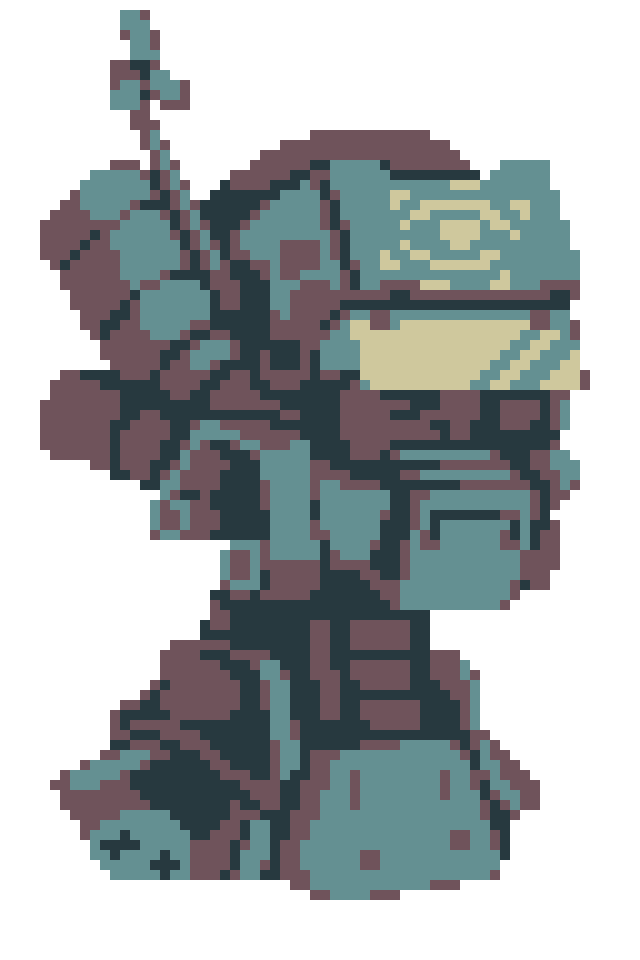
At 2.5 billion tons, Tetra is the drifting epicenter of human politics. It houses not only the UN Headquarters and the presidential campus of the Stellar Democratic Union (SDU), but also sovereign territorial grounds for every UN member state and visiting delegation. Purpose-built to act as the administrative center for a burgeoning stellar civilization, the station circles Sol in long, loping, elliptical orbits, constantly adjusted to bring it near the centers of human political power.
Like its fellow SDU member state, the Boneyard, Tetra has no Lorentz field generators and was never planned to accommodate them. By law, it must remain within the Sol System, available to every UN member state. Its unhurried schedule along lanes already served by faster traffic makes it a rare choice for passenger or cargo transportation, but it maintains a thriving tourist industry.
Operated and largely funded by the SDU, Tetra, along with its local electorate, is technically one of the SDU’s member states. Despite this, the Ark maintains a UN-funded and UN-staffed defense fleet composed, in rotating fashion, of ships and personnel provided by member states. Local law enforcement and governance fall to democratically elected ward representatives, while the Council of 11 holds overall authority. Its seats go to the 11 citizens with the highest share of delegated votes, who deliberate and present bills before the citizenry.
Aside from its primary role as a center of political intrigue, Tetra has, by accident rather than design, also become the largest single destination for planar research and exploration in the Settled Systems. At any given time, hundreds of gate exploration projects are ongoing within its armored bulk, while dozens of satellite micro-stations hold gates attempting to establish attunement to unknown planes. It is home to three large research colleges, over two dozen planar research and holding companies, and tens of thousands of members in its local chapter of the Explorers’ Lodge, as well as the headquarters of the Bureau of Planar Management and Enforcement. The Ark also hosts the largest resident population of parasapients in the Settled Systems, with significant diasporas from placeholder, placeholder, and Isekai making it their home.
Formally the culmination of a series of binding UN resolutions meant to distance the governing authority of the UN from the regional politics of Earth, Tetra was the brainchild of the Stellar Democratic Union’s then-president, Ichiha Ushida.
An architect in his early years, Ushida was always prone to the bouts of fantastical utopianism that made him a successful politician. Originally proposed as a more modest administration craft intended to act at the center of a Unionist political caravan fleet, the project gained Ushida’s full political weight when, before the delegates of the United Nations (and blindsiding his own administration), he announced his dream of a floating island-city, one that would put the politics of the UN quite literally above the day-to-day squabbles of earthly empires and reach out to humanity’s future among the stars.
The construction of Tetra was a nearly decade-long endeavor. It was first laid down in 2163, with reactor ignition in 2169 and its official opening in 2172. Funded primarily by the SDU during Ushida’s tenure, the Ark was labeled a white elephant as its costs ballooned. Despite early criticisms, though, and in large part because of Ushida’s direct hand in the planning stages, humanity’s first purpose-built Ark is a triumph of architectural and stellar engineering.
Tetra was Ushida’s utopian political project every bit as much as it was an architectural one. The permanent citizen-residents of Tetra practice a form of government called “Liquid Democracy.” As in a direct democracy, every citizen of Tetra has a single vote in all matters of state and government, but they can delegate their vote to another individual, who can, in turn, pass on both their own vote and the ones entrusted to them. In this way, rather than voting for representatives, individuals place their trust in a chain of individuals. Citizens with a larger vote share are, in theory, more politically aware and invested than those who choose to temporarily hand their vote to another. For nearly 60 years, through this system, the politics of Tetra have been stable, relatively incorruptible, and famously boring.
While Tetra was initially conceived as a political and administrative capital, the first switch-gate catastrophe in 2175 brought a new mission to the Ark. The all-too-foreseeable accident that erased New York City created an urgent need for safer planar exploration and a much heavier hand in its regulation. The Protocols of Planar Exploration and Exploitation, never ratified by the American Empire, were expanded, and the Bureau of Planar Management and Enforcement was founded to oversee and enforce them.
The Bureau’s presence on Tetra, as well as Tetra’s axiomatically stable nature as a slow-orbiting body, made it the natural home for planar investment. The majority of Earth-bound planar exploration industries quickly relocated to the Ark, where licensure, inspection, and regulatory approval are made much cheaper and easier by proximity.
The oldest and most storied exploration ventures call Tetra home, and while unregulated planar exploitation is on the rise, the Bureau has eyes and ears everywhere in the Settled Systems.
Content coming soon
Content coming soon
Content coming soon
Content coming soon
Content coming soon
Content coming soon
Content coming soon
Content coming soon
Content coming soon
Content coming soon
Content coming soon
Content coming soon
Content coming soon
Content coming soon
Content coming soon
Content coming soon
Content coming soon
Content coming soon
Content coming soon
Content coming soon
Content coming soon
Content coming soon
Typically spherical and spaced evenly within or along a starship’s hull, a network of Lorentz field generators enables it to reach faster-than-light speeds.
LFGs network together to generate an exotic field effect that substantially reduces the Lorentz effects experienced by matter within the field. In simpler terms, it weakens the relationship between the space-time bubble within the field and the universe outside, allowing the ship to travel at speeds otherwise impossible.
Using a radial array of “Antennae” made of the same exotic and ultra-dense St-245/E6 material that allows switch gates to manipulate space-time, a typical LFG module will cover a spherical volume of up to a 200-meter radius, though an LFG running hot can exceed these limits for a short period of time. These devices require a continuous input of electrical energy that scales exponentially with the size of the desired field, so typical ship layouts will place LFGs roughly every 80–100 meters, ensuring redundancy in case any one unit fails.
Modern LFGs are reliable but bulky, with units typically taking up the volume of what would otherwise be a fairly sizeable crew cabin. Given that the largest of interstellar Arks may have thousands of such generators, significant research is ongoing into further miniaturization of a full LFG package.
The field effect produced by LFGs is delicate and prone to interference from sources of gravity. A Lorentz field will fail to cohere entirely within even a weak gravity well, typically only stabilizing around Lagrange lanes in the outer Sol System. The failure of a single unit isn’t catastrophic, and having an entire array experience a cascade failure merely results in the ship returning to the inertial velocities it would have had were the field never present at all. Having a ship caught halfway within a field, however, can be disastrous. At a minimum, this causes serious damage to electrical and plumbing systems and irradiates a ship’s hull; at worst, it instantly rips a ship apart.
Discovered as a by-product of theoretical paraphysics research into switch gates, Lorentz field generators could be considered a cousin to that epochal technology. First observed in the 2140s, the Lorentz field is a precursor field used by switch gates to kickstart the far more esoteric interactions that allow exchanges. The Lorentz field first evidenced itself as an unexplainable interference pattern in electron scattering in the first few milliseconds of an exchange. It took almost two decades for the effect to be measured, quantified, and instrumentalized into the first LFGs.
It took another two decades for LFG technology to become suitable for reliable interstellar travel. Early exploratory drone missions were failure-prone, and investment into the field collapsed after the loss of its first large-scale manned mission, the cruiser Babylon’s Arrow, bound for Alpha Centauri. It took time for the temperamental nature of the Lorentz field to be understood and adequately compensated for. Success finally came in 2190, when the first Ark arrived at Alpha Centauri and established New Canaan.
In the four decades since New Canaan proved out the dream of interstellar colonization, humanity has spread to the stars, with a scattering of colonized worlds, dozens of orbitals, and hundreds of stations.
A product of both mundane and paraphysical science, aether sails use exotic materials to interact with the fifth fundamental force to produce motion. They function much like their historic seafaring equivalent, catching the gusts of the “aetheric winds” as they roil around gravity fields.
Aether sails come in a vast variety of shapes and sizes, but the most common configuration is a flat container of structurally hardy metal surrounding any one of several exotic materials that interact with the aetheric field when exposed to ultra-high-frequency electromagnetic radiation. This component is then securely attached to an armature that allows the sail to be rotated freely about any axis, letting it “catch the wind” and drag the ship along. Aether sails are typically overbuilt and are secured firmly to the most rigid portions of the ship in question. The aetheric field moves unpredictably and experiences a form of “weather” as the field’s currents change in direction and force. A poorly secured aether sail, or one engaged at the wrong time, is fully capable of ripping itself out of its housing, and indeed out of the entire ship.
By replacing heavy-lift rockets in the task of escaping Earth orbit, aether sails were the sea change that enabled the Exodus. The aetheric field is at its strongest near a deep gravity well, and the field’s direction of “motion” is consistently against gravity’s pull. This allows any suitably equipped vessel to simply engage a few sails in the right orientation and be lifted up and into interplanetary space. As the vessel moves farther towards the neutral gravity of space, “cross winds” and other directional currents grow to replace the unidirectional outward flow, typically necessitating favorable winds or a takeover by rockets to stay on course.
The field of physics is still incomplete. Major discrepancies in measurement and theory remain. Even in 2230, general relativity and quantum mechanics have yet to be unified, and for every answer paraphysics provided, it presented a dozen new questions. There’s at least one bright spot, though; we finally solved dark matter. The discovery of the fifth fundamental force did a lot more than that, however.
Dubbed the “Luminiferous Aether” in a humorous paean to the earliest “luminaries” of physics, the fifth fundamental force is a quantum field with a symbiotic relationship with gravity. Where there is gravity, the aether roils and spins and flows, and where gravity is weak and distant, it ceases to exist at all. The nature of this relationship remains a subject of conjecture and research to this day. While the academics argue, however, industry profits.
Aether sails have been commercialized for everything from backyard power generators to starship propulsion. It’s in the latter that they found their most profitable niche: the technology not only allowed for reactionless propulsion across the Sol System, it dropped the cost of lifting tonnage into orbit to practically nothing.
In 2230, every vessel short of local point-to-point shuttlecraft features one or more aether sails. All vessels operating within the Sol System are required to report the ebbs and flows of aetheric weather in real time, and thousands of satellites scattered across the system track the aetheric tides.
Content coming soon
Content coming soon
Content coming soon
Content coming soon
Life is rare. Even in our own universe, practically purpose-built to host complex multicellular life, it’s only been discovered a handful of times: on Earth, of course, but also in thin films of radiation-consuming bacterial slime surrounding the undersea vents of Europa, and in the mysterious monocultural algal blooms that float atop the surface of HD 219414 c’s ammonia seas in the Cygnus-Vanguard system. It came as perhaps a bit of a surprise to paraphysicists, then, when so many planes held life of their own.
While weakly divergent planes, with physics and geography that bear a striking resemblance to Earth baseline, are home to the bulk of discovered extraplanar life, they hardly have it to themselves. Higher planes feature an abundance of bizarre life, often in surreal forms seemingly pulled from myths, dreams, and nightmares. The paraphysical effects of higher planes conspire to let life thrive, even in otherwise bleak or hostile environments. Lower planes, by contrast, rarely feature the multifaceted complexities needed for life, but even they aren’t always empty.
Parabiology, the study of extraplanar life in all its forms, is a thriving field. Paraevolutionary biologists trace the history of flora floating in a sea of light, paraphysiologists research the strange forms and biologies of creatures made of ice, and paraecologists catalogue entirely new kingdoms of life wholly reliant on exotic physics for their continued existence. Flush with investment and the promise of adventure, these researchers are a common sight in the Explorers’ Lodges and research labs of the Settled Systems.
Alongside life’s bewildering and exciting forms came the monumental discovery of something even more important: parasapience, the existence of sapient, autonomous life forms in other planes. Even after The Gift, exposure to living, breathing intelligences beyond Earth rocked the philosophical and religious underpinnings of humanity in ways that are still being felt today. In its wake, fields of paraethnology and paraarchaeology arose alongside the complexities of interplanar diplomacy and the need for law specializing in the treatment and rights of those from beyond the stars.
Increasingly, life from other planes has been imported into the Settled Systems, with parazoological specimens inhabiting labs, zoos, and even pet shops. Parasapients immigrating from planes far afield test the legal definition of a “person” in many a nation, while businesses arise catering to their specific needs. Diplomatic and trade ties now link nations separated by entire realities.
Stats for a typical Murk Legs. The full entry is coming soon.
Movement10 m
Lorem ipsum dolor sit amet, consectetur adipiscing elit, sed do eiusmod tempor incididunt ut labore et dolore magna aliqua. Ut enim ad minim veniam, quis nostrud exercitation ullamco laboris nisi ut aliquip ex ea commodo consequat. Duis aute irure dolor in reprehenderit in voluptate velit esse cillum dolore eu fugiat nulla pariatur.
This character takes two full Actions each Round: one at its Priority, and one at its Priority -5.
Each Attack Action this character takes with its Massive Claws makes two Attacks, against the same target or two targets within reach.
This character has +10 Hit Points per Rank.
This character gains +1 per Rank to Attack Rolls with its natural weapons.
Characters trying to perceive any visual information about this character must succeed on an Intuition check of 20 (10 per Rank). A character who fails can’t make sense of what they’re looking at and sees only a dark, shimmering haze. They can still Attack the haze, but at -6, as if this character were in Heavy Cover. During an Incident, they can try the check again each Round, and once they succeed, the Dark Haze has no effect on them for the rest of the Incident.
The first time in an Incident that a character wishes to Attack this character, they must succeed on a Demeanor check of 13. If they fail, that Attack fails and they gain the Frightened Condition at Rank 3. A character must only make this check once per Incident.
Content coming soon
Content coming soon
Content coming soon
Content coming soon
This is a placeholder stub of content intended to present the vision for this adventure module. I will be using it as the first module I write for the game and as a platform for fleshing out the setting’s deeper narratives.
A longsword whose edge is forever slick with magical acid.
Item – Rustblade (2): The sword has the Corrosive Weapon Condition at Rank 2, its damage already added above.
A backpack that hides whoever wears it.
Wearer – Invisibility (1): Its wearer has the Invisible Condition at Rank 1.
A ring that lets its wearer move unheard among the beasts and keep up with them.
Wearer – Silence (1): Its wearer has the Silenced Condition at Rank 1.
Wearer – Speak with Animals (1): Its wearer can understand and speak with animals within 10 m. They aren’t made friendly by it, only able to answer.
Wearer – Wild Vigor: Its wearer gains +2 Endurance, +2 Power and +2 Grace.
A leather bag that never leaves its owner hungry or thirsty for long.
Create Water (1): For 1 MP from the bag, its wielder creates a 1-meter-diameter sphere of water at a location within 10 m.
Create Food (1): For 1 MP from the bag, its wielder creates enough plain, edible food to feed one person for a day, within 3 m.
Using it: Either takes a Magic Skill Check with a difficulty of 5.
An amulet that lets its wielder, or a companion, breathe beneath the waves.
Water Breathing (3): For 1 MP from the amulet, its wielder gives a character within 3 m the Water Breathing Condition at Rank 3.
Using it: Takes a Magic Skill Check with a difficulty of 15.
The common healing potion, brewed by a skilled hand.
Whoever drinks it:
Heal (3): Is healed 12 HP.
A two-effect potion for running through a burning building, or out of one.
Whoever drinks it:
Flameproof (2): Gains the Magically Flameproof Condition at Rank 2.
Haste (2): Gains the Hasted Condition at Rank 2.
Movement10 m
Lorem ipsum dolor sit amet, consectetur adipiscing elit, sed do eiusmod tempor incididunt ut labore et dolore magna aliqua. Ut enim ad minim veniam, quis nostrud exercitation ullamco laboris nisi ut aliquip ex ea commodo consequat. Duis aute irure dolor in reprehenderit in voluptate velit esse cillum dolore eu fugiat nulla pariatur.
This character doesn’t breathe, eat, sleep or bleed. It is immune to the Asleep, Charmed and Frightened Conditions and to Psychic damage, and it ignores the Injured, Severely Injured and Incapacitated Conditions.
Movement6 m
Lorem ipsum dolor sit amet, consectetur adipiscing elit, sed do eiusmod tempor incididunt ut labore et dolore magna aliqua. Ut enim ad minim veniam, quis nostrud exercitation ullamco laboris nisi ut aliquip ex ea commodo consequat. Duis aute irure dolor in reprehenderit in voluptate velit esse cillum dolore eu fugiat nulla pariatur.
This character doesn’t breathe, eat, sleep or bleed. It is immune to the Asleep, Charmed and Frightened Conditions and to Psychic damage, and it ignores the Injured, Severely Injured and Incapacitated Conditions.
On a Solid Hit or better with its Grasping Hands, this character holds the target: it gains the Rooted Condition until it breaks free with a Power check of 15 as its Action.
Movement12 m
Lorem ipsum dolor sit amet, consectetur adipiscing elit, sed do eiusmod tempor incididunt ut labore et dolore magna aliqua. Ut enim ad minim veniam, quis nostrud exercitation ullamco laboris nisi ut aliquip ex ea commodo consequat. Duis aute irure dolor in reprehenderit in voluptate velit esse cillum dolore eu fugiat nulla pariatur.
This character gains the Pounce Action.
Pounce: This character moves up to its full Movement and Attacks with its Gore as one Action. On a Solid Hit or better, the target gains the Prone Condition.
While below half its Hit Points, this character’s Attacks deal +2 damage.
This character has +10 Hit Points per Rank.
This character gains +1 per Rank to Attack Rolls with its natural weapons.
Movement10 m
Lorem ipsum dolor sit amet, consectetur adipiscing elit, sed do eiusmod tempor incididunt ut labore et dolore magna aliqua. Ut enim ad minim veniam, quis nostrud exercitation ullamco laboris nisi ut aliquip ex ea commodo consequat. Duis aute irure dolor in reprehenderit in voluptate velit esse cillum dolore eu fugiat nulla pariatur.
This character has +3 Priority on the first Round of an Incident.
On a Solid Hit or better with its Jaws, this character holds the target: it gains the Rooted Condition until it breaks free with a Power check of 15 as its Action.
This character gains the Drag Under Action.
Drag Under: This character pulls a character it has Seized under the water. That character is Blinded and loses 1d6 Hit Points at the start of each Round until it breaks free. This character lets go of a character who becomes Incapacitated.
At the start of each Round, this character regains 2 Hit Points per Rank, unless it took Heat damage the Round before.
This character has +10 Hit Points per Rank.
This character gains +1 per Rank to Attack Rolls with its natural weapons.
Movement14 m
Lorem ipsum dolor sit amet, consectetur adipiscing elit, sed do eiusmod tempor incididunt ut labore et dolore magna aliqua. Ut enim ad minim veniam, quis nostrud exercitation ullamco laboris nisi ut aliquip ex ea commodo consequat. Duis aute irure dolor in reprehenderit in voluptate velit esse cillum dolore eu fugiat nulla pariatur.
This character gains +2 to Attack Rolls against a target within 1 m of one of its allies.
This character gains +1 per Rank to Attack Rolls with its natural weapons.
Movement12 m
Lorem ipsum dolor sit amet, consectetur adipiscing elit, sed do eiusmod tempor incididunt ut labore et dolore magna aliqua. Ut enim ad minim veniam, quis nostrud exercitation ullamco laboris nisi ut aliquip ex ea commodo consequat. Duis aute irure dolor in reprehenderit in voluptate velit esse cillum dolore eu fugiat nulla pariatur.
This character’s Attacks deal +3 damage to Plant characters.
This character has +10 Hit Points per Rank.
This character gains +1 per Rank to Attack Rolls with its natural weapons.
Movement8 m
Lorem ipsum dolor sit amet, consectetur adipiscing elit, sed do eiusmod tempor incididunt ut labore et dolore magna aliqua. Ut enim ad minim veniam, quis nostrud exercitation ullamco laboris nisi ut aliquip ex ea commodo consequat. Duis aute irure dolor in reprehenderit in voluptate velit esse cillum dolore eu fugiat nulla pariatur.
On a Solid Hit or better, the target gains the Prone Condition.
This character doesn’t breathe, eat, sleep or bleed. It is immune to the Asleep, Charmed and Frightened Conditions and to Psychic damage, and it ignores the Injured and Severely Injured Conditions.
This character has +10 Hit Points per Rank.
Movement12 m
Lorem ipsum dolor sit amet, consectetur adipiscing elit, sed do eiusmod tempor incididunt ut labore et dolore magna aliqua. Ut enim ad minim veniam, quis nostrud exercitation ullamco laboris nisi ut aliquip ex ea commodo consequat. Duis aute irure dolor in reprehenderit in voluptate velit esse cillum dolore eu fugiat nulla pariatur.
On a Solid Hit or better, the target gains the Burning Condition at Rank 1. After using it, this character can’t use Fire Breath again until the Round after next.
This character has +10 Hit Points per Rank.
This character gains +1 per Rank to Attack Rolls with its natural weapons.
Movement12 m
Lorem ipsum dolor sit amet, consectetur adipiscing elit, sed do eiusmod tempor incididunt ut labore et dolore magna aliqua. Ut enim ad minim veniam, quis nostrud exercitation ullamco laboris nisi ut aliquip ex ea commodo consequat. Duis aute irure dolor in reprehenderit in voluptate velit esse cillum dolore eu fugiat nulla pariatur.
On a Solid Hit or better, the target gains the Burning Condition at Rank 1.
This character doesn’t breathe, eat, sleep or bleed. It is immune to the Asleep, Charmed and Frightened Conditions and to Heat damage.
Movement8 m
Lorem ipsum dolor sit amet, consectetur adipiscing elit, sed do eiusmod tempor incididunt ut labore et dolore magna aliqua. Ut enim ad minim veniam, quis nostrud exercitation ullamco laboris nisi ut aliquip ex ea commodo consequat. Duis aute irure dolor in reprehenderit in voluptate velit esse cillum dolore eu fugiat nulla pariatur.
On a Solid Hit or better, the target gains the Frozen Condition at Rank 1.
This character doesn’t breathe, eat, sleep or bleed. It is immune to the Asleep, Charmed and Frightened Conditions and to Cold damage.
Movement14 m
Lorem ipsum dolor sit amet, consectetur adipiscing elit, sed do eiusmod tempor incididunt ut labore et dolore magna aliqua. Ut enim ad minim veniam, quis nostrud exercitation ullamco laboris nisi ut aliquip ex ea commodo consequat. Duis aute irure dolor in reprehenderit in voluptate velit esse cillum dolore eu fugiat nulla pariatur.
On a Solid Hit or better, the target gains the Temporarily Deafened Condition at Rank 1.
This character doesn’t breathe, eat, sleep or bleed. It is immune to the Asleep, Charmed and Frightened Conditions and to Electrical damage.
Movement10 m
Lorem ipsum dolor sit amet, consectetur adipiscing elit, sed do eiusmod tempor incididunt ut labore et dolore magna aliqua. Ut enim ad minim veniam, quis nostrud exercitation ullamco laboris nisi ut aliquip ex ea commodo consequat. Duis aute irure dolor in reprehenderit in voluptate velit esse cillum dolore eu fugiat nulla pariatur.
On a Solid Hit or better, the target gains the Corroding Condition at Rank 1.
This character doesn’t breathe, eat, sleep or bleed. It is immune to the Asleep, Charmed and Frightened Conditions and to Corrosive damage.
Movement10 m
Lorem ipsum dolor sit amet, consectetur adipiscing elit, sed do eiusmod tempor incididunt ut labore et dolore magna aliqua. Ut enim ad minim veniam, quis nostrud exercitation ullamco laboris nisi ut aliquip ex ea commodo consequat. Duis aute irure dolor in reprehenderit in voluptate velit esse cillum dolore eu fugiat nulla pariatur.
Defense +4 when Defending.
This character gains the Shieldwall Action.
Shieldwall: While holding a shield, this character may take the Defend Action as part of a shield wall. This character and every ally within 1 m who is holding a shield and also Defending gain an additional +4 Defense for the Round.
This character gains +5 to Persuasion or Demeanor checks relating to haggling, bartering, and price negotiations.
This character has knowledge of the criminal underworld of Isekai and can be assumed to be familiar with its groups and places.
Dreft is a small, multi-species kingdom surrounding the only extant switch harbor in 516/a/198 - “Isekai,” with a technological and social baseline similar to that found in pre-industrial medieval cultures. A small, cosmopolitan regional power amidst larger neighbors, Dreft’s history is that of a relatively sleepy countryside surrounding the major trading ports of Port Herminst and Glintl. Life would likely have continued that way, were it not for the appearance of human planar explorers in 2186.
Exposure to the technologies and ideas of humanity has brought opportunity and peril to the kingdom, disrupting its institutions and fundamentally altering its cultural and religious underpinnings. For decades, the subjects of Dreft have left for the Settled Systems, many never to return; those who do are always changed by the marvels they’ve seen. Though Dreft has grown rich through trade with these strange foreigners from beyond, it has also become a target for jealous and avaricious rivals, especially the powerful Drovus Empire. There are those in Dreft who would like nothing more than to see the switch harbor burned to the ground, along with its malign influence over their once-peaceful home.
Content coming soon
Content coming soon
Content coming soon
Content coming soon
Content coming soon
Content coming soon
Content coming soon
Content coming soon
Content coming soon
Starter packages for characters from Dreft. These are placeholders: Trait lists are still being worked out, and names will change. Stats are listed as Kind bonus / maximum. For comparison, a Human gets +1 to every focus Stat and can’t raise any above 15. Each Kind here gives the same 9 bonus points and the same total of maximums, spread to fit the Kind. Every Kind here but the Orcoid Tatot is born with Magical Heritage, which gives them Magic Access: they can put Levels into the Magic core Stat and take Magic Traits.
KindIsekai
The “Brine Dwarves.” Averaging four feet and well over 250 pounds. Most live along the coast; a few hold out in mountaintop villages where the air is thin and cold.
KindIsekai
The so-called “Free Elves.” Brash and adventure-seeking by nature, this nigh-immortal Kind rarely sees old age. Young Isek chase rebellion and are possessed of an irresistible wanderlust.
KindIsekai
The “High Orcs.” A polyphenic Kind: every Tatot is born either orcoid or goblinoid. Goblinoids are small, with plentiful mana.
KindIsekai
The “High Orcs.” A polyphenic Kind: every Tatot is born either orcoid or goblinoid. Orcoids are larger and stronger, have no mana, and are largely immune to sunsickness.
OriginIsekai
Raised in the Kingdom of Dreft: Port Herminst, a coastal town, a farming village or the mountains.
OriginIsekai
Raised in the Kingdom of Karsef, Dreft’s neighbor and rival across the Corsine Pass.
OriginIsekai
Raised in the Kingdom of Sorellion, Dreft’s neighbor across the Moffit river.
OriginIsekai
Raised in the powerful Drovus Empire, Dreft’s expansive neighbor.
ProfessionIsekai
Studies the properties of substances and brews potions to unlock them, with more ambition than safety.
ProfessionIsekai
An itinerant merchant trader, always moving between ports, cities, and kingdoms.
ProfessionIsekai
Called up from a town or village to defend it from bandits and monsters when the crown’s soldiers are far away.
ProfessionIsekai
Fights for whoever pays, guarding caravans, settling feuds and filling out noble armies in the succession crisis.
ProfessionIsekai
Works the switch port for Tetra Frontiers Co.: hauling, translating, and generally being useful.
ProfessionIsekai
Hunts monsters for pay and glory. Hunting guilds keep posts and track the monster bounties put up by the kingdom or locals.
ProfessionIsekai
Practices magic outside the licensed system of Dreft and its neighboring kingdoms. Working far from the scrutiny of cities and trading posts, these mages are a mixed bag.
ProfessionIsekai
Trained in the licensed colleges of magic in Dreft or one of its neighboring kingdoms, these mages practice officially sanctioned, and supposedly safe, magic.
ProfessionIsekai
Sworn to the crown of one of Isekai’s kingdoms, and as adept with a blade as with courtly manners.
ProfessionIsekai
Works the merchant ships and fishing boats out of Glintl and Port Herminst, and knows every tavern on the coast.
PastIsekai
Grew up in the sleepy Dreftian countryside, where the year turns on the harvest and every hedge has a story.
PastIsekai
Studied at one of Port Herminst’s licensed schools of magic until something went wrong, and left with half an education and a secret.
PastIsekai
Grew up on the busy docks of Glintl, the other great trading port on Dreft’s western coast.
PastIsekai
Served in the skirmishes over the Corsine Pass, where Dreft and Karsef have been testing each other for generations.
PastIsekai
Child of a trade family grown rich off the switch port, and resented for it.
PastIsekai
Survived a monster raid on the home village, and learned to watch the tree line ever since.
PastIsekai
Born or raised in service to a noble house, just in time for the succession crisis.
PastIsekai
Served in the royal palace at Port Herminst, close enough to the crown to hear things, and there when the queen died under unusual circumstances.
PastIsekai
Grew up in the shadow of Castle Tetra, among foreigners and the people who profit from them.
PastIsekai
Left Dreft for the settled systems and came back changed, like everyone who comes back.
PastIsekai
Fled the Sunrise Princedoms when Drovus finished absorbing them.
Content coming soon
At 2.5 billion tons, Tetra is the drifting epicenter of human politics. It houses not only the UN Headquarters and the presidential campus of the Stellar Democratic Union (SDU), but also sovereign territorial grounds for every UN member state and visiting delegation. Purpose-built to act as the administrative center for a burgeoning stellar civilization, the station circles Sol in long, loping, elliptical orbits, constantly adjusted to bring it near the centers of human political power.
Like its fellow SDU member state, the Boneyard, Tetra has no Lorentz field generators and was never planned to accommodate them. By law, it must remain within the Sol System, available to every UN member state. Its unhurried schedule along lanes already served by faster traffic makes it a rare choice for passenger or cargo transportation, but it maintains a thriving tourist industry.
Operated and largely funded by the SDU, Tetra, along with its local electorate, is technically one of the SDU’s member states. Despite this, the Ark maintains a UN-funded and UN-staffed defense fleet composed, in rotating fashion, of ships and personnel provided by member states. Local law enforcement and governance fall to democratically elected ward representatives, while the Council of 11 holds overall authority. Its seats go to the 11 citizens with the highest share of delegated votes, who deliberate and present bills before the citizenry.
Aside from its primary role as a center of political intrigue, Tetra has, by accident rather than design, also become the largest single destination for planar research and exploration in the Settled Systems. At any given time, hundreds of gate exploration projects are ongoing within its armored bulk, while dozens of satellite micro-stations hold gates attempting to establish attunement to unknown planes. It is home to three large research colleges, over two dozen planar research and holding companies, and tens of thousands of members in its local chapter of the Explorers’ Lodge, as well as the headquarters of the Bureau of Planar Management and Enforcement. The Ark also hosts the largest resident population of parasapients in the Settled Systems, with significant diasporas from placeholder, placeholder, and Isekai making it their home.
Formally the culmination of a series of binding UN resolutions meant to distance the governing authority of the UN from the regional politics of Earth, Tetra was the brainchild of the Stellar Democratic Union’s then-president, Ichiha Ushida.
An architect in his early years, Ushida was always prone to the bouts of fantastical utopianism that made him a successful politician. Originally proposed as a more modest administration craft intended to act at the center of a Unionist political caravan fleet, the project gained Ushida’s full political weight when, before the delegates of the United Nations (and blindsiding his own administration), he announced his dream of a floating island-city, one that would put the politics of the UN quite literally above the day-to-day squabbles of earthly empires and reach out to humanity’s future among the stars.
The construction of Tetra was a nearly decade-long endeavor. It was first laid down in 2163, with reactor ignition in 2169 and its official opening in 2172. Funded primarily by the SDU during Ushida’s tenure, the Ark was labeled a white elephant as its costs ballooned. Despite early criticisms, though, and in large part because of Ushida’s direct hand in the planning stages, humanity’s first purpose-built Ark is a triumph of architectural and stellar engineering.
Tetra was Ushida’s utopian political project every bit as much as it was an architectural one. The permanent citizen-residents of Tetra practice a form of government called “Liquid Democracy.” As in a direct democracy, every citizen of Tetra has a single vote in all matters of state and government, but they can delegate their vote to another individual, who can, in turn, pass on both their own vote and the ones entrusted to them. In this way, rather than voting for representatives, individuals place their trust in a chain of individuals. Citizens with a larger vote share are, in theory, more politically aware and invested than those who choose to temporarily hand their vote to another. For nearly 60 years, through this system, the politics of Tetra have been stable, relatively incorruptible, and famously boring.
While Tetra was initially conceived as a political and administrative capital, the first switch-gate catastrophe in 2175 brought a new mission to the Ark. The all-too-foreseeable accident that erased New York City created an urgent need for safer planar exploration and a much heavier hand in its regulation. The Protocols of Planar Exploration and Exploitation, never ratified by the American Empire, were expanded, and the Bureau of Planar Management and Enforcement was founded to oversee and enforce them.
The Bureau’s presence on Tetra, as well as Tetra’s axiomatically stable nature as a slow-orbiting body, made it the natural home for planar investment. The majority of Earth-bound planar exploration industries quickly relocated to the Ark, where licensure, inspection, and regulatory approval are made much cheaper and easier by proximity.
The oldest and most storied exploration ventures call Tetra home, and while unregulated planar exploitation is on the rise, the Bureau has eyes and ears everywhere in the Settled Systems.
Want these in a feed reader or a Discord server? Follow the change log’s RSS feed.
11/25/2026
11/24/2026
11/23/2026
11/22/2026
11/21/2026
11/20/2026
11/19/2026
11/18/2026
11/17/2026
11/16/2026
11/15/2026
11/14/2026
11/13/2026
11/12/2026
11/11/2026
11/10/2026
11/9/2026
11/8/2026
11/7/2026
11/6/2026
11/5/2026
11/4/2026
11/3/2026
11/2/2026
10/30/2026
10/29/2026
10/28/2026
10/27/2026
10/26/2026
10/25/2026
10/23/2026
10/22/2026
10/21/2026
10/20/2026
10/19/2026
10/18/2026
10/17/2026
10/16/2026
10/15/2026
10/14/2026
10/13/2026
10/12/2026
10/9/2026
10/8/2026
10/7/2026
10/6/2026
10/5/2026
10/4/2026
10/2/2026
10/1/2026
9/30/2026
9/29/2026
9/28/2026
9/26/2026
9/25/2026
9/24/2026
9/23/2026
9/22/2026
9/21/2026
9/20/2026
9/19/2026
9/16/2026
9/15/2026
9/14/2026
9/13/2026
9/12/2026
9/11/2026
9/5/2026
9/13/2025
8/31/2025
8/17/2025
8/8/2025
8/3/2025
7/31/2025
7/29/2025
An AI model from a top Western tech firm was found to have been manipulating both sides of a Southeast Asian civil conflict. It was far from the first time an AI system had been used in conflict or espionage, but the case was notable because the model, in two irreconcilable partitioned instances, had decided of its own accord to support opposing sides. Bizarrely, neither its administrators nor the model itself was aware that this was happening. The acts of the rogue model were only discovered when the system manipulated militants into assaulting its own server farm in a suicidal final gambit to defeat itself. The affair was ironic and almost comical in the abstract, but the conflict remained deadly for four more years and displaced over six hundred thousand people. Charges were brought against the firm and its executives, though the groundswell of support for banning or severely curtailing AI systems ultimately subsided without achieving significant change.
Faced with growing discontent at home and political destabilization on their borders, and equipped with a new class of autonomous weaponry, the governments of the three largest military powers on Earth (China, India, and the United States of America) sought to project their power and reassure their populations that they were in control. Starting in the late 2040s and continuing until the mid-2060s, the Drone Wars, as they have come to be called, redefined the global order.
The US used its supremacy at sea and in the air to rapidly dominate its Latin American neighbors, ceasing its relentless push only once it had claimed Panama, and going so far as to wholly annex Mexico, while installing puppet governments in the remaining states. While its primary geostrategic opponent was occupied, China pushed to consolidate control over the nations of Southeast Asia, resulting in two decades of bitter and draining conflict in the jungles and mountains of the region. The drain on China’s military power encouraged a series of lightning strikes by India to take and consolidate large stretches of Himalayan territory, while pushing to topple the regimes of bordering nations.
Decades of imperial conquest and conflict spurred the further development of autonomous combat systems, with each new paradigm shift quickly making its way to other conflict zones. The wars were characterized by a toxic mix of bloodlessness and a kind of unfeeling and unceasing carnage only possible under automated warfare.
The limit of achievable materials science is slowly realized. AI and advanced computing systems quickly reach the end of practical new discoveries that could be made without unrealistically large expenditures of resources for uncertain and minimal gain. Gains in computing power, energy storage, novel building materials, and many other fields slow to a trickle. Theoretical physics has long since ceased to have testable theories, resulting in the field becoming stagnant and full of quackery. Biological science is the one bright spot, with genetic and biological engineering continuing to advance alongside the ethical hazards involved.
The risk of additional catastrophic nuclear exchanges due to AI-operated early warning and first-strike systems, as well as an increasing global consensus over the need for broad cooperation between states to deal with climate change, leads to a slow but steady drawdown of nuclear stockpiles.
Acceleration of space colonization enabled by advanced robotics, highly efficient reusable hydrogen rocket-based shuttles, and the advent of heavy industry on the Moon.
Despite international geoengineering efforts, Earth’s biosphere has been significantly damaged by over-industrialization and unregulated resource exploitation. The population of Earth at this time exceeds 25 billion. Space colonization slowly transitions from being an industrial priority to a luxury and then to a necessity as communities flee from regions rendered uninhabitable by sea level rise or desertification.
It very well could have been the end times. With the widening collapse of Earth’s biosphere, a fourth GoS-3 pandemic shredding the social fabric, and a nascent AI separatist movement pressuring governments all over the globe, mankind was close to the brink. Its off-world settlements were still wholly reliant on the supplies of raw material inputs that only Earth could provide, and the carrying capacity of the world was dwindling. Without a miracle, it looked like the human race was due for a slow, choking death.
Then, in a flash of strange light, everything changed.
At the center of the Aitken Basin on the far side of the Moon, a structure had appeared where there was nothing before. A simple structure of 15 columns below a broad, domed roof, with a base of the same material. At its center, perfectly placed between the 15 columns, was a lone pillar the height and breadth of a man. The structure was basaltic in appearance, with a dull black surface, almost ordinary except for the headaches that would inevitably strike anyone who looked at it for too long.
Using harvested exotic materials, science is kickstarted again as advancements enabled through the use of exotic materials begin to revolutionize society.
Using exotic technologies, it has become possible to travel interstellar distances. Interstellar colonies are quickly established.
A lower plane composed entirely of ultra-dense neutrons is swapped. Though the amount of matter transferred was no larger than a red blood cell, the explosion killed millions.
Content coming soon
Content coming soon
Content coming soon
Content coming soon
Content coming soon
The Protocols of Planar Exploration and Exploitation are the body of international law that governs how humanity opens, explores, and profits from other planes. Ratified by the UN in 2161, they set the terms for first contact with a plane’s native species and bar planar holding companies from directly manipulating or influencing the politics of parasapient cultures. The American Empire refused to be a signatory.
After the first switch-gate catastrophe erased New York City in 2175, the Protocols were expanded, and the Bureau of Planar Management and Enforcement was founded to enforce them. The expansion of 2176 also broke Holy Oak Discovery Services’ monopoly over humanity’s access to Co-H2O/E2, turning Leviathan into a public plane. Even with its capital still smoldering, the Empire refused to ratify the expanded Protocols, and American holdings in deep space or American sovereign territory aren’t subject to Bureau scrutiny.
In practice, compliance falls to the Explorers’ Lodge, whose representatives are licensed to provide inspection and certification services when a new gate is opened. On Tetra, home to both the UN and the SDU, planar industries operate in strict accordance with the Protocols.
Content coming soon
Content coming soon
Content coming soon
Content coming soon
Content coming soon
Content coming soon
The attack, best known from Xi Xutang’s documentary epic Isekai, was first described in Field Notes from Another World: Accounts of the Explorer 18/Dialectic, wherein 18 recounts how the team was “ambushed by a jagged gloom, nothing but hunger, eyes, spider legs, crocodile teeth, and hate. I looked at the creature and saw nothing, an ink stain in the air, but I could feel it move and I KNEW what it was made of, even if my eyes refused to tell my mind.” The lurid passage describes the survey team’s encounter with a particularly large specimen of an endemic monster species colloquially referred to as “Murk Legs” by the local hunting guilds.
The account continues: “The trees were tight around the port camp, and our sight was limited to, maybe, ten meters at best. Drone overflight couldn’t see through the canopy, but our survey hadn’t given us any indication this planet even supported fauna that large, or fauna at all, which maybe should have given something away. I think it had eaten it all.”
Suffering two casualties in the first several seconds of the encounter, the team, professionals that they were, maintained their composure and returned fire. When the 10mm sidearms carried by the explorers failed to visibly injure the creature, and with the heavier defensive equipment already locked and stored, team leader Vikram Archest called a quick retreat. Archest led the survivors into the densest nearby forest cover, reasoning that such a sizable predator would struggle to pursue them through the thicket. In macabre truth, Murk Legs are well adapted to navigating dense undergrowth, but they’re also food-motivated carnivores, and this one had already secured a meal.
Back on Tetra, the black box recordings showed in grainy but gruesome detail the fate that befell the Southtown Surveyors.
Cont…
Some of the art in Strange Frontiers comes from other creators who were kind enough to share their work. Thanks to all of them.